
There are various waves seen on referential montages that are easily mistaken for spikes. Consider the following:
Referential montage:
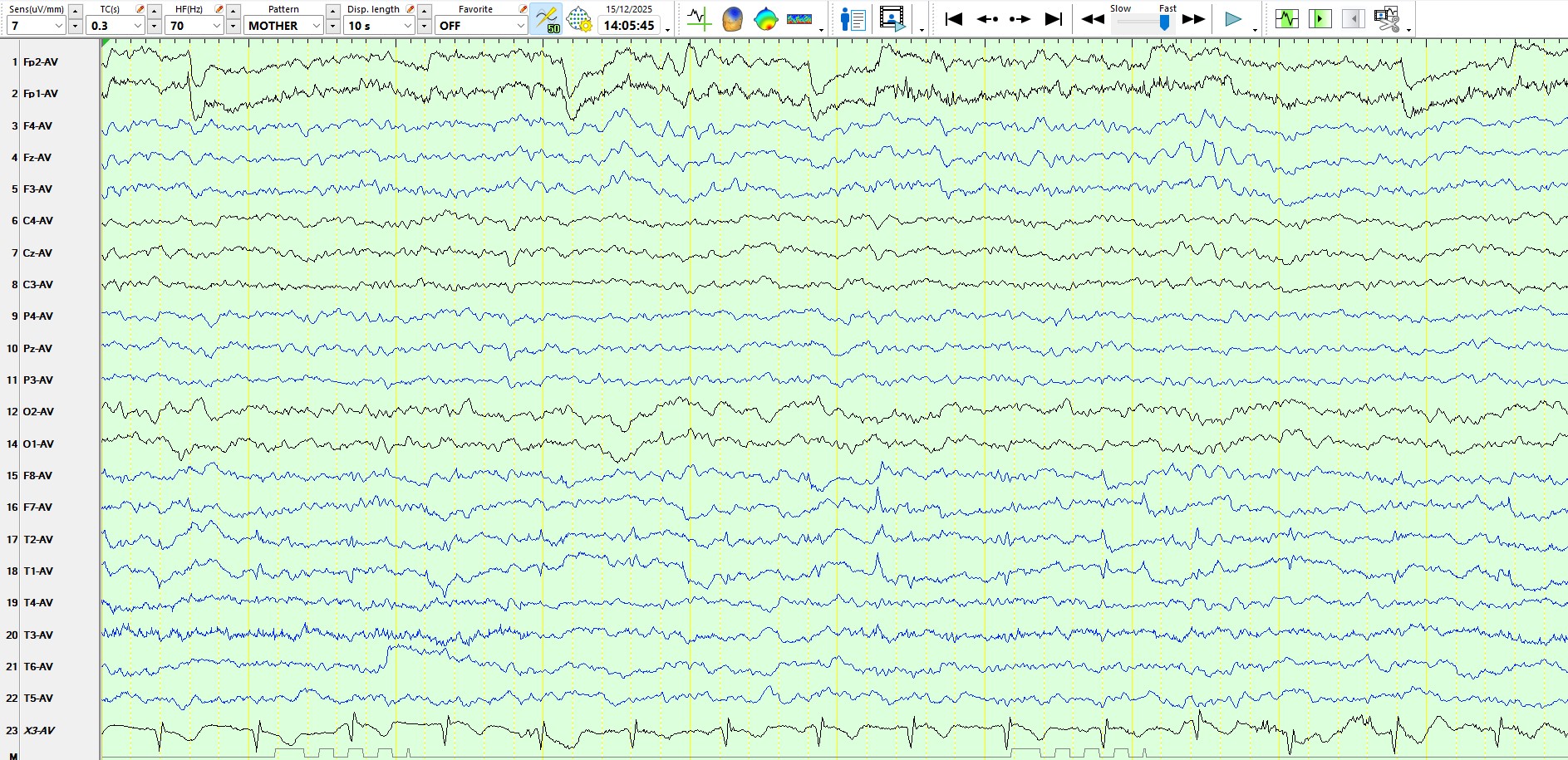
In the above, the wave at F7-M1-T3 between the eight...
As mentioned in previous posts, I prefer the coronal bipolar montage to the anterior-posterior bipolar montage for several reasons. The following page illustrates one of the reasons:
The following...
Some of these vertex waves appear in trains. Some are high in amplitude, others barely visible. The EEG is normal.
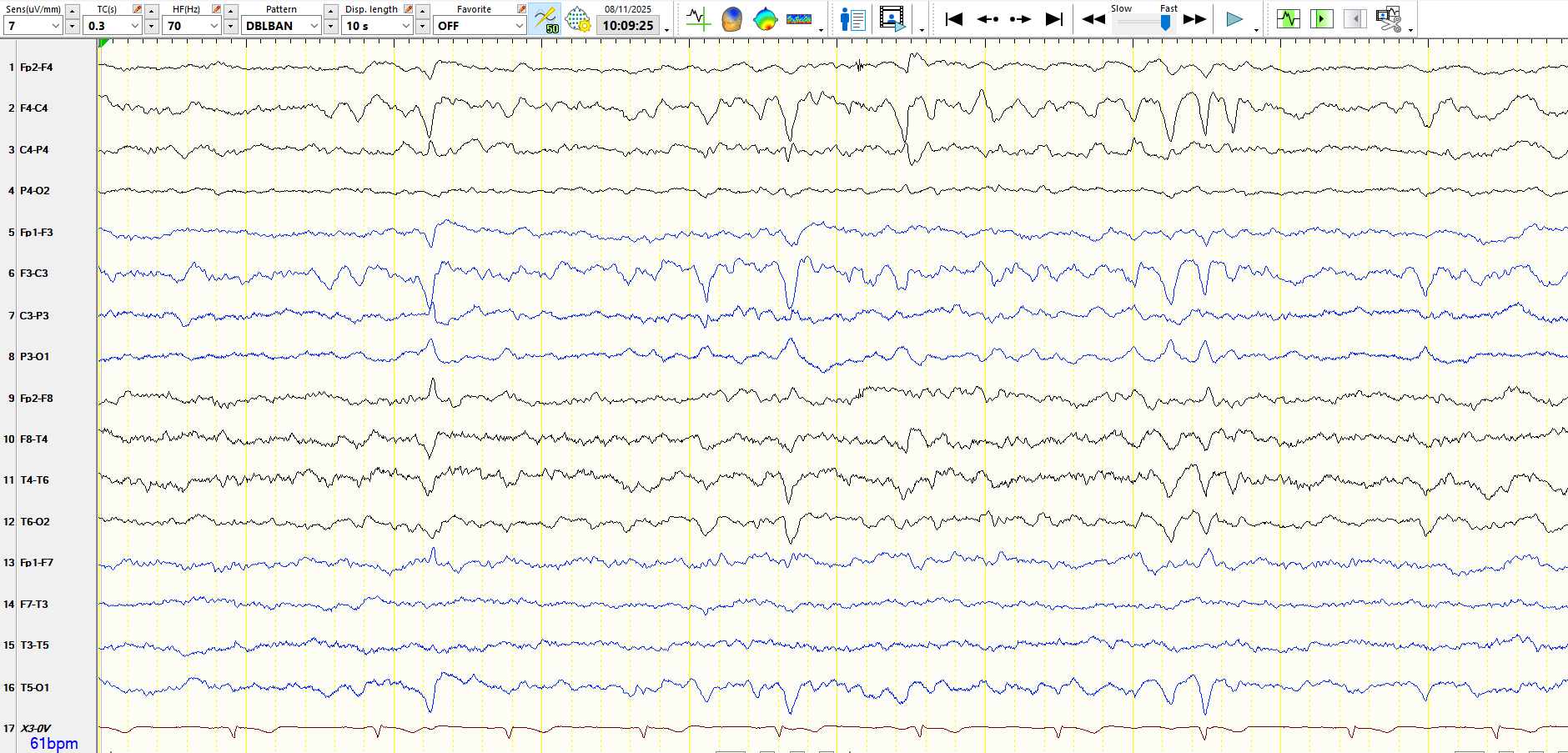
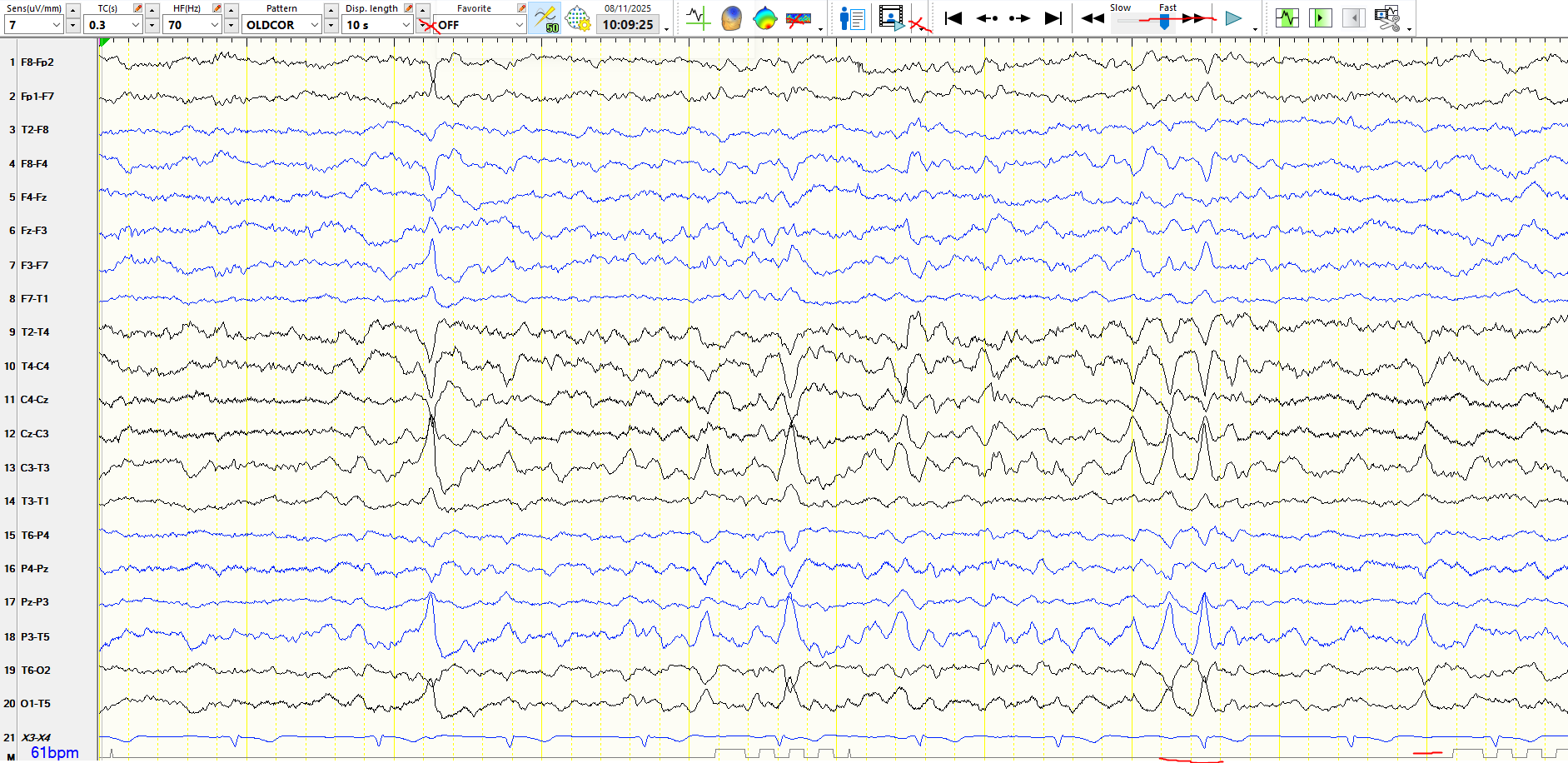
9 years old, epilepsy.
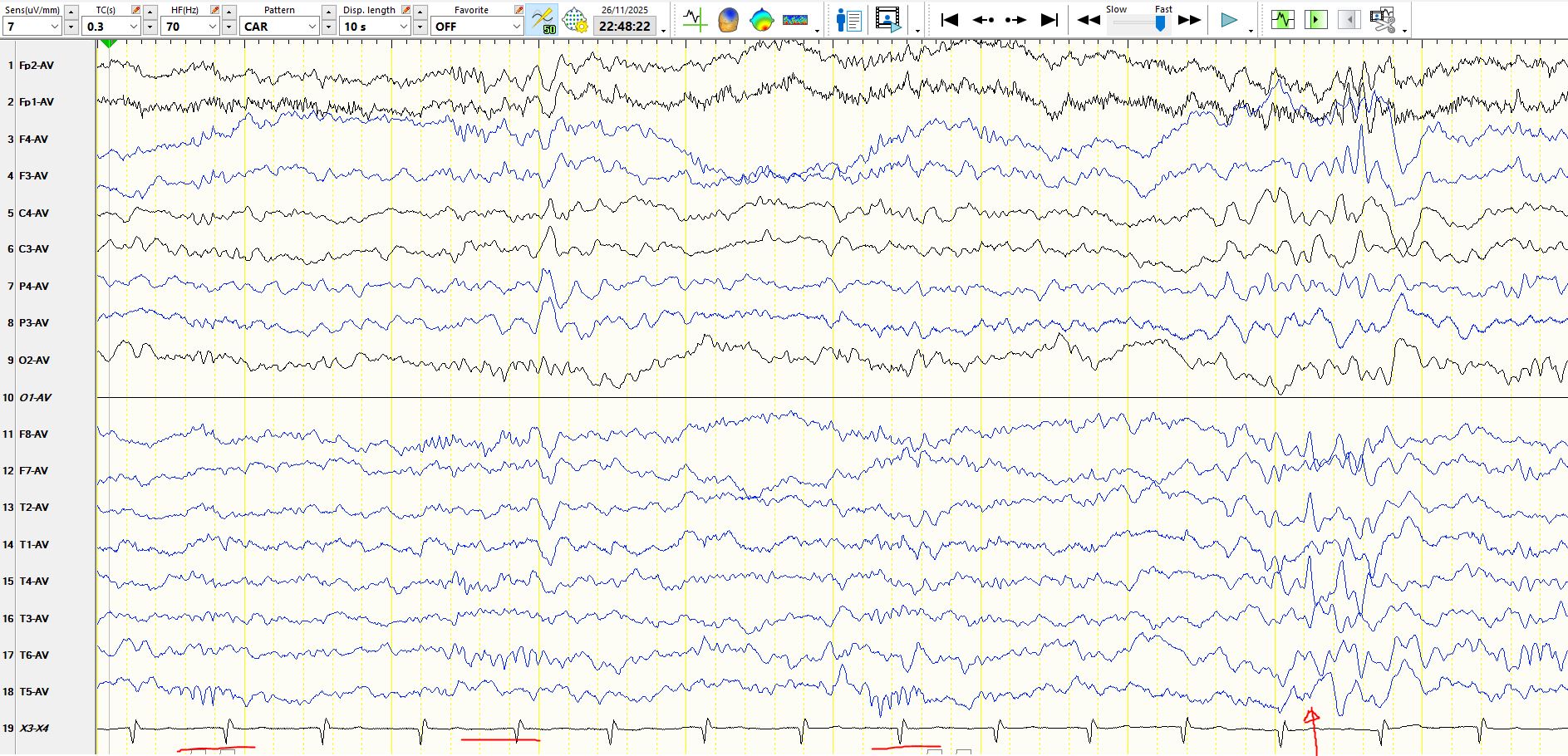
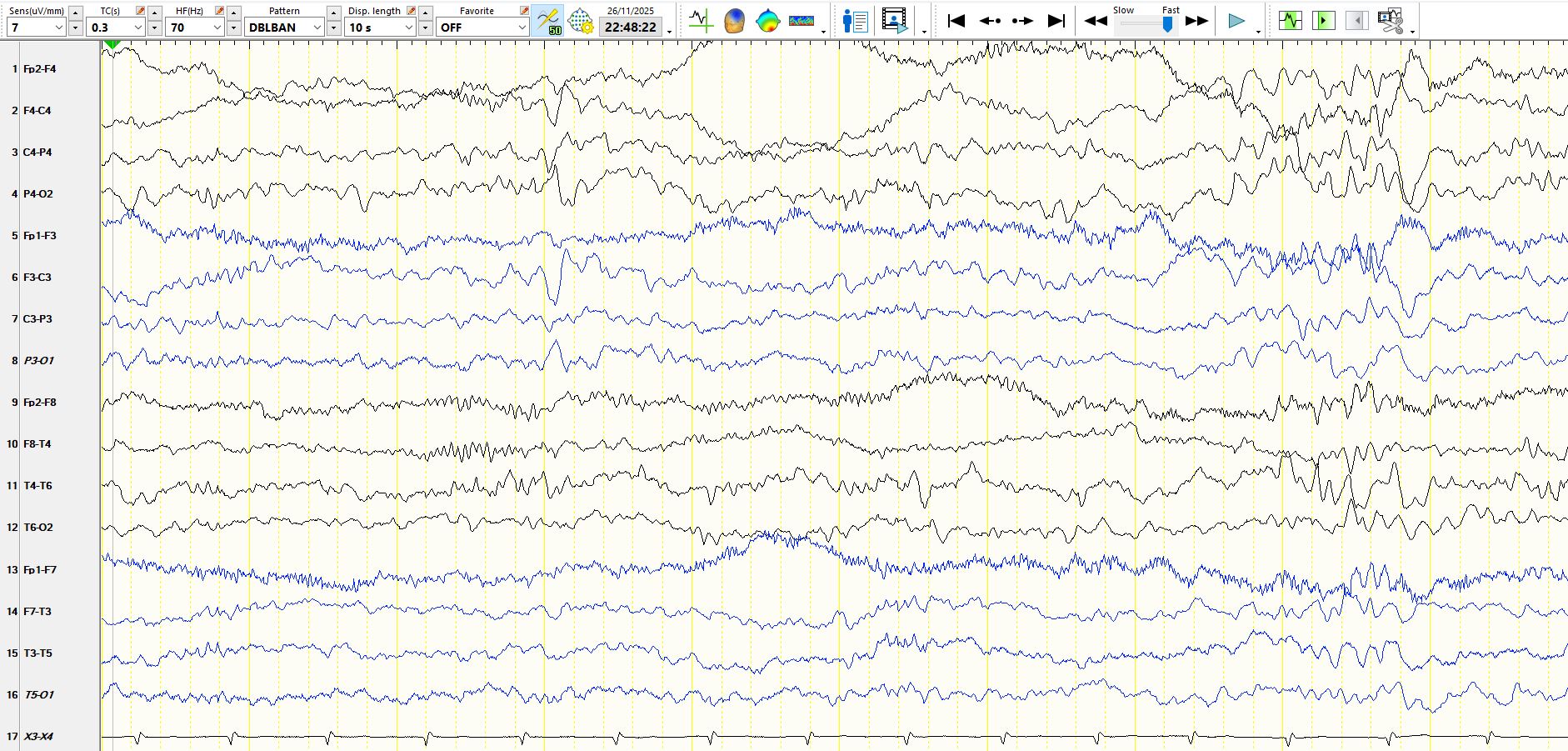
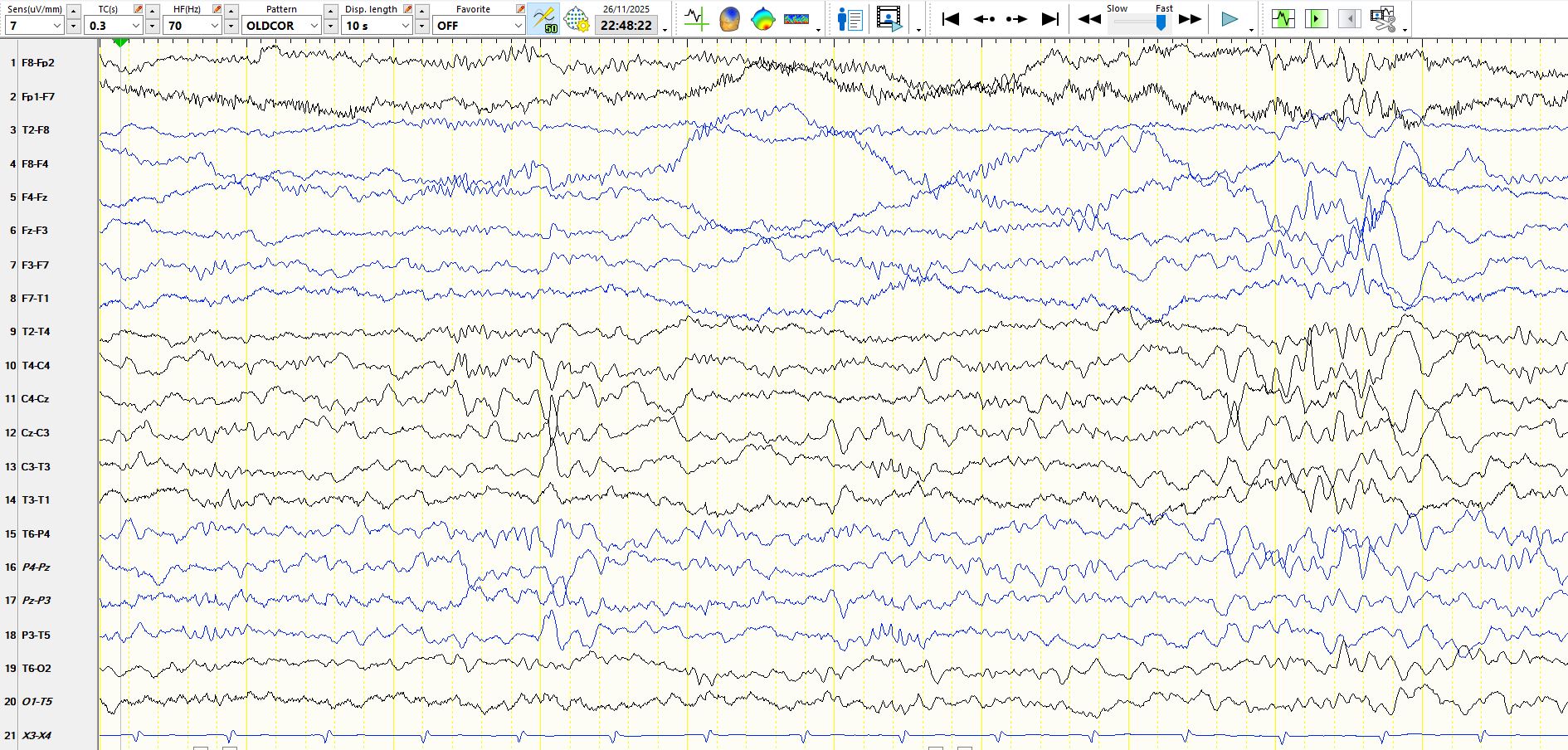
The patient is asleep. The 3 images above represent the same page on different montages. The 14 Hz version of 14- and 6-Hz positive bursts has been hig...
Female patient, 11 years old. What is the nature of the following discharge? A paediatric neurologist has referred the patient because of episodic events that may represent epileptic seizures.
Refere...
This is a boy with possible absence seizures. The EEG is normal during wakefulness.
.
Bipolar AP montage:
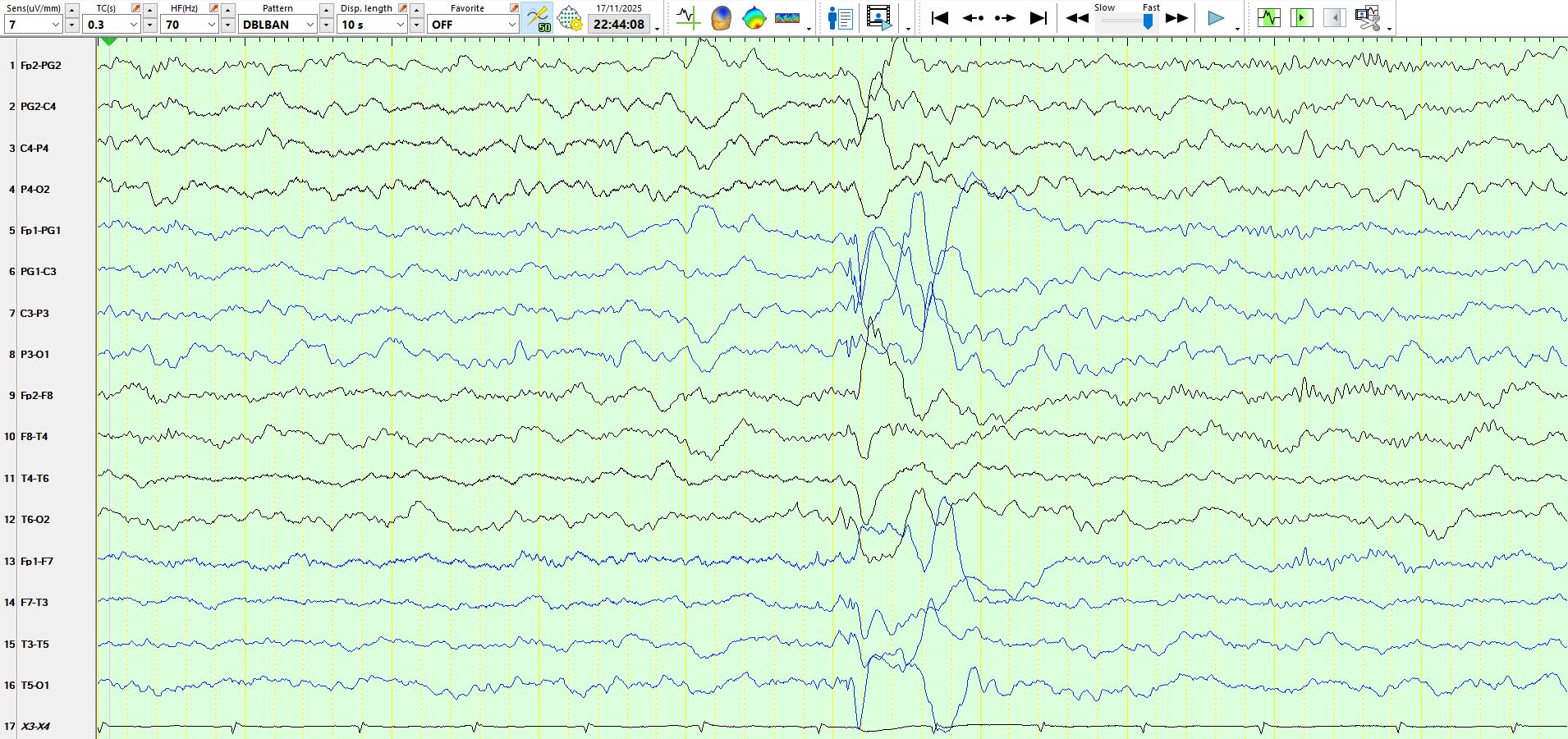
Coronal montage:
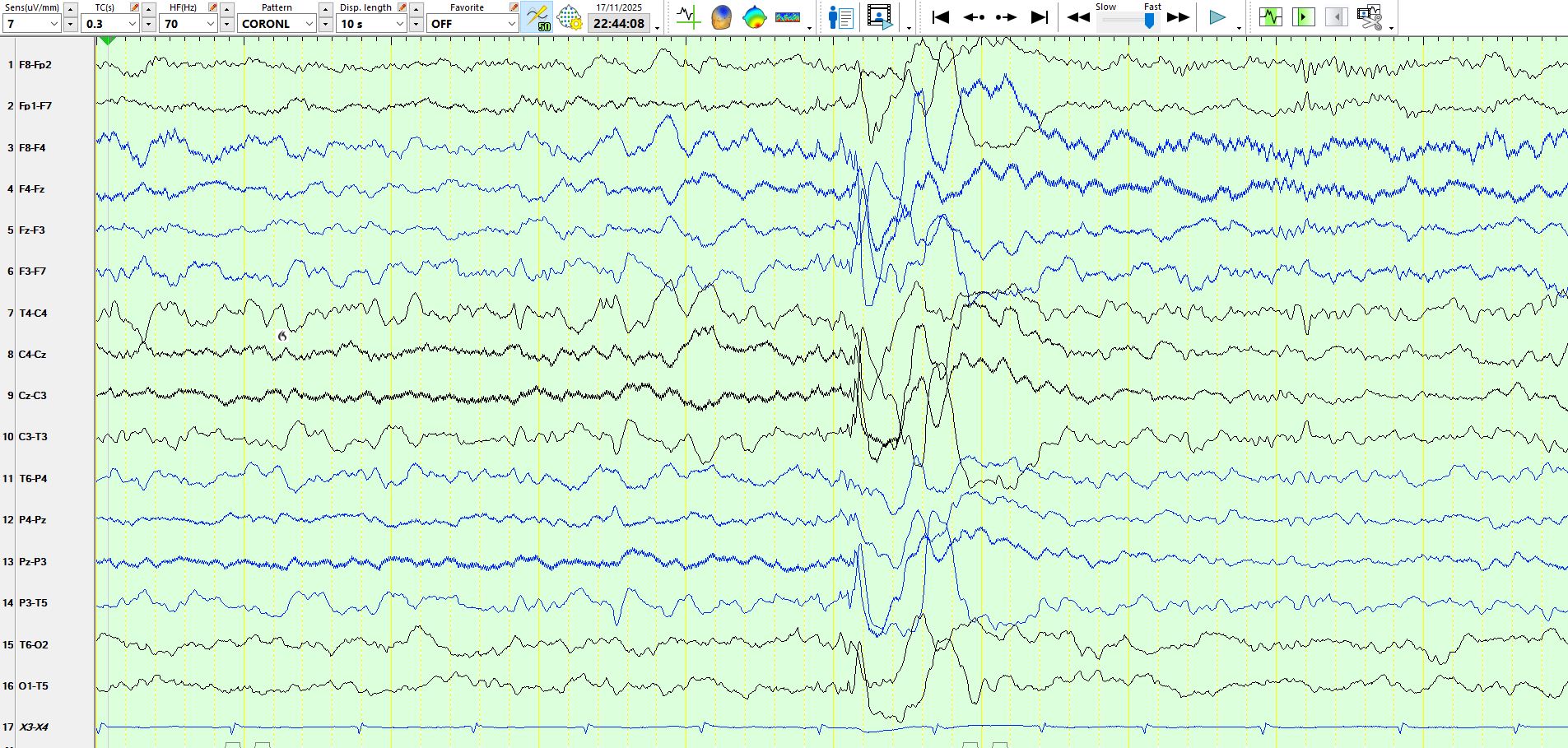
Referential montage:
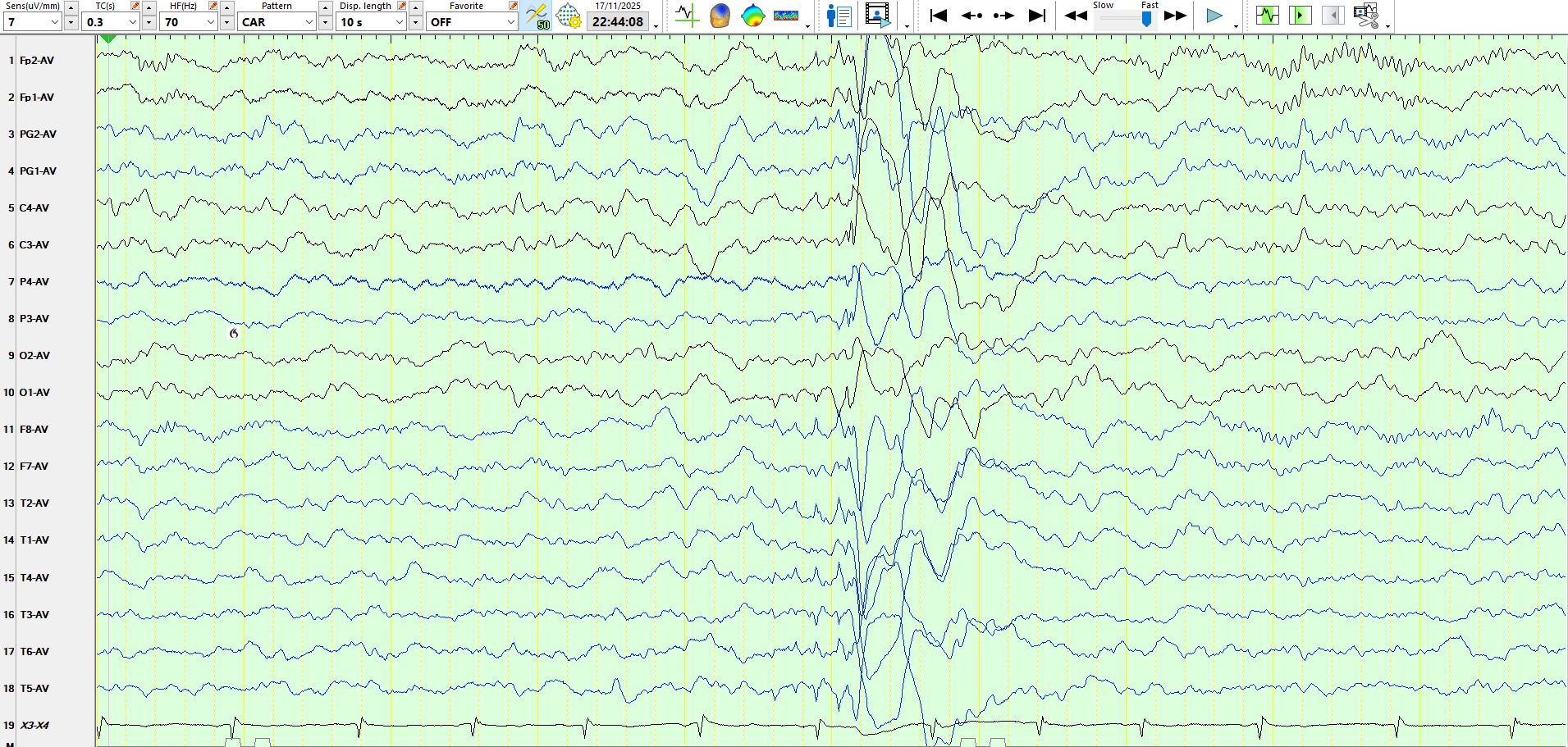
The patient had several suc...
A previous post refers.
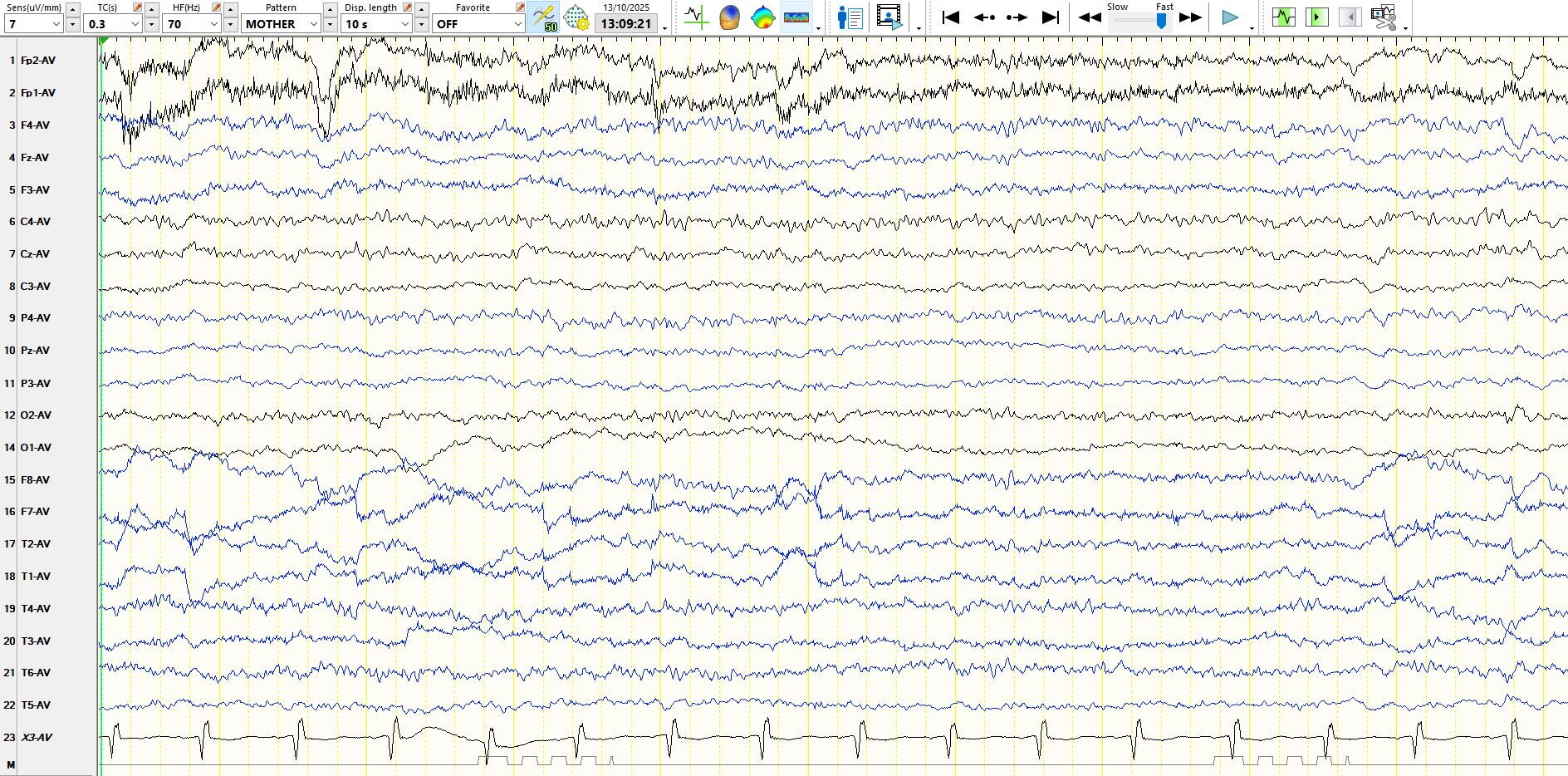
Asymmetries may be missed by looking at common average montages
This is a more striking example:
The above page, represented on bipolar montage:
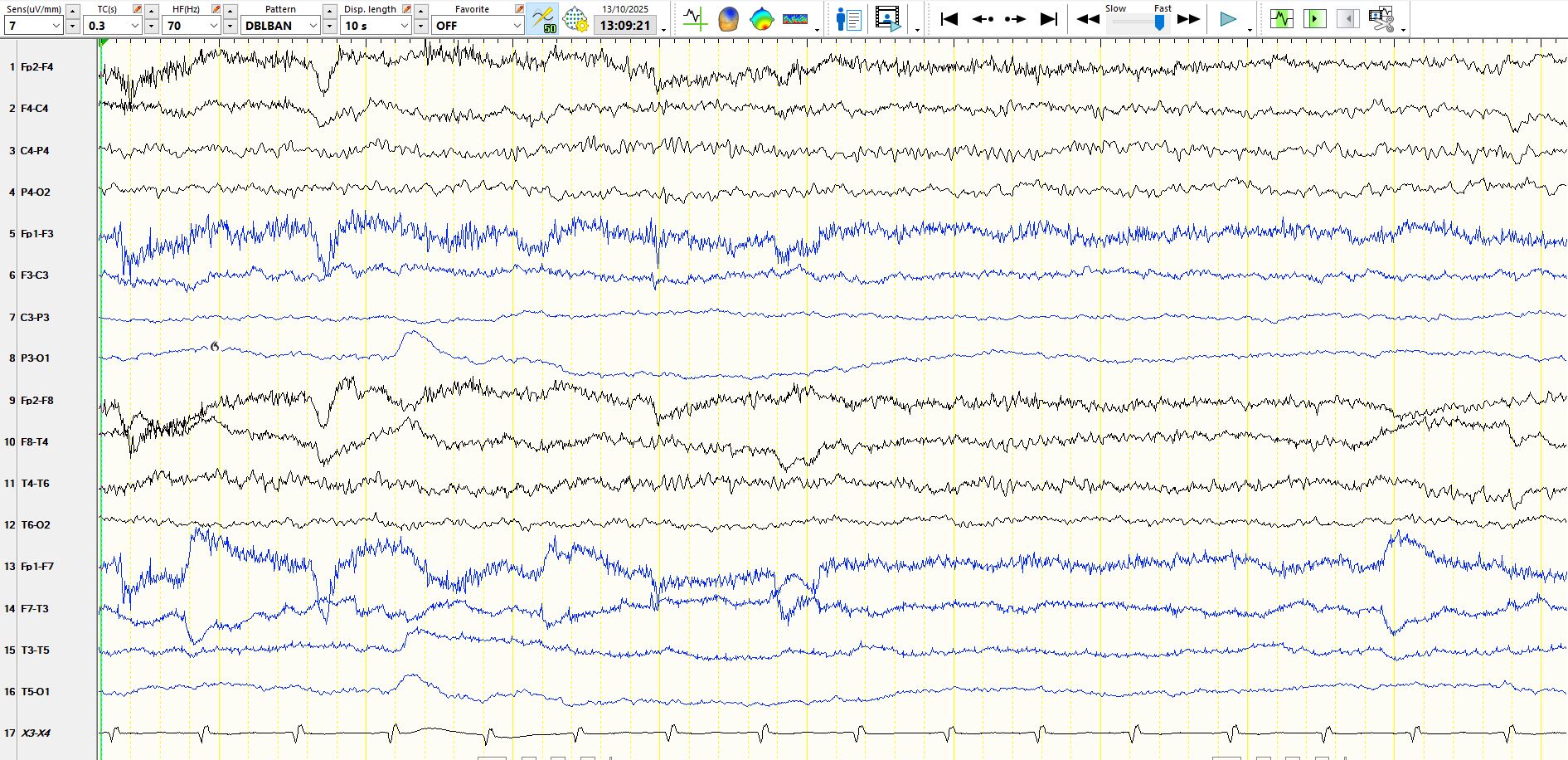
While ther...
Various features define vertex waves. Since spikes may only appear in sleep, distinguishing these from spikes at the vertex requires considerable care. Their morphologies may be indistinguishable. Sim...
I have previously referred to some of the limitations of the common average montage. The following pages highlight this issue. It is far easier to see the differences between the 2 hemispheres on the ...
This is a teenager who has developed multiple, nightly "jerks" in sleep, keeping her mother and the referring paediatric neurologist awake at night!
The EEG correlate of this video:
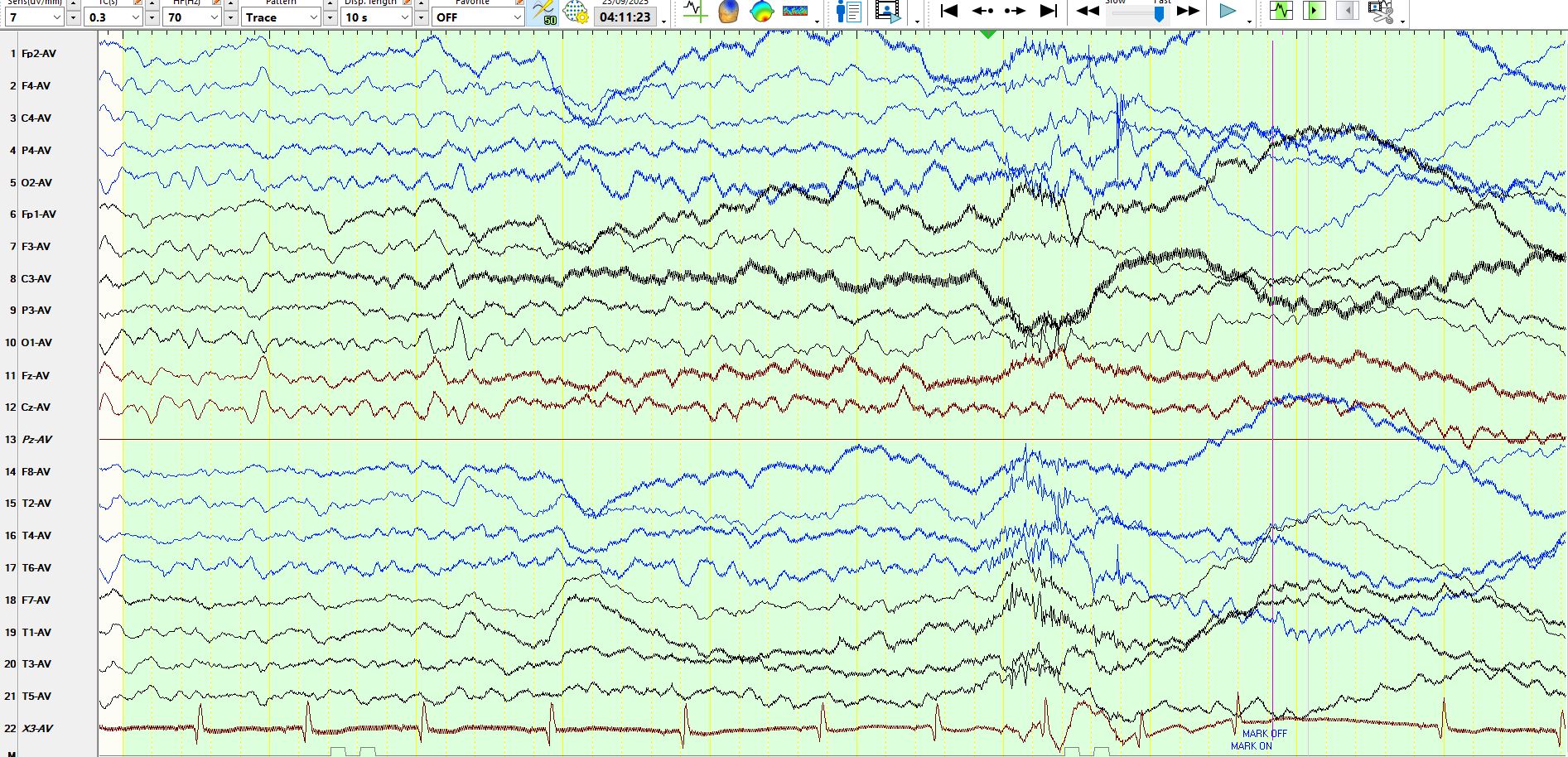
This ...
The mother has videos of these myoclonic jerks, which have no remarkable features. They occur while the infant is engaged in activities such as eating or sitting quietly, but not in sleep.
The fo...
Spend some time looking at the first page and try and answer the question; the wave of interest has been arrowed. Which of the following are correct? The wave represents:
1. An asymmetric F-wave
2. ...
