
Approximately 8y old
Sep 06, 2025Have a look at the following series of pages, some of which are sequential epochs:
The first three are consecutive pages, recorded at 10 uV / mm:
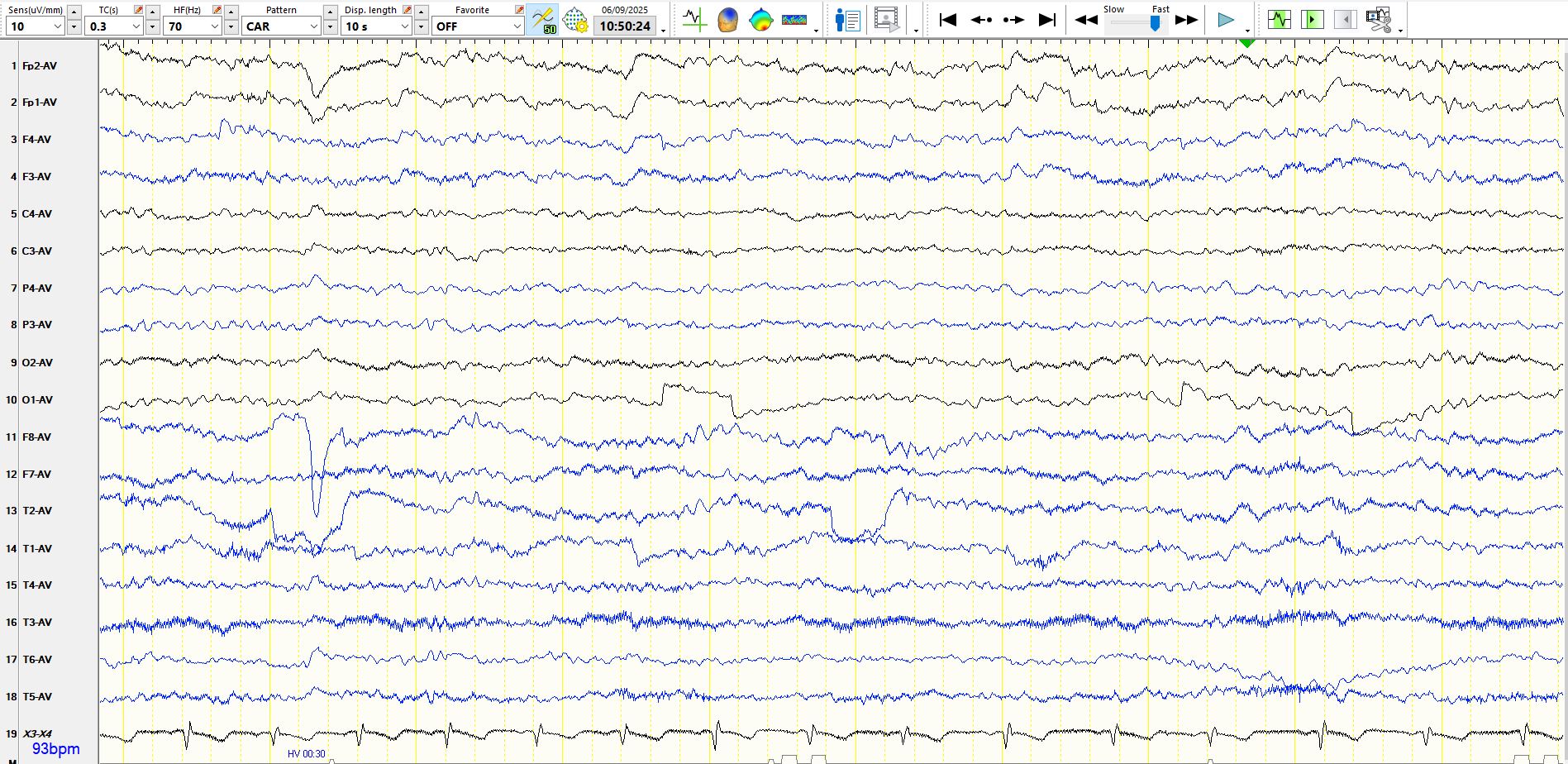
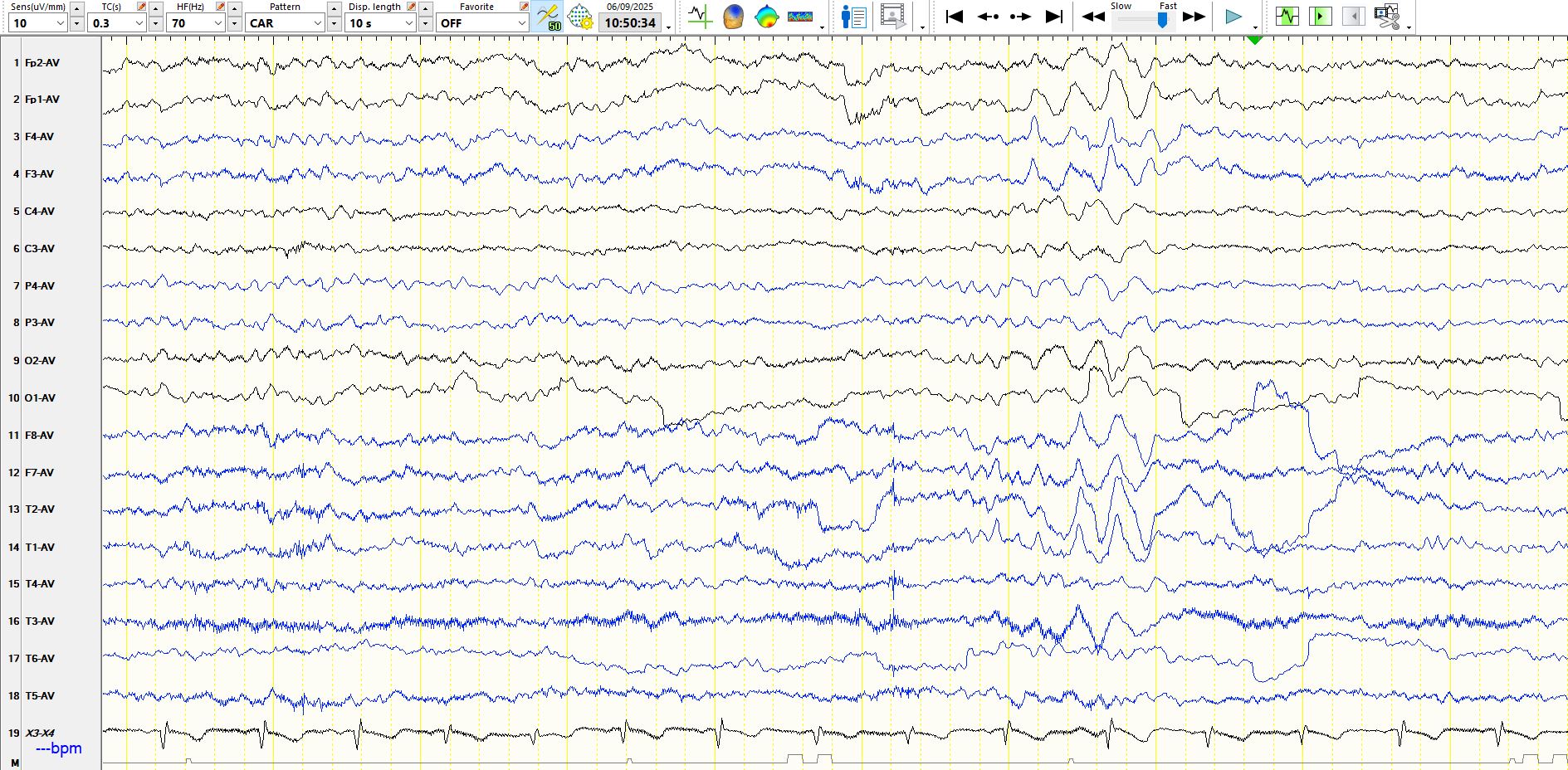
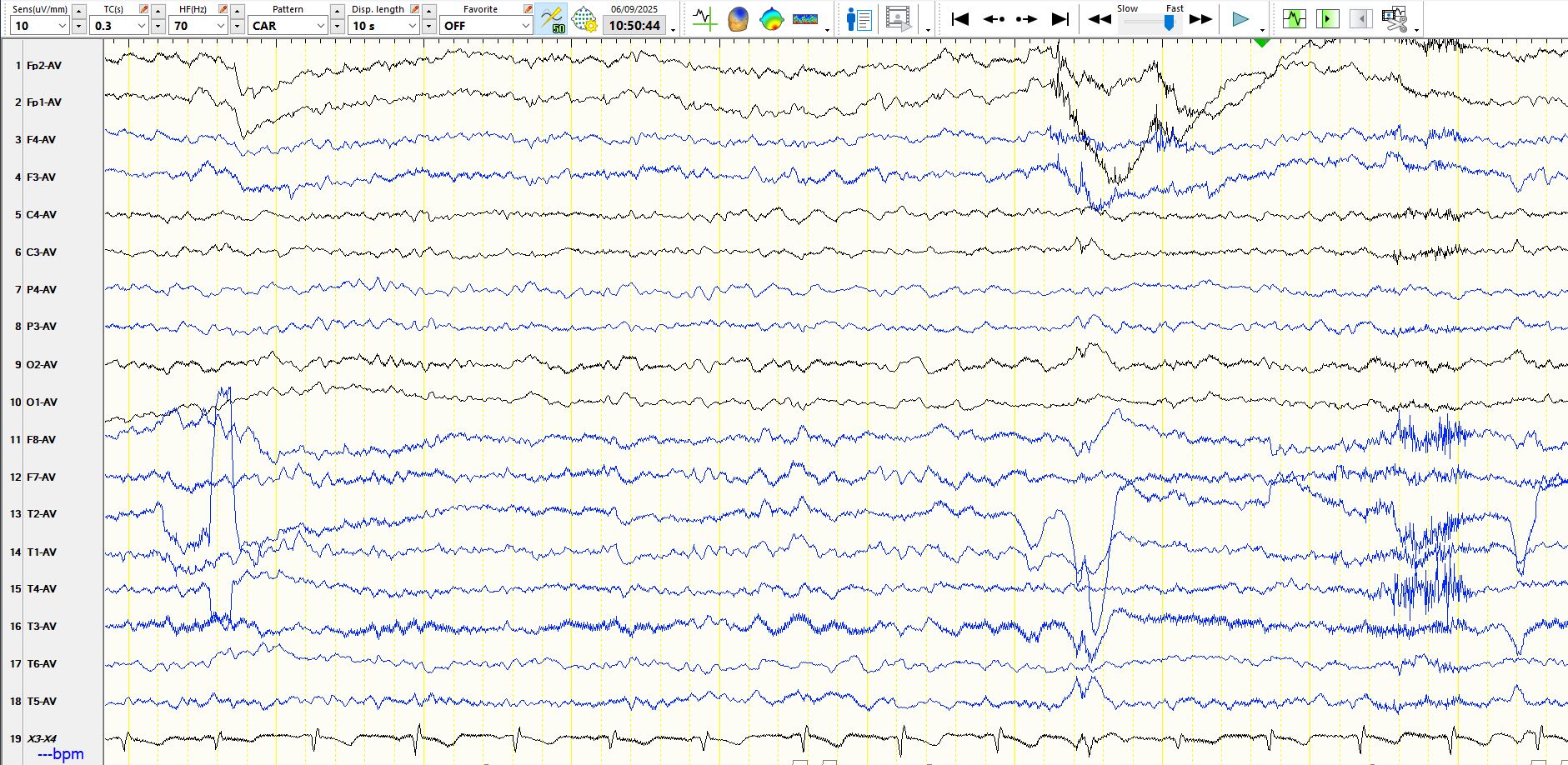
This is a short while later:
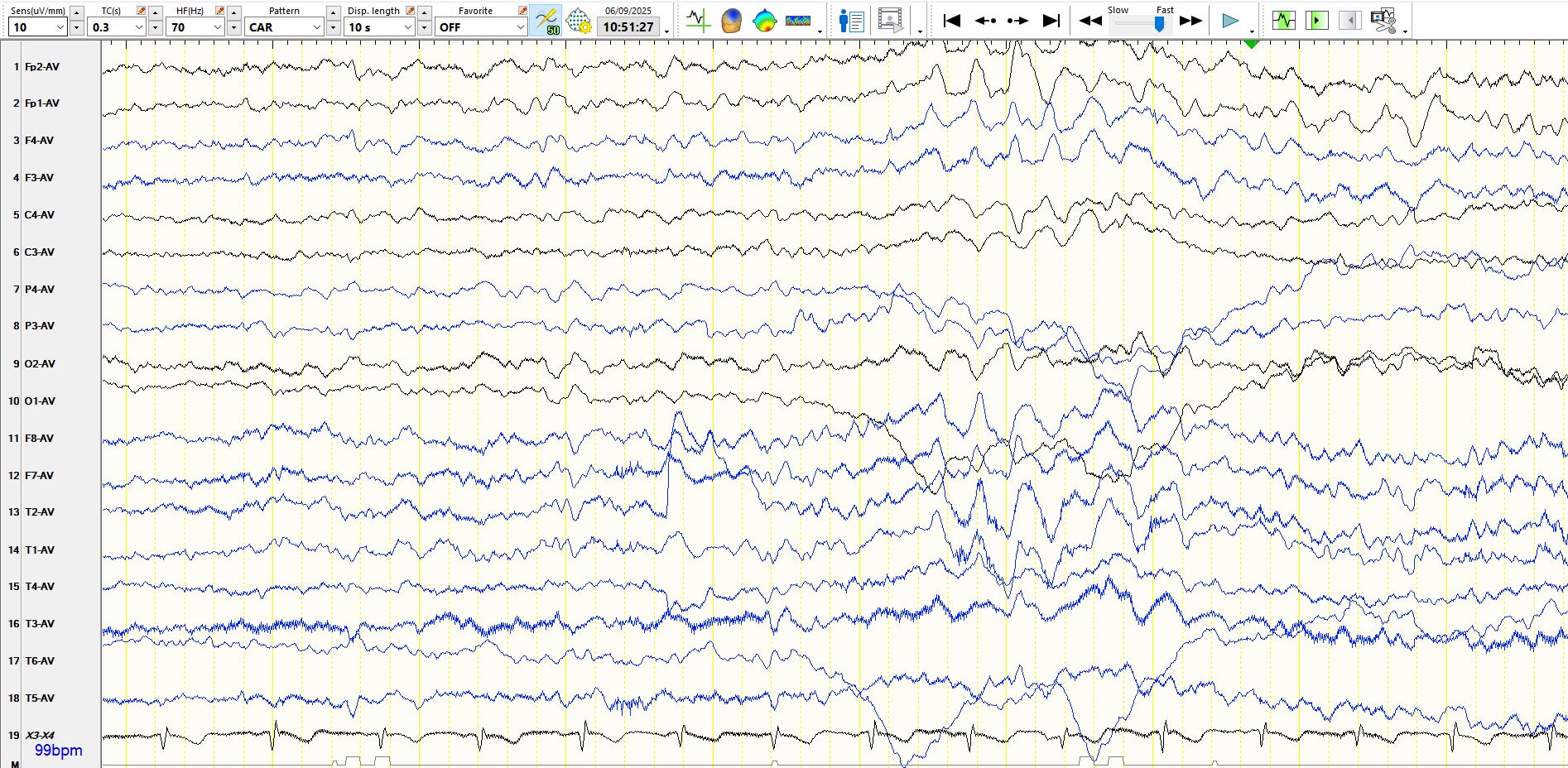
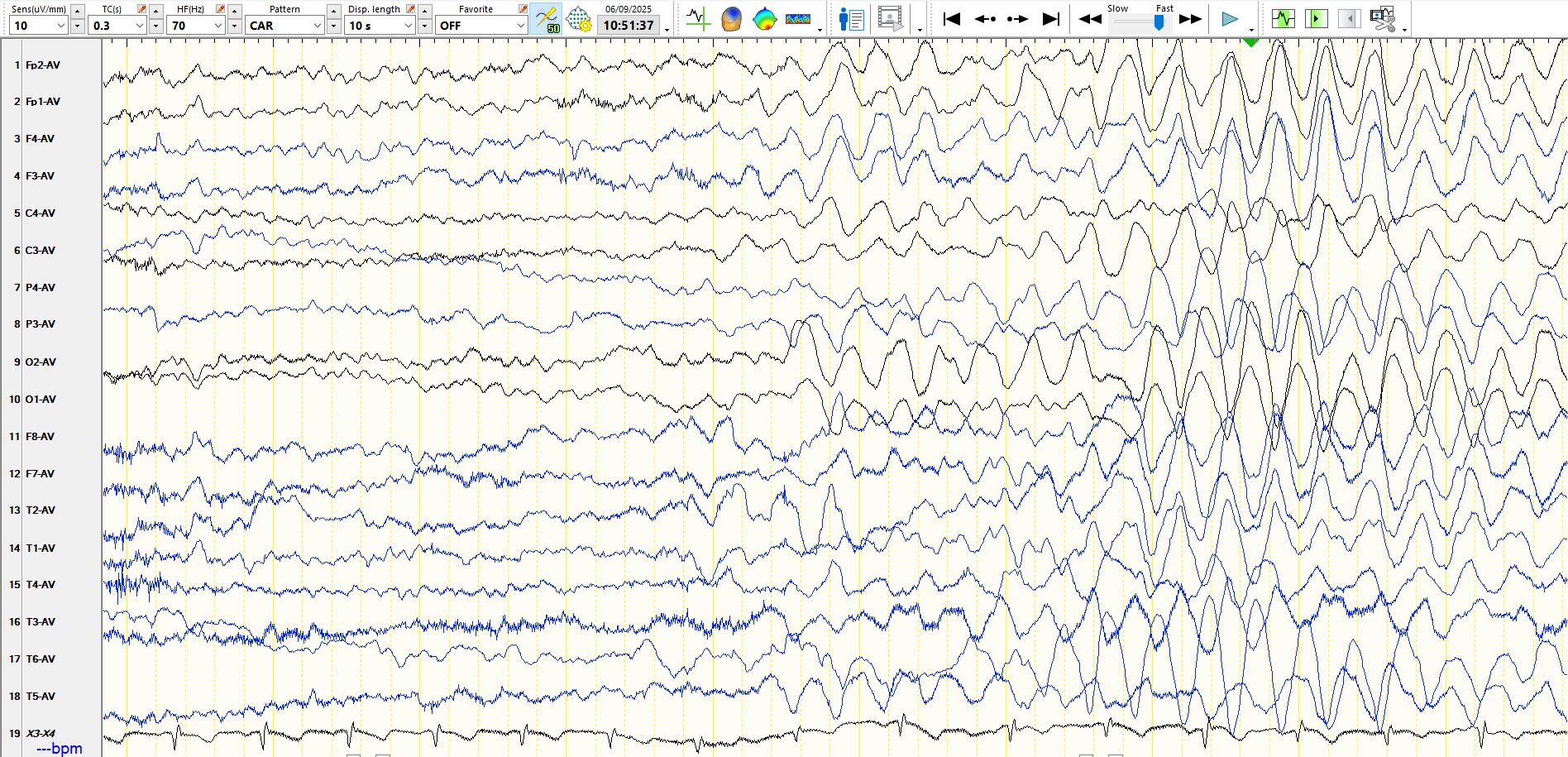
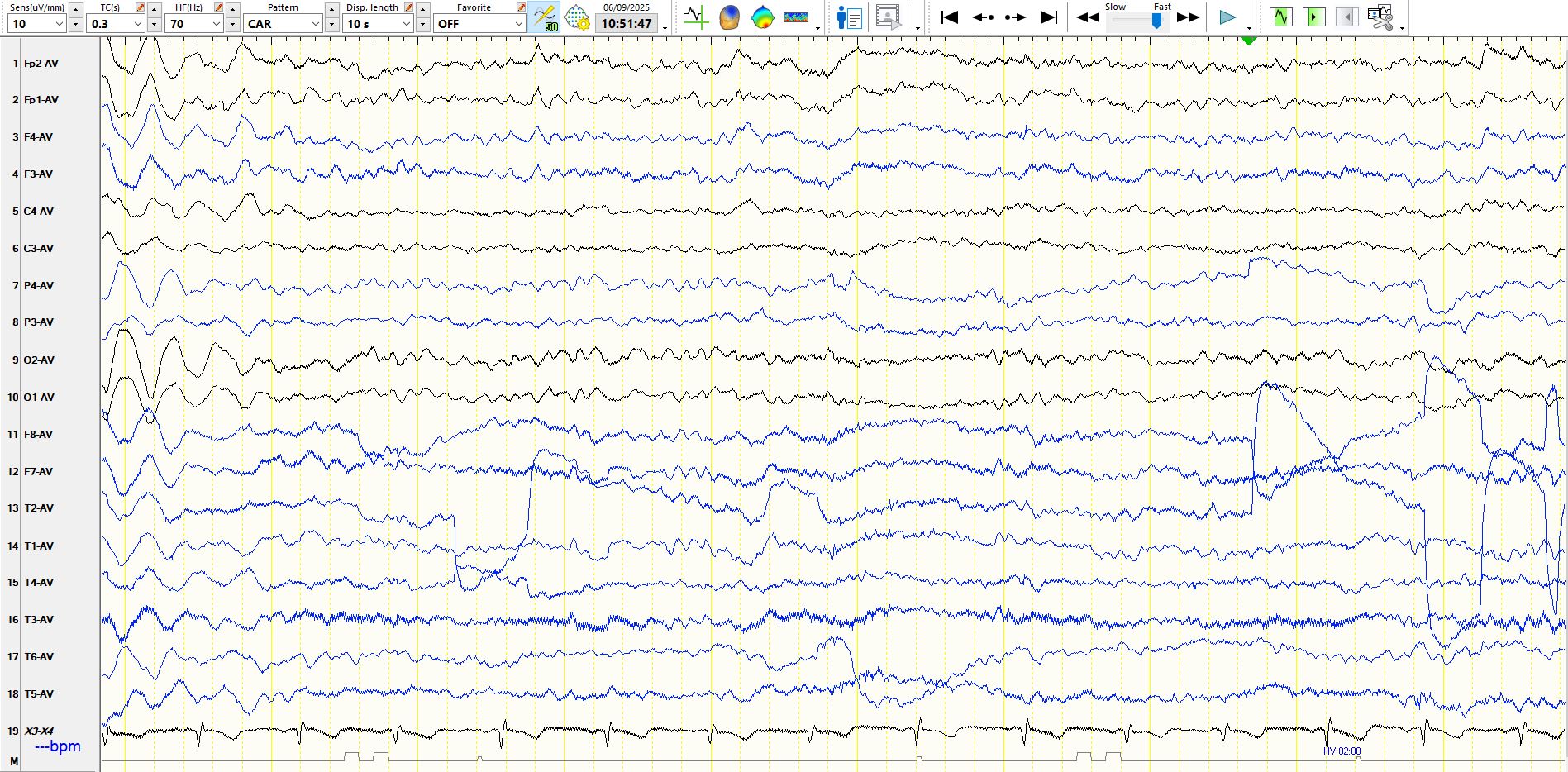
As you may have noticed, the above pages were recorded while the patient was hyperventilating. It is common to see intermittent bursts of delta waves and long runs of rhythmic delta waves during hyperventilation. If they are bilaterally synchronous and generalised, as they are above, they represent a normal phenomenon. The mechanism(s) for their appearance had been the subject of scientific hypotheses for longer than I have been on planet, but the dominant view over the past few decades has been that this relates to hypocarbia and cerebral vasoconstriction, with resultant cerebral hypoxia. Cerebral alkalosis may also have a role. The rhythmic slowing on EEG is sometimes associated with alterations in awareness and symptomatology, including automatisms. that resemble epileptic seizures, but the occurrence of these should not lead to the EEG phenomenon being reported as absence seizures. Hence, if the technologist tells you that the patient was unresponsive or unaware, don't fall into the trap of calling these absence seizures; doing so likely will result in unnecessary and potentially harmful treatment. It is worth saying that the slowing that one sees during hyperventilation resembles that seen on EEG when patients have cardiac arrest or arrhythmias or tachyarrhythmias.
Hyperventilation-induced EEG slowing with altered awareness: Non-epileptic, epileptic or both? - PMC

