
Spike-and-wave in sleep.
Nov 24, 2025Female patient, 11 years old. What is the nature of the following discharge? A paediatric neurologist has referred the patient because of episodic events that may represent epileptic seizures.
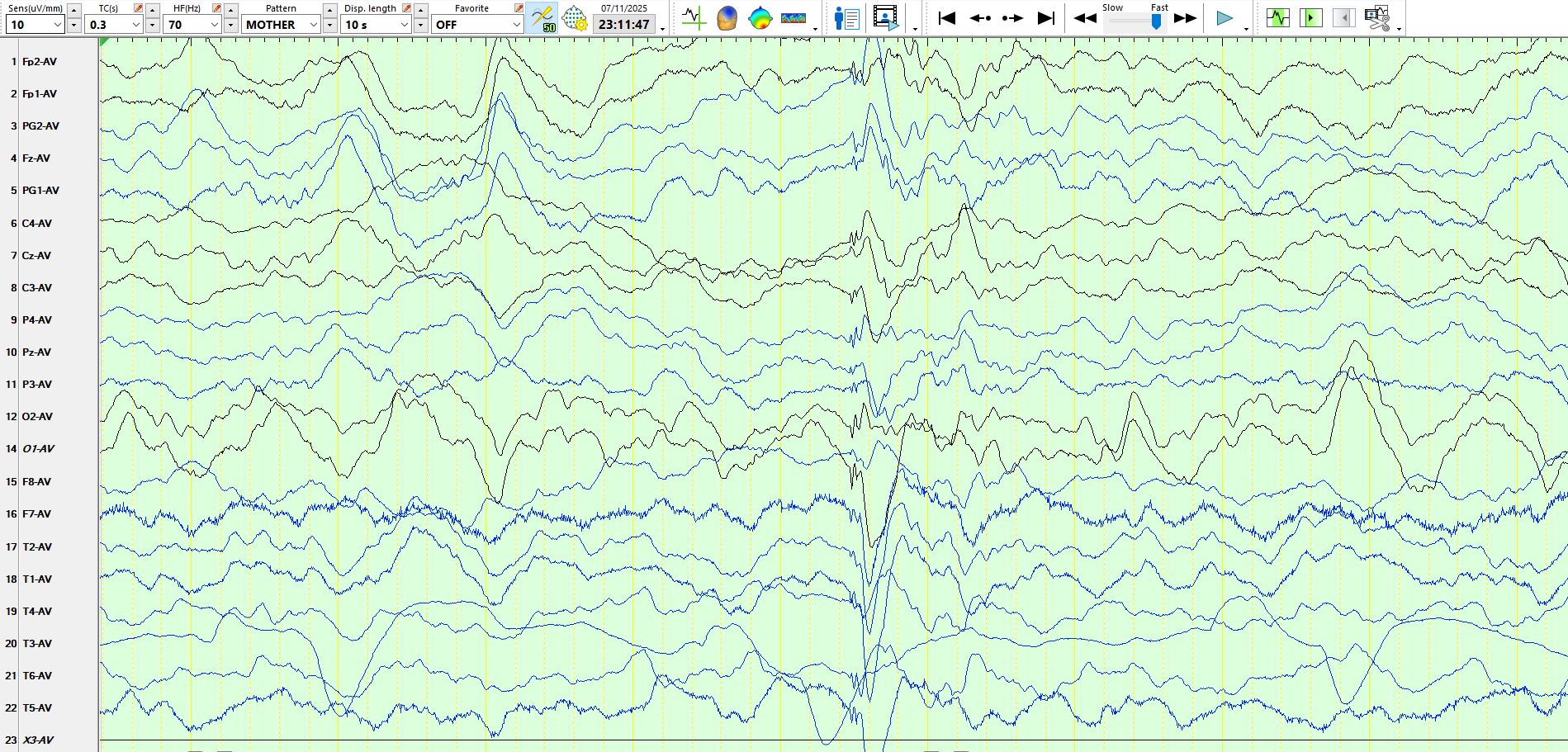
Referential montage:
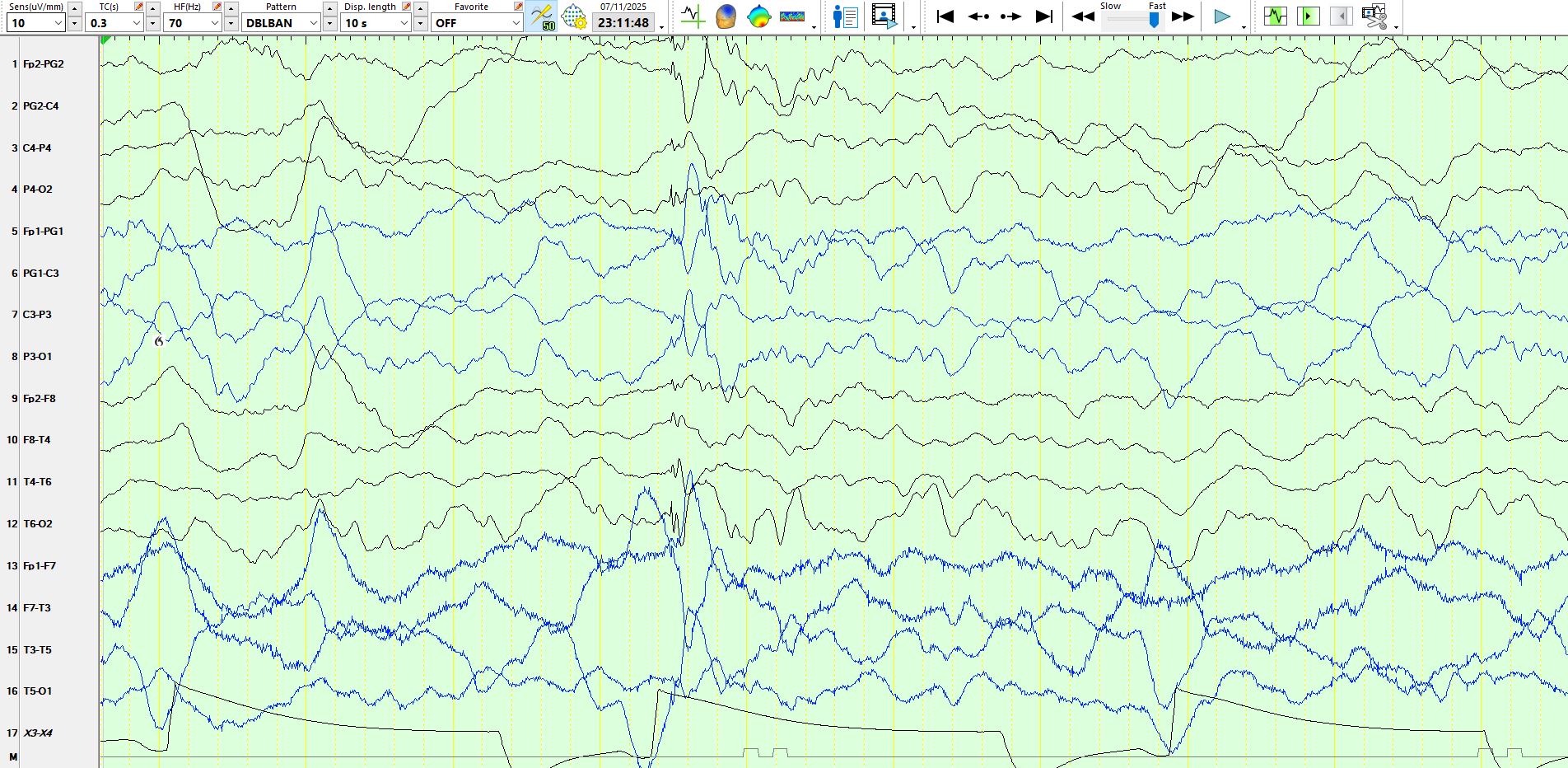
Bipolar montage (same page as above):
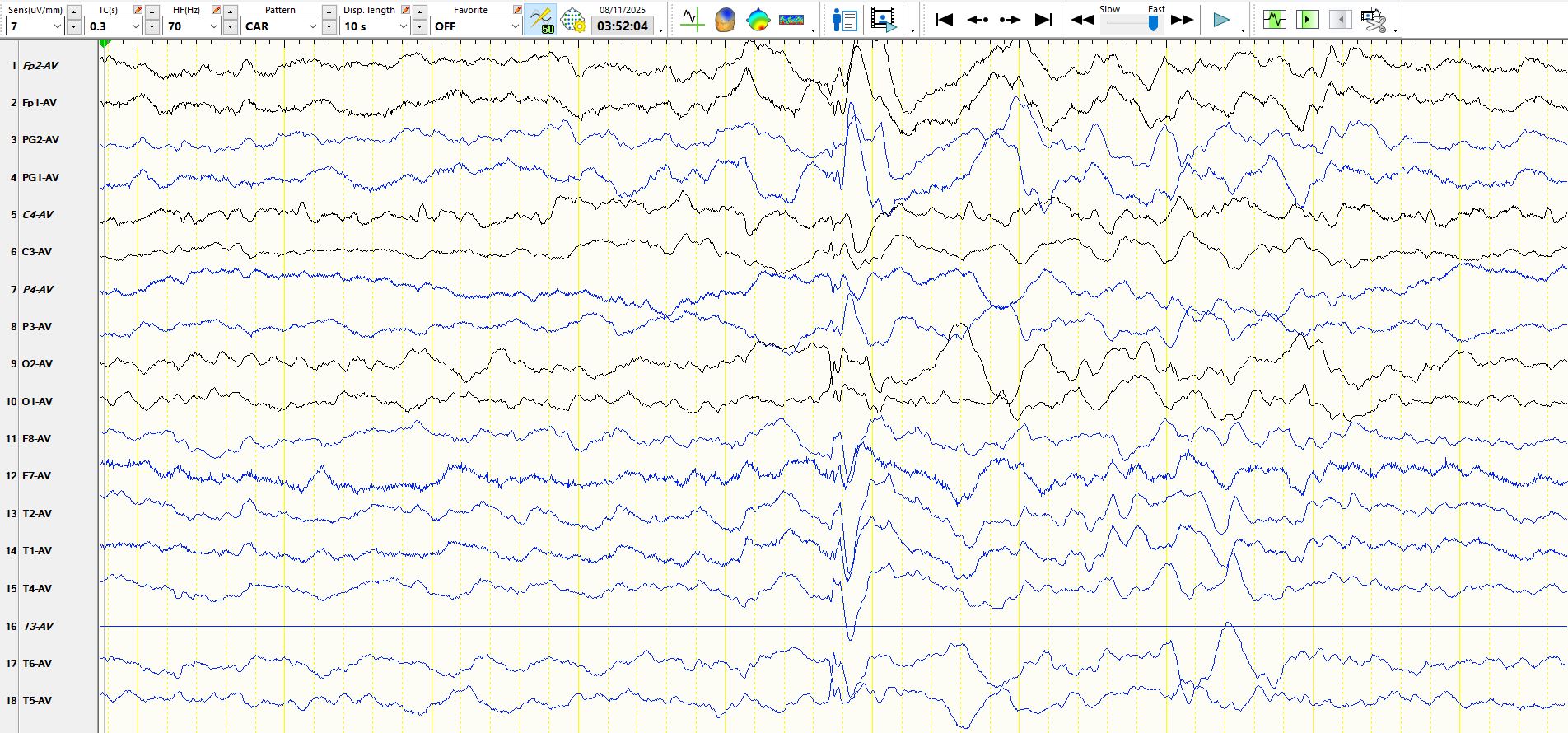
Different example, referential montage:
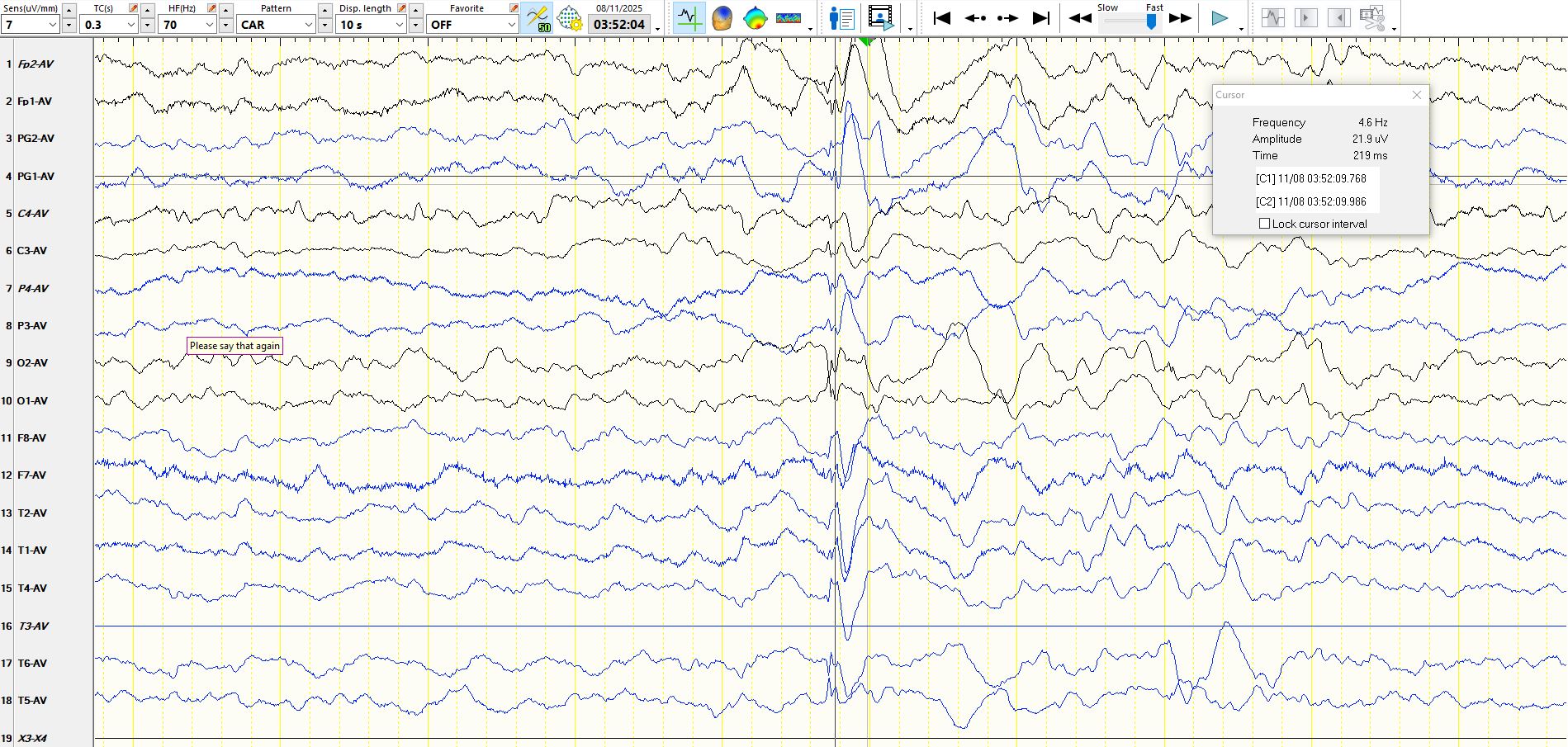
Same page as above, the frequency is approximately 5 Hz:
Example number 3, referential montage:
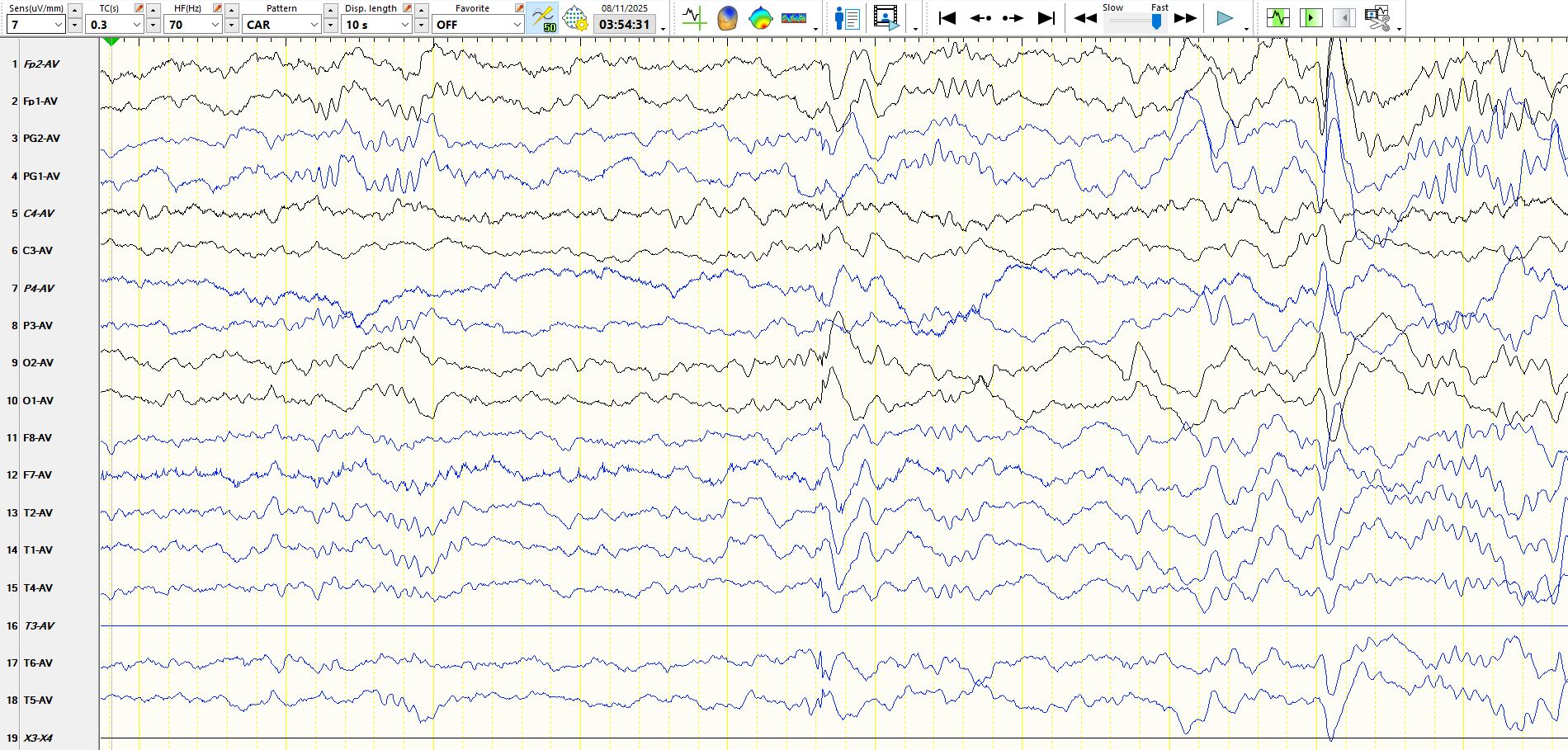
Example number 4:
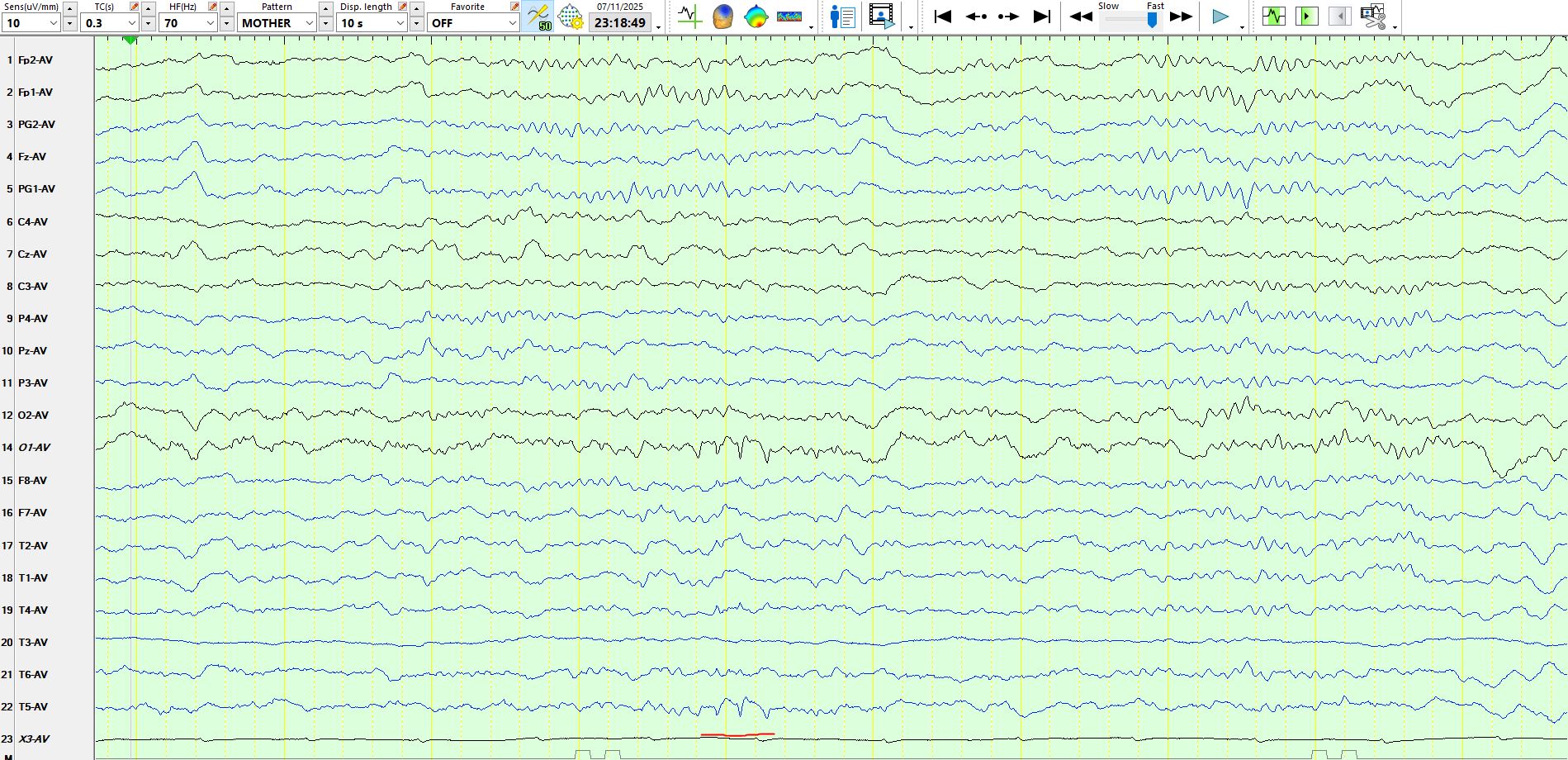
Same page as above, bipolar montage:
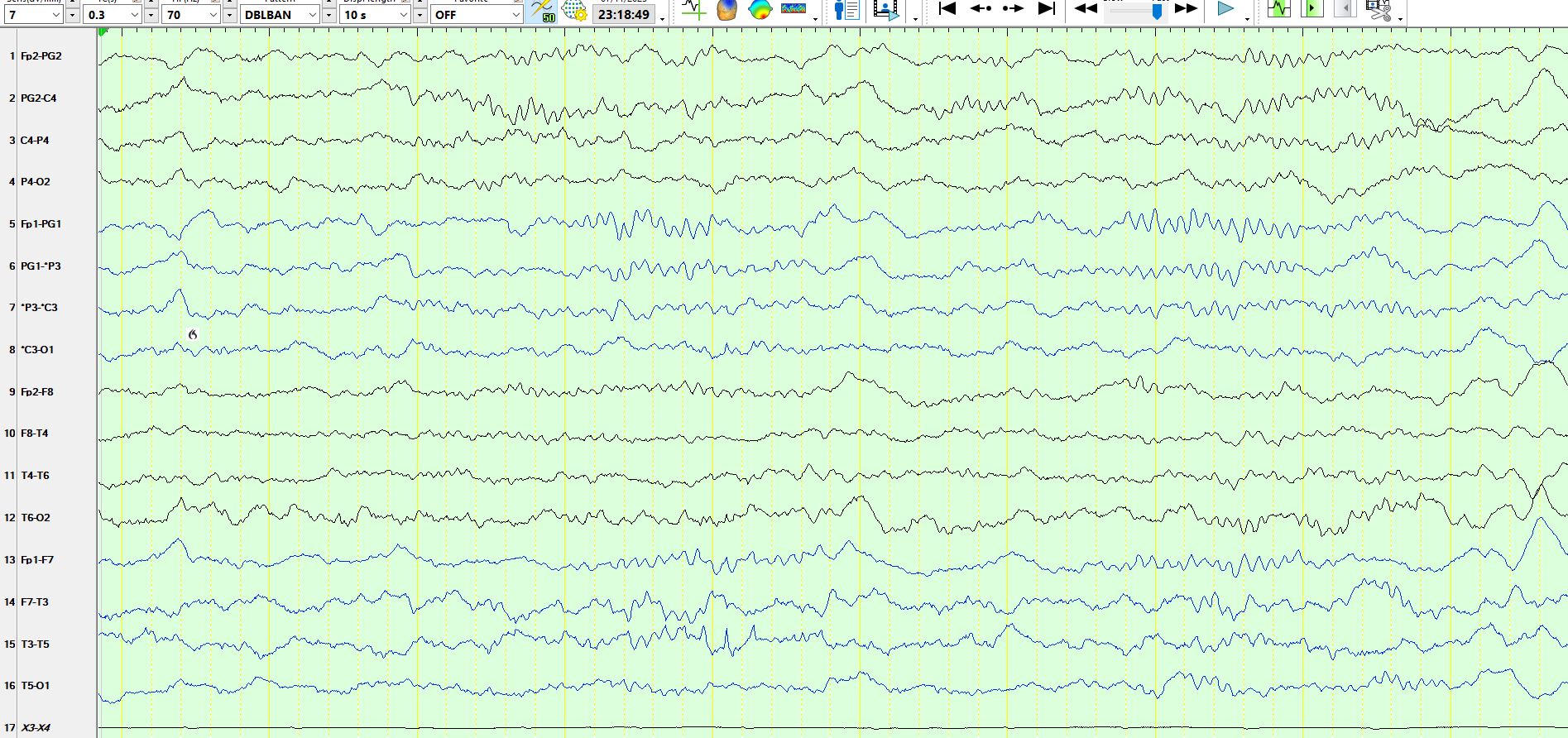
Same page as the above:
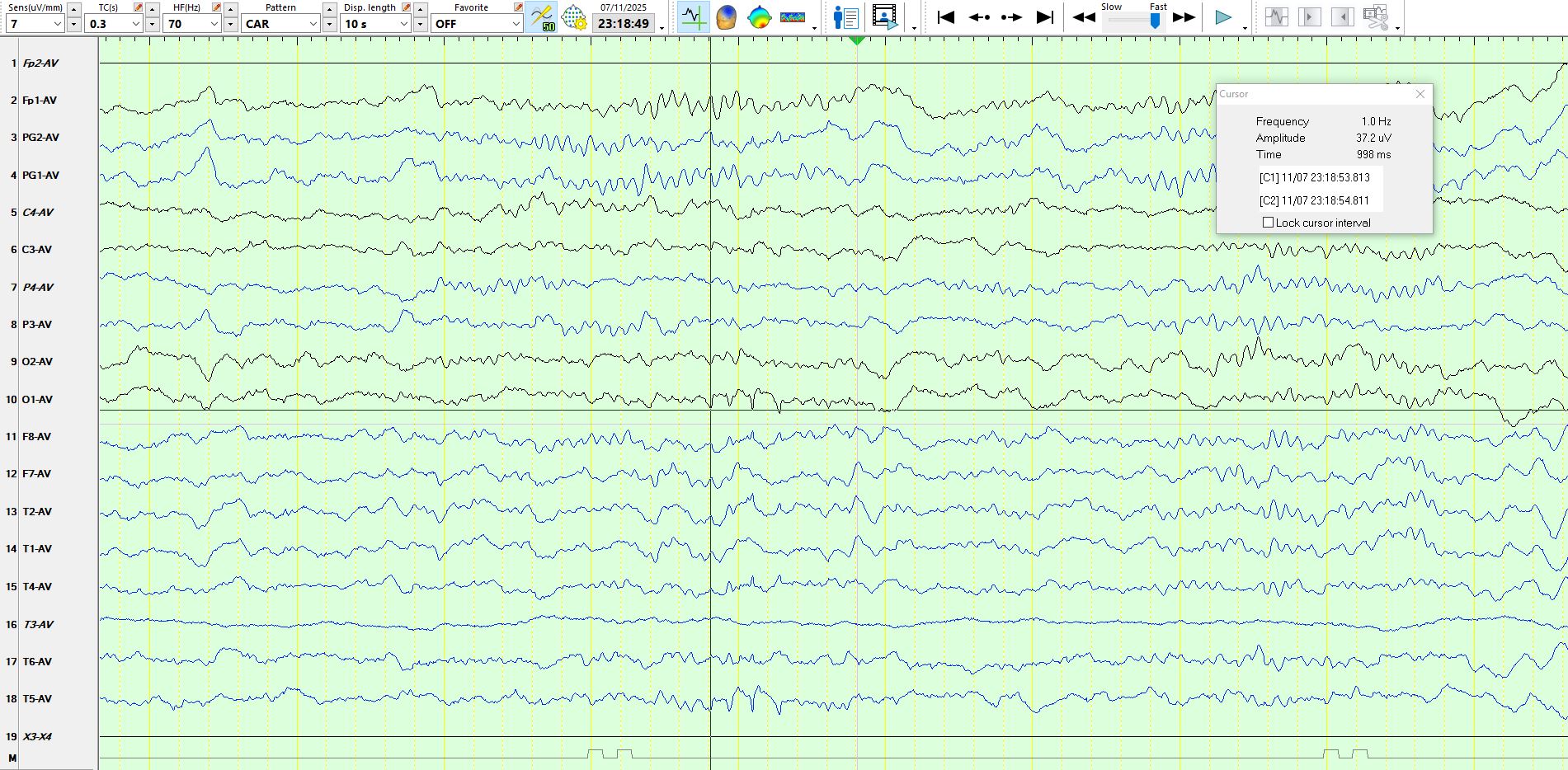
The discharge on the top and second pages is typical of the 6 Hz variant of 14- and 6 Hz positive bursts. The slow wave component of the discharges may be high in amplitude, especially on referential montages. The discharges typically appear in children, especially in the first half of the teenage years; slow waves are typically considerably higher in amplitude than the spikes. The last 2 pages above provide corroborative evidence for the above conclusions. While there were only 2 such examples during the entire night's recording, there are a few important features. First, the frequency is almost exactly 6 Hz. Second, discharges appear over the temporal-occipital regions. Third, the discharges are of opposite polarity over the left and right sides of the posterior hemispheres. Fourth, the discharges have an arciform appearance. Fifth, the discharges are electropositive over the left posterior temporal-occipital region at the same time as they are electro-negative over the right temporal region. Hence, they have features of 14- and 6-Hz positive bursts.
PS: My judgment about the nature of the clinical events is that they are unlikely to represent epileptic seizures. Hence, neither the history nor the EEG independently predicts the diagnosis of epilepsy. The combined predictive properties make epilepsy very unlikely.
PPS: The two pages demonstrating the same epoch on bipolar montage are shown because it was clear to me, while looking at the top page, that there was a transposition of C3 and P3. Correction of this on the second page elegantly shows the vertex wave on the left-hand side of the page.