
70+
Mar 23, 2026There have been 2 neurological events, approximately 2 years apart. These were virtually identical and both occurred while standing in the house. The patient had a sense of vertigo, as the world appeared to turn around her. After about 30s -4 minutes of "dizziness", she was amnestic, with no recollection of falling. She awoke lying outside the house, where her family had moved her. A family member witnessed her falling, shaking for approximately 2 minutes, with saliva at the mouth, and with a subsequent confusional state.
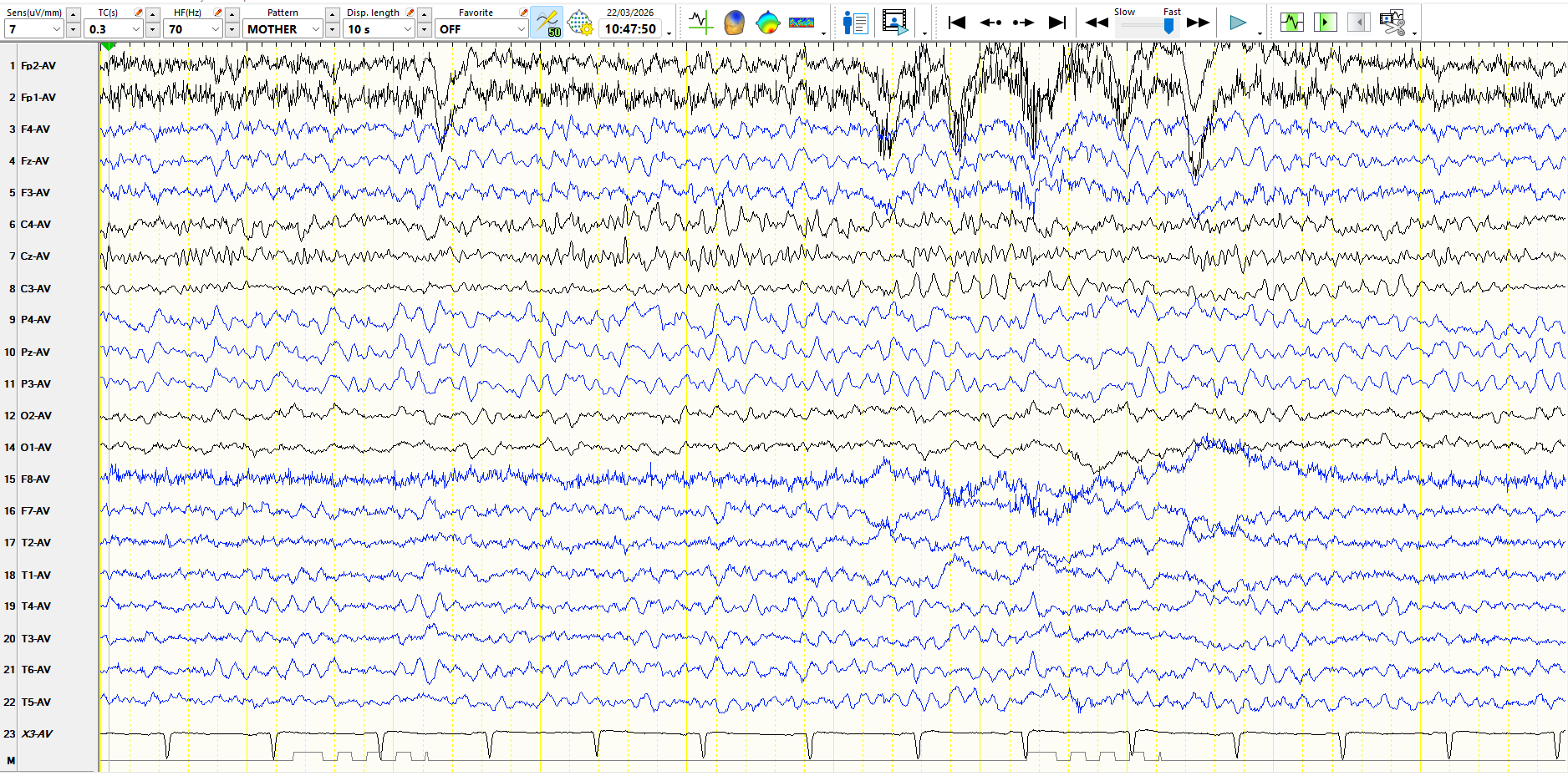
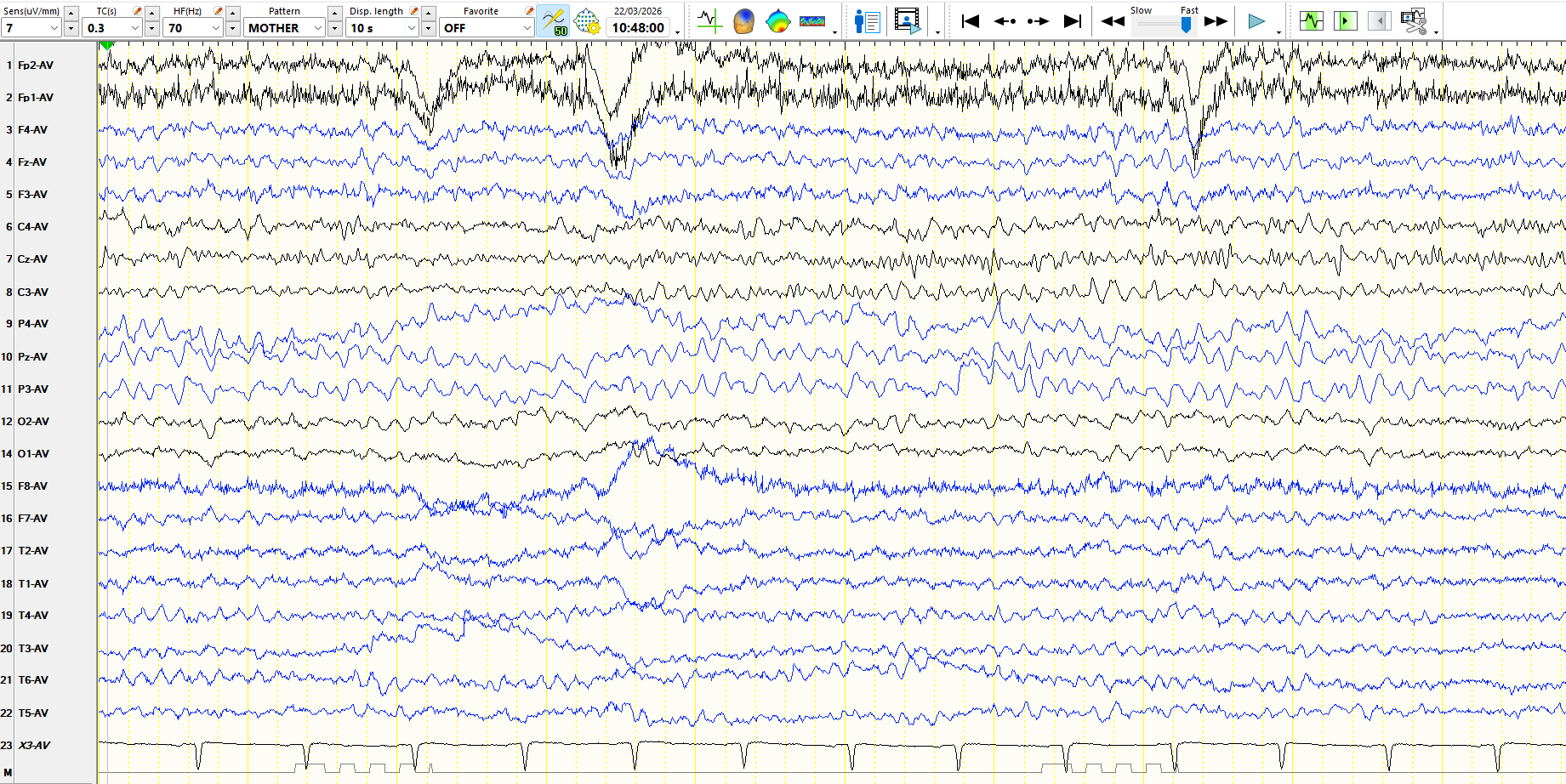
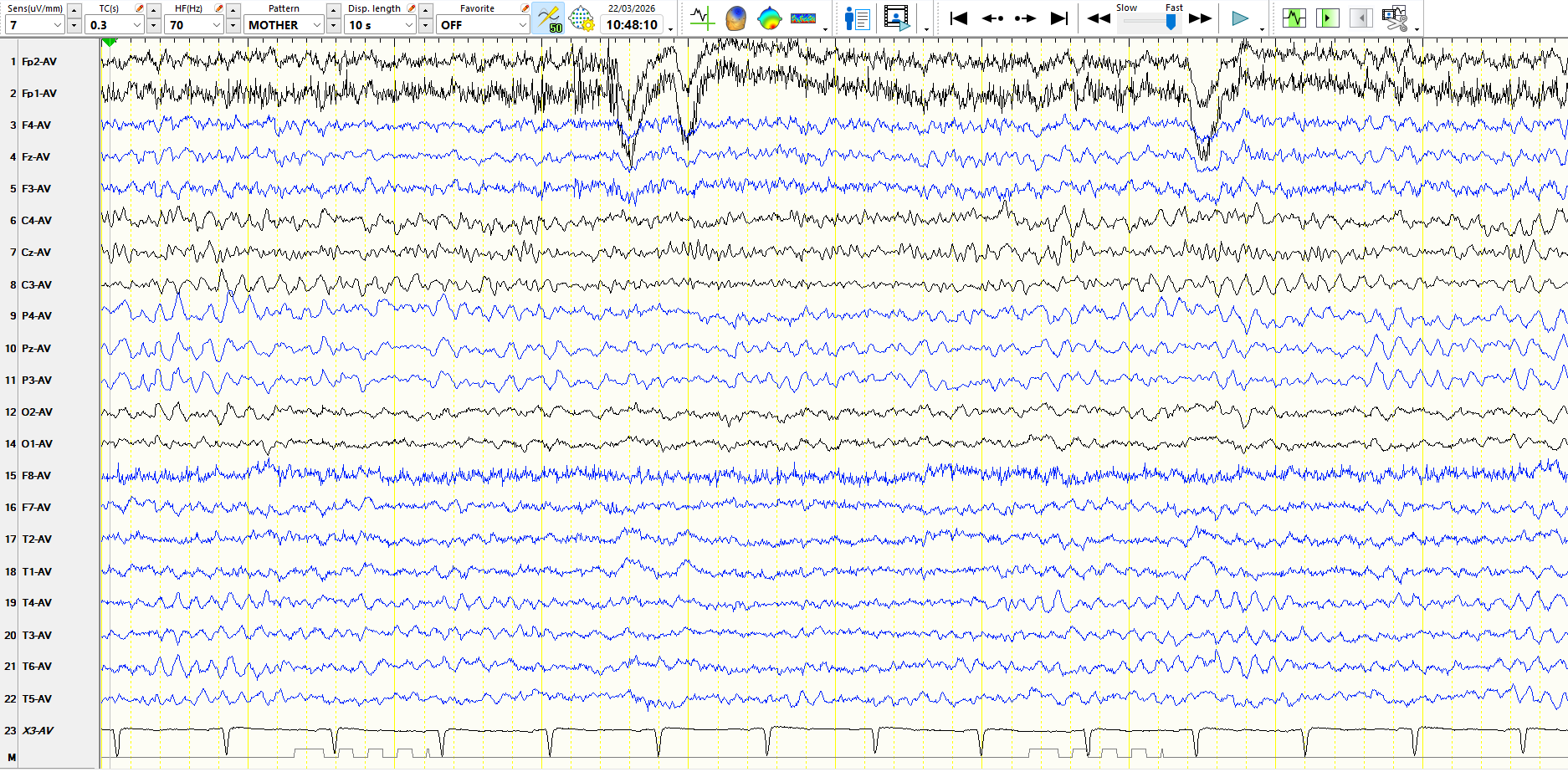
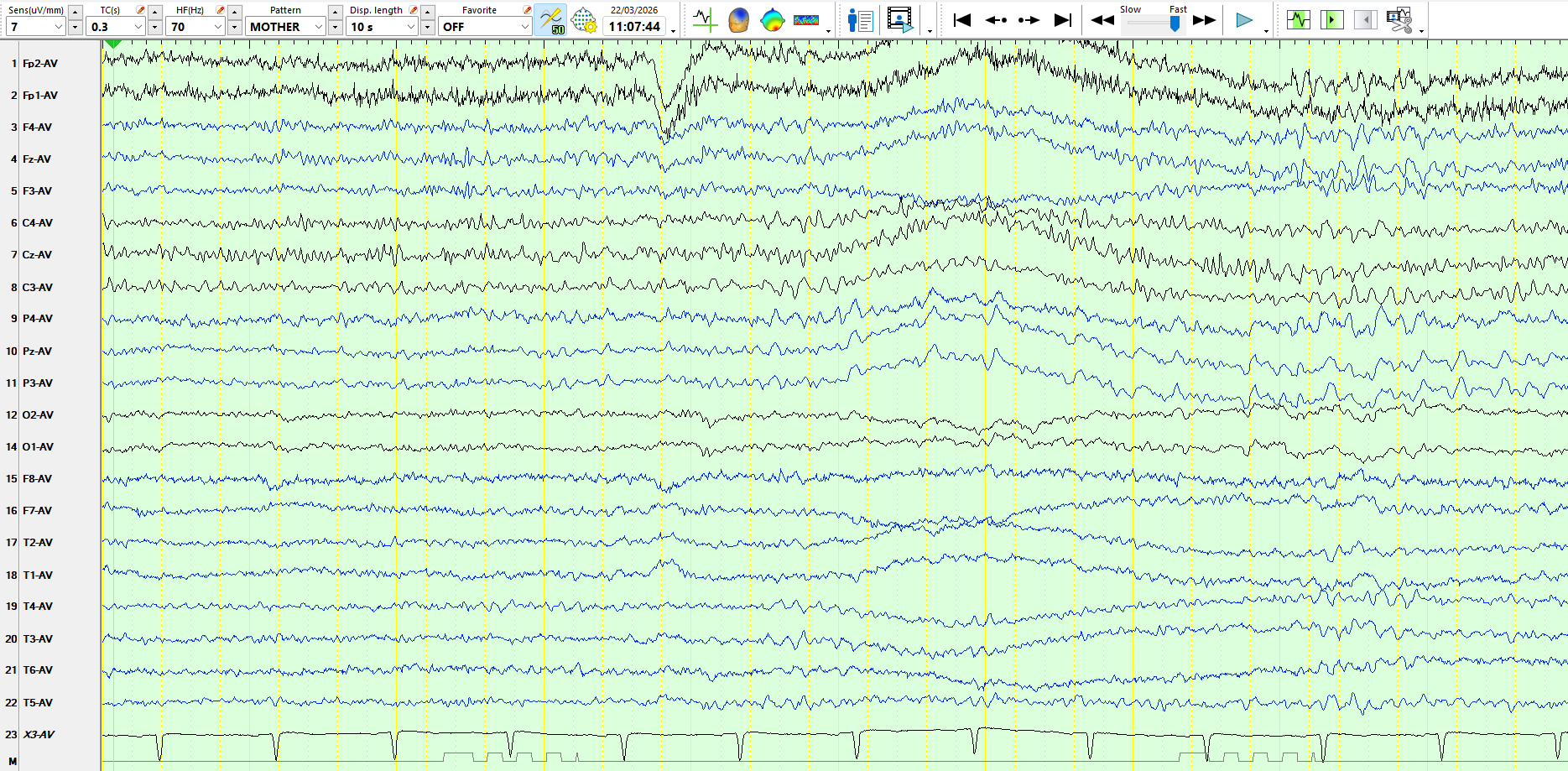
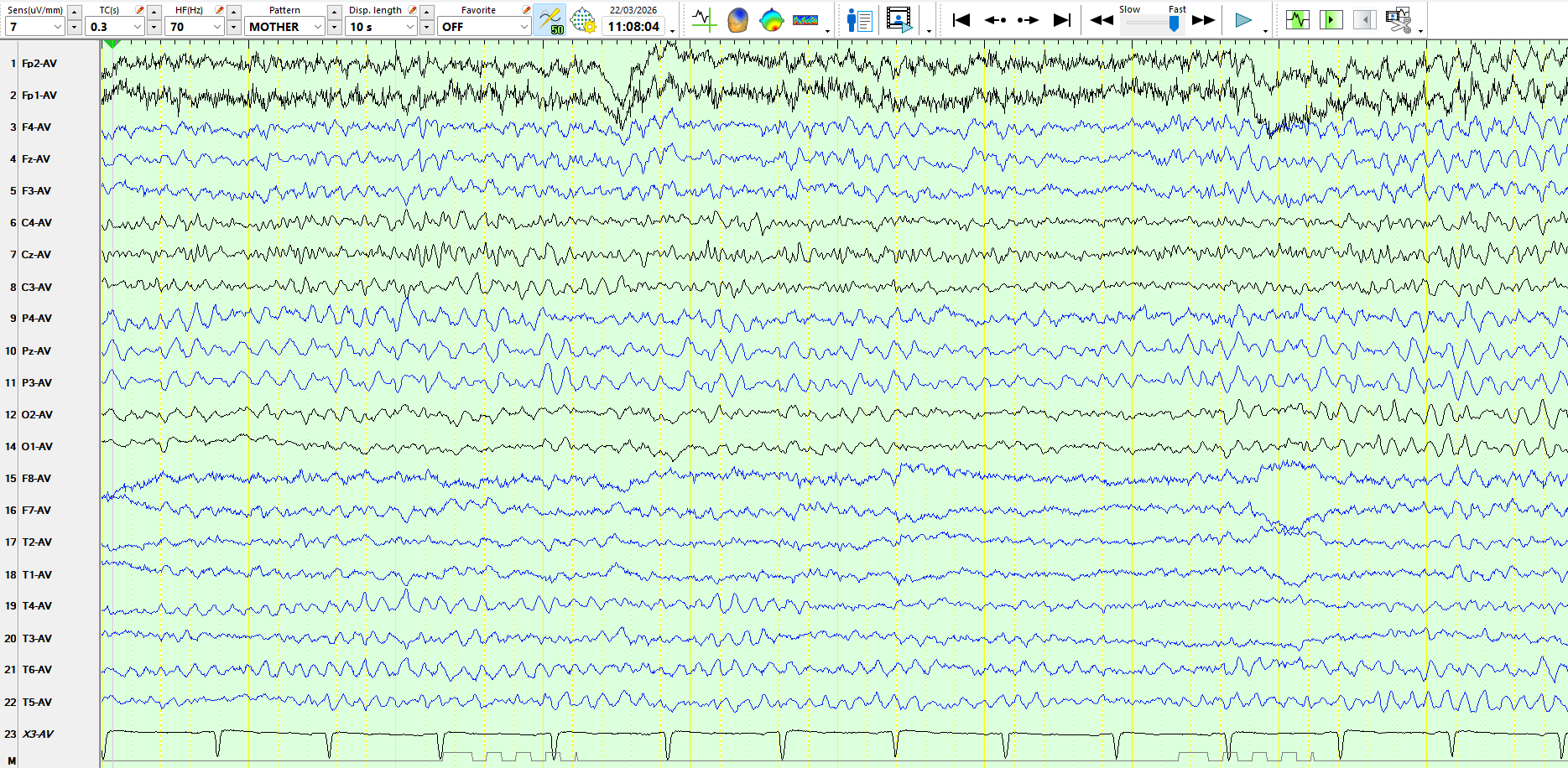
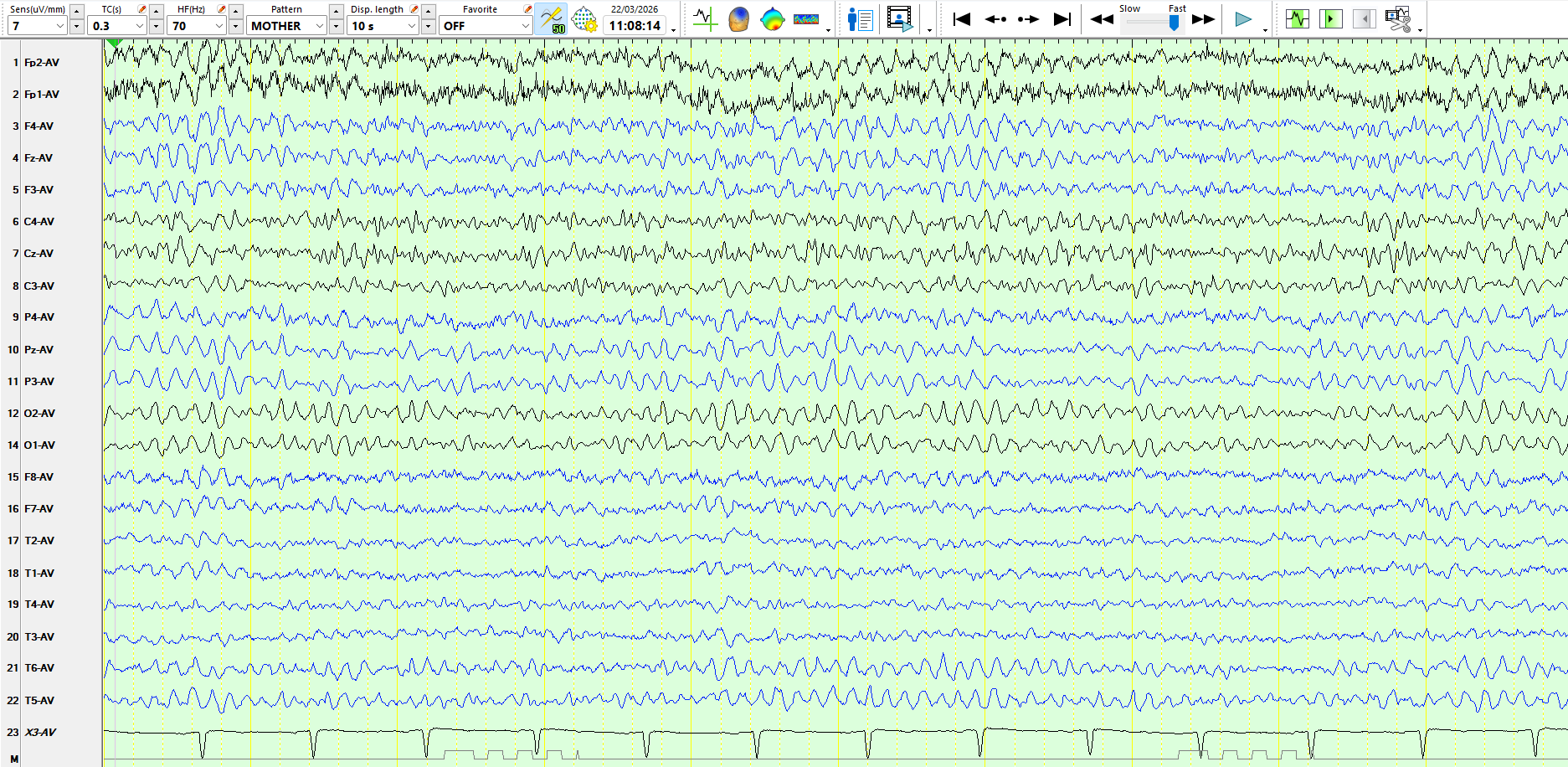
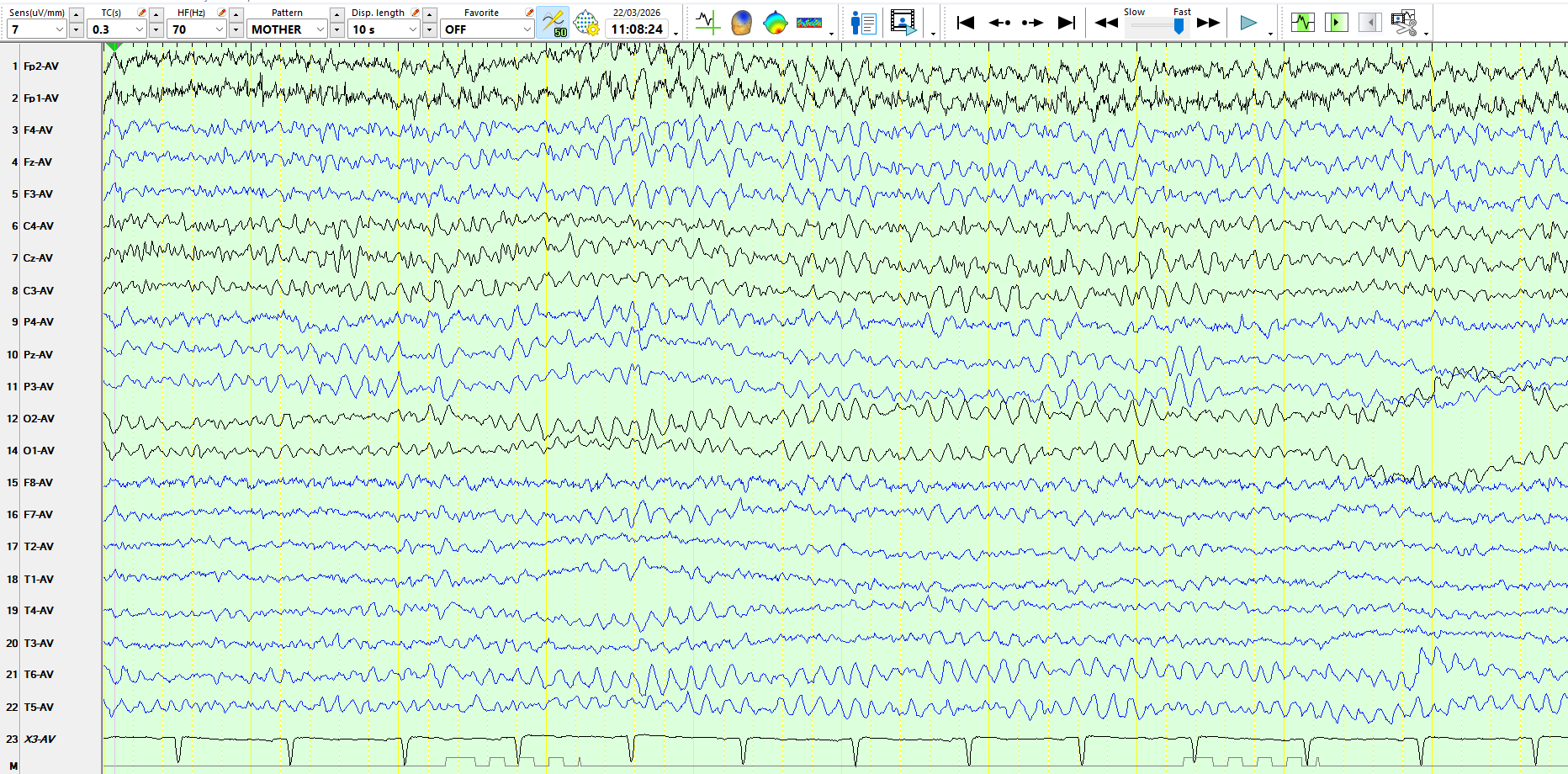
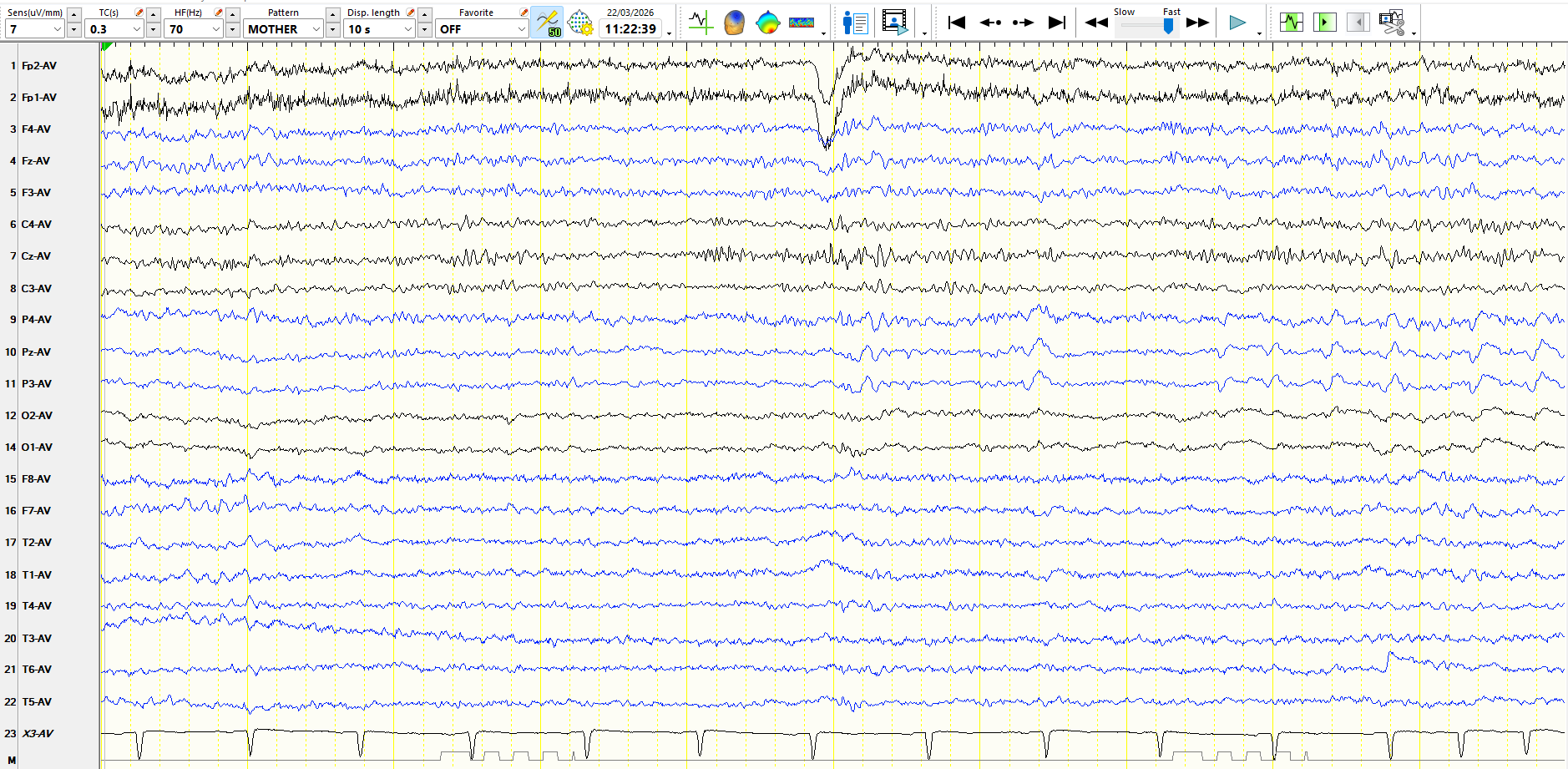
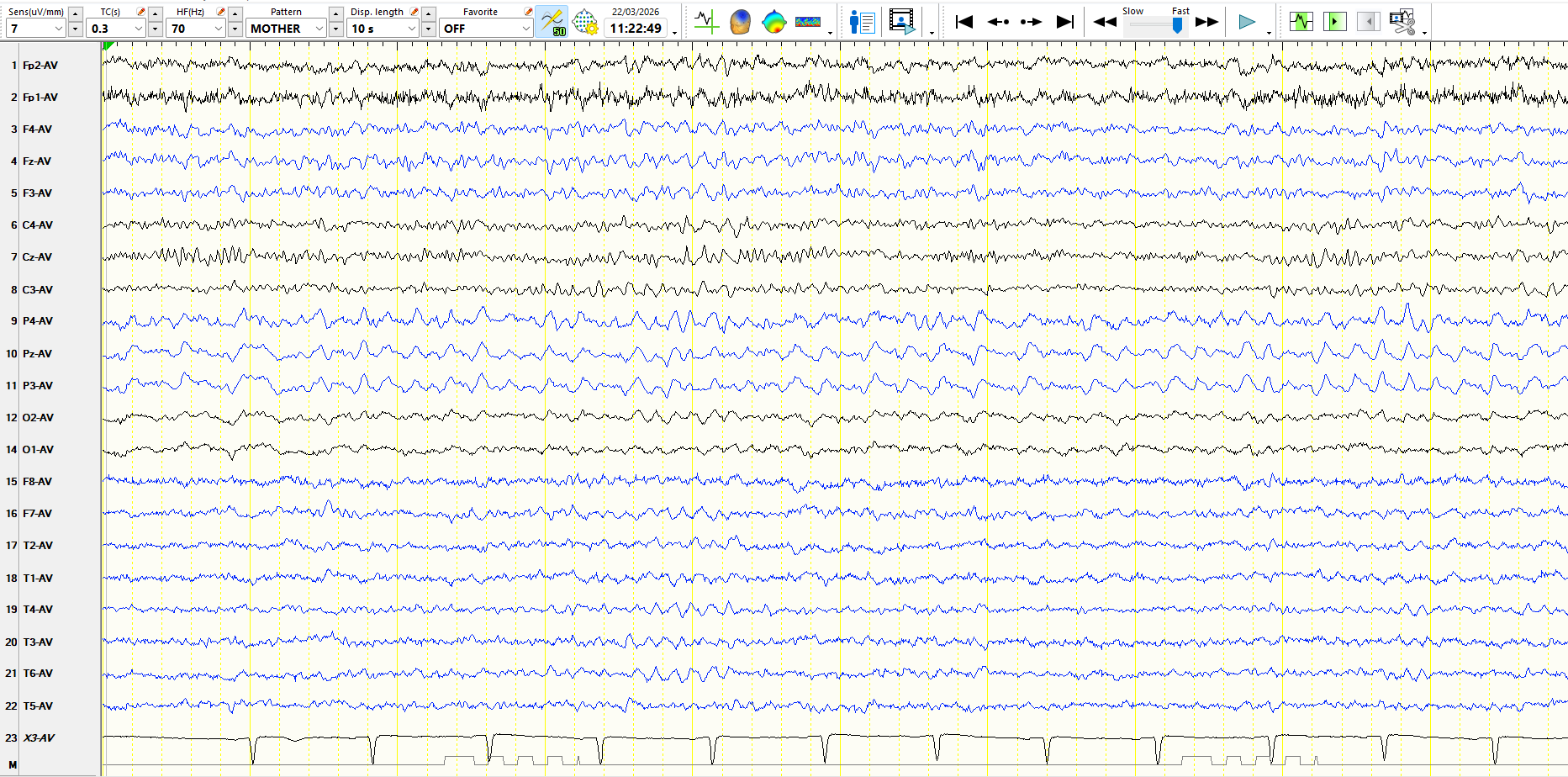
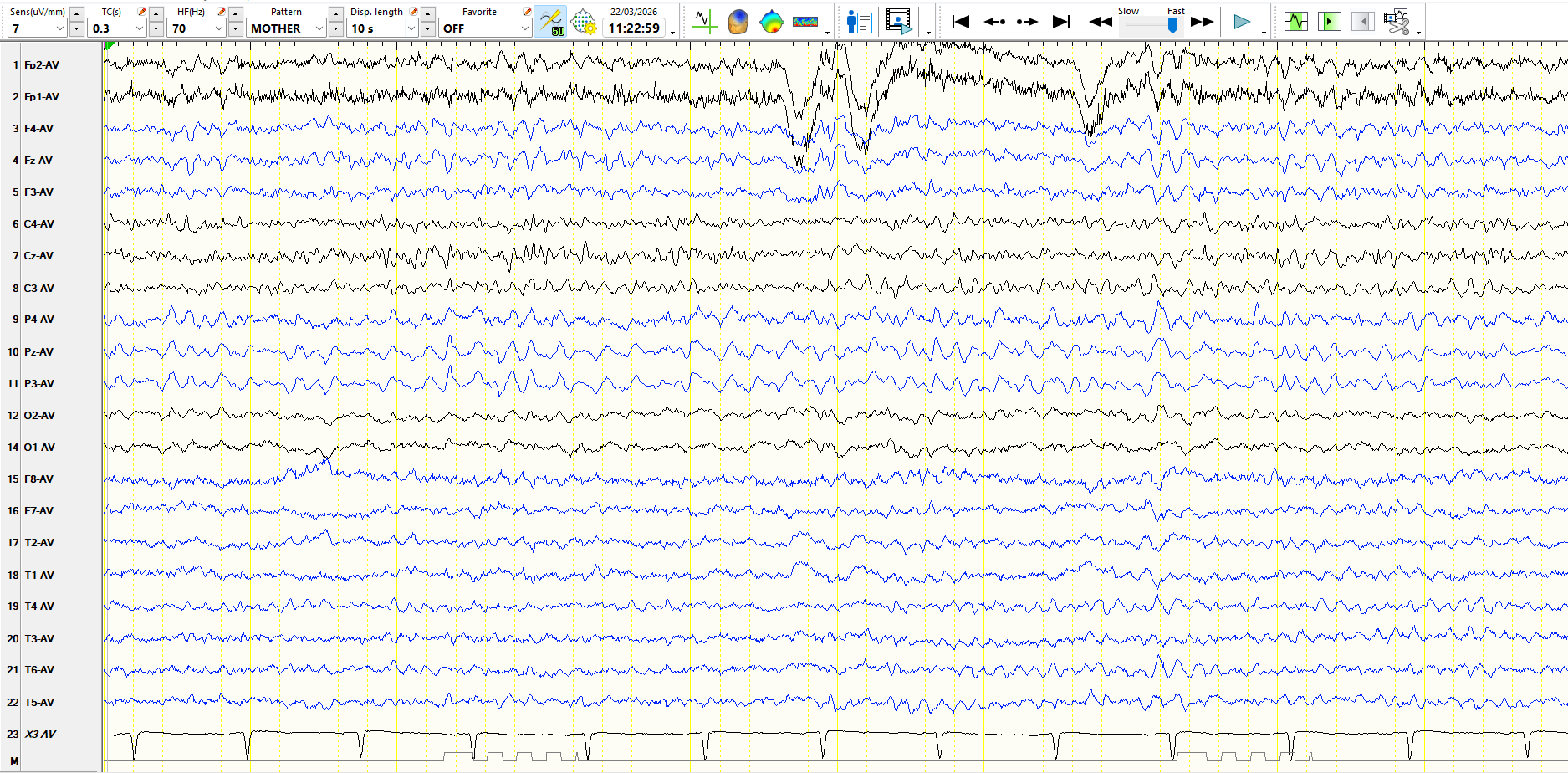
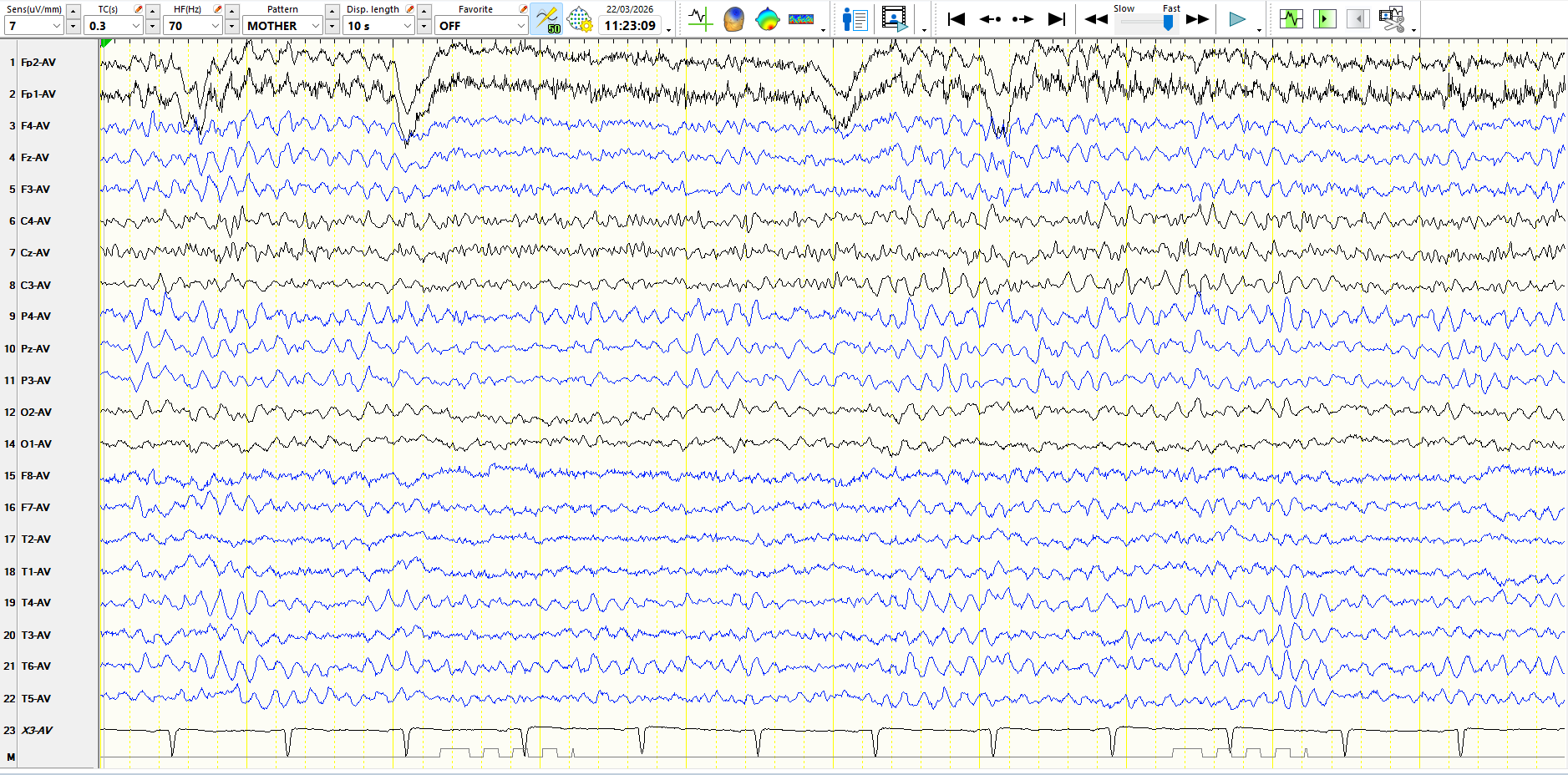
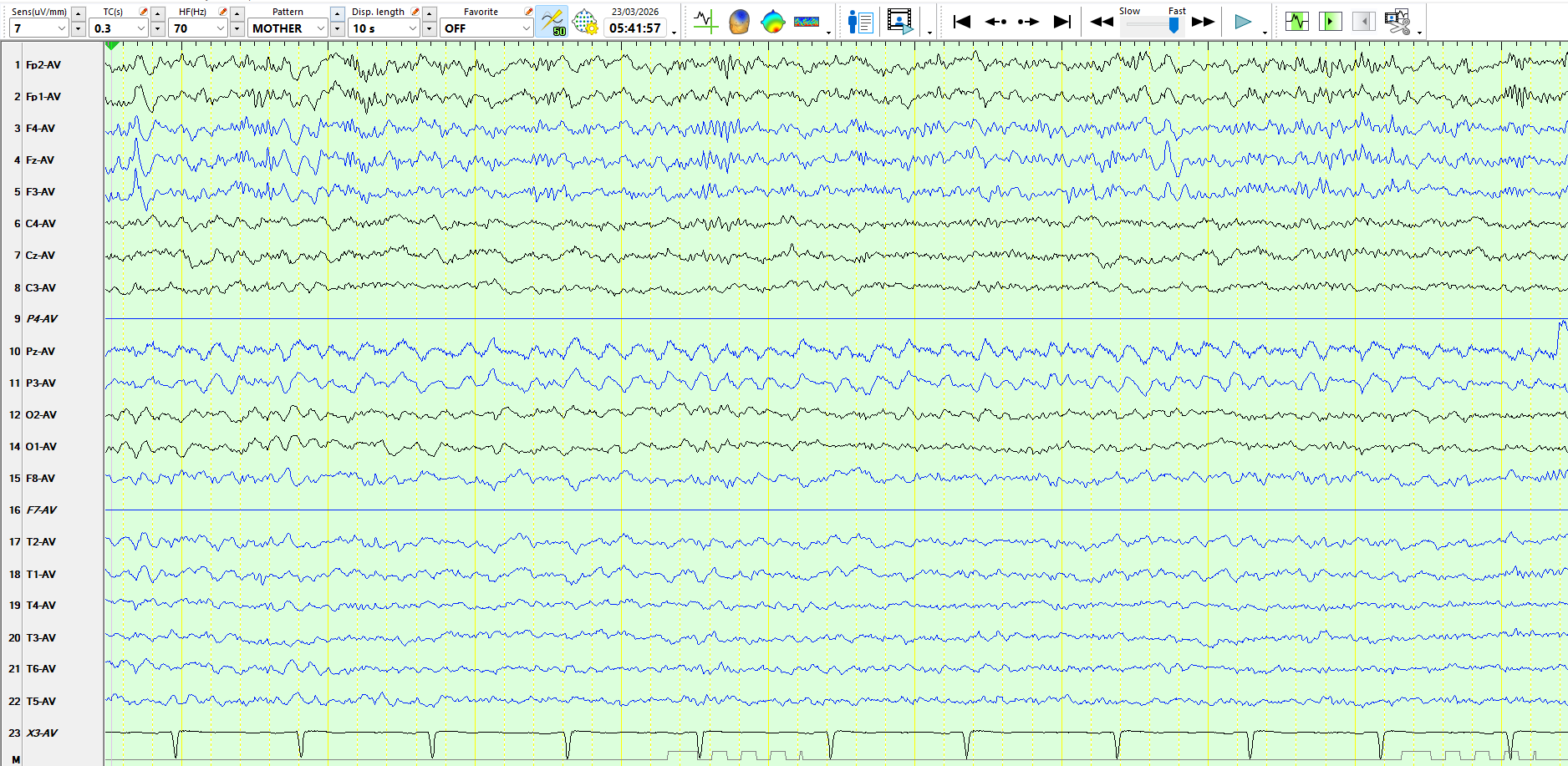
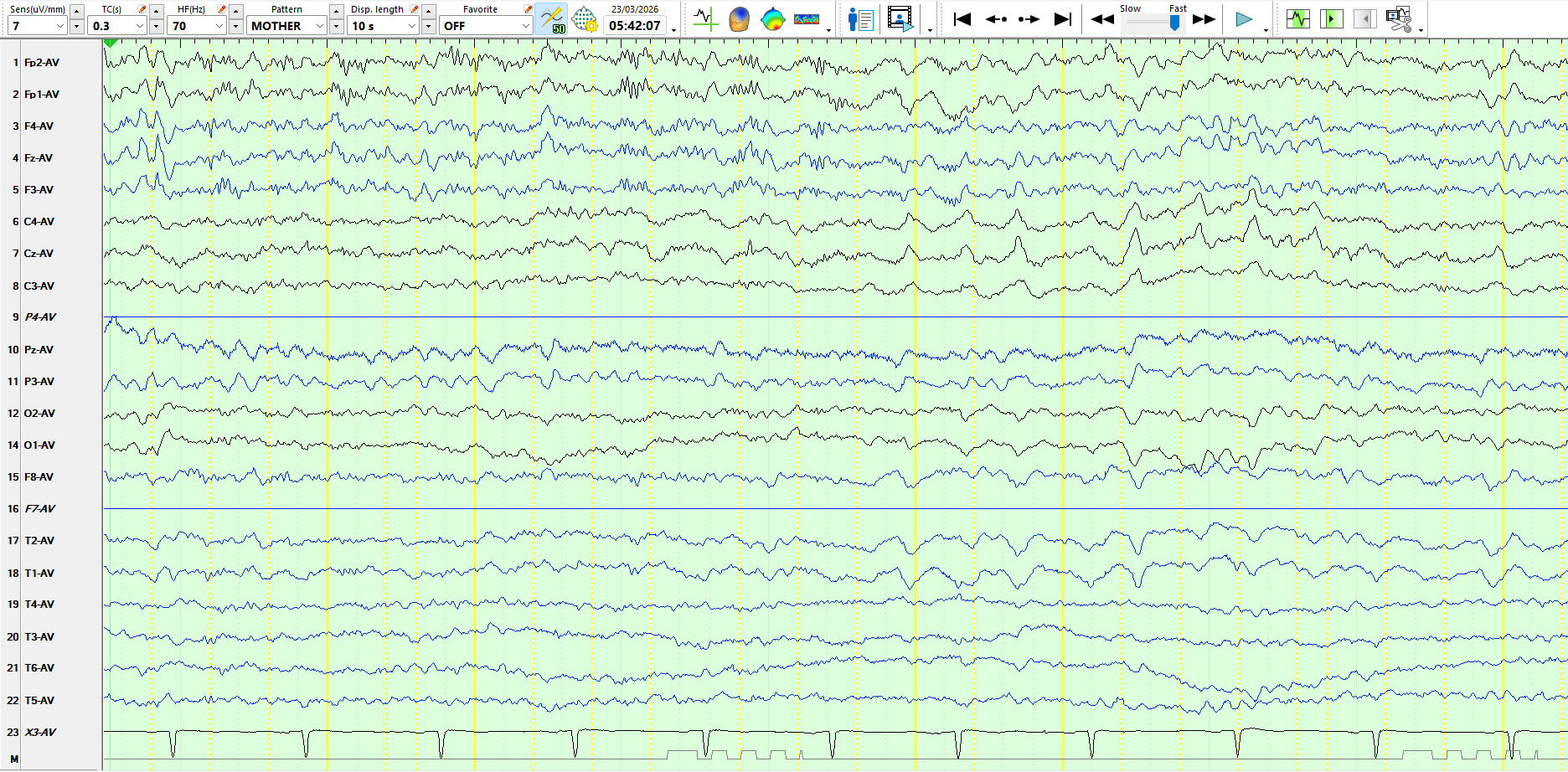
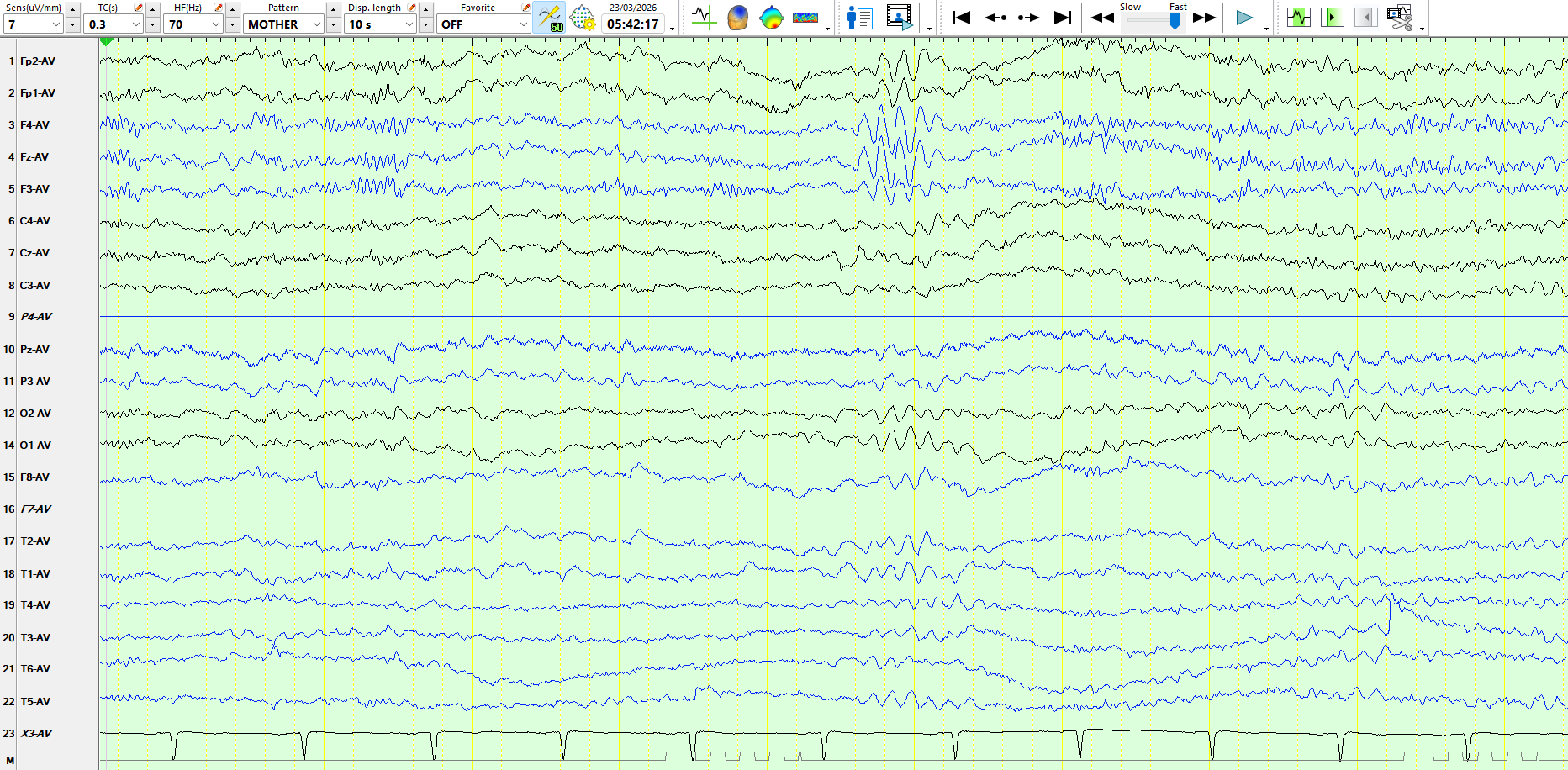
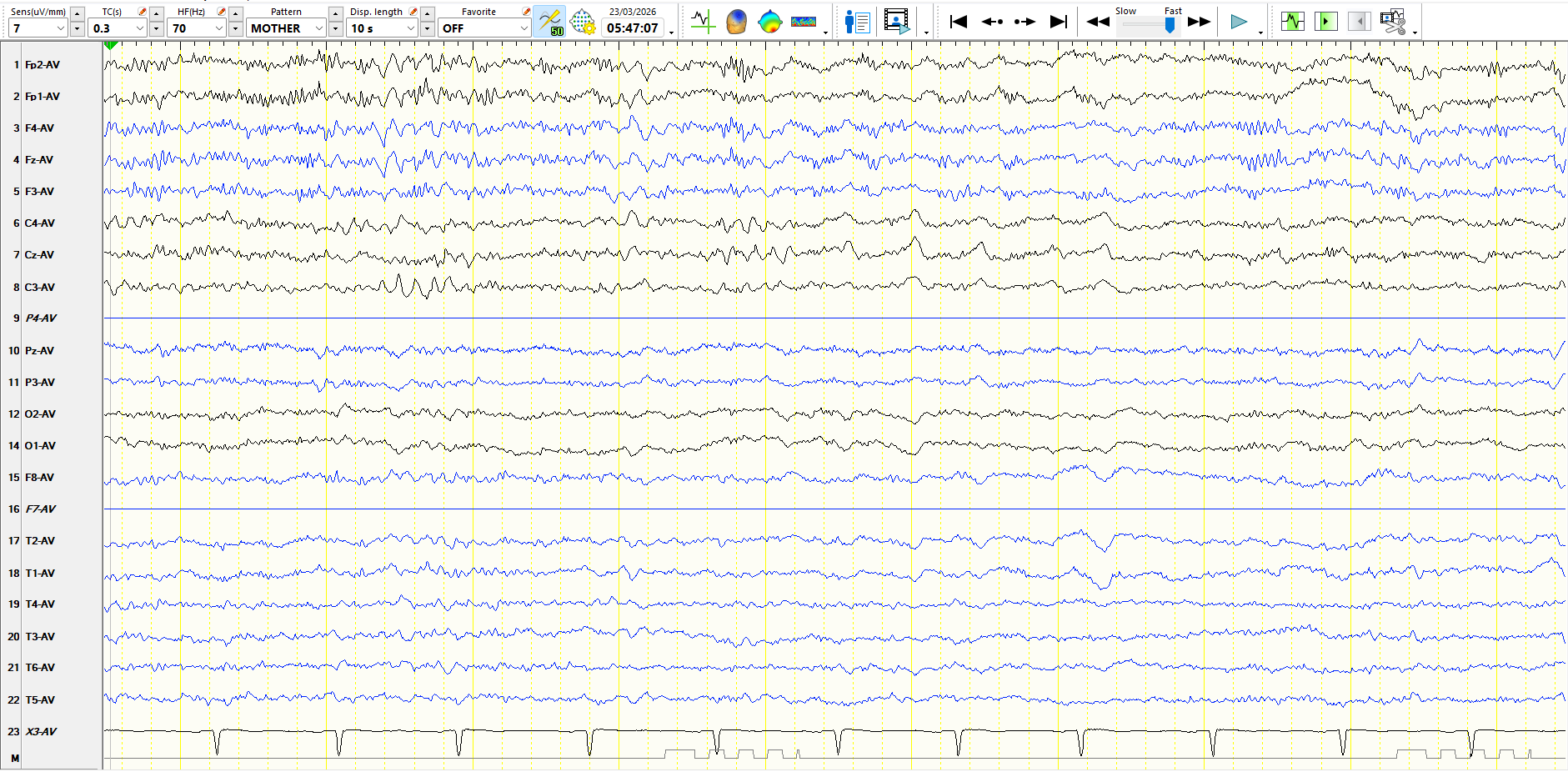
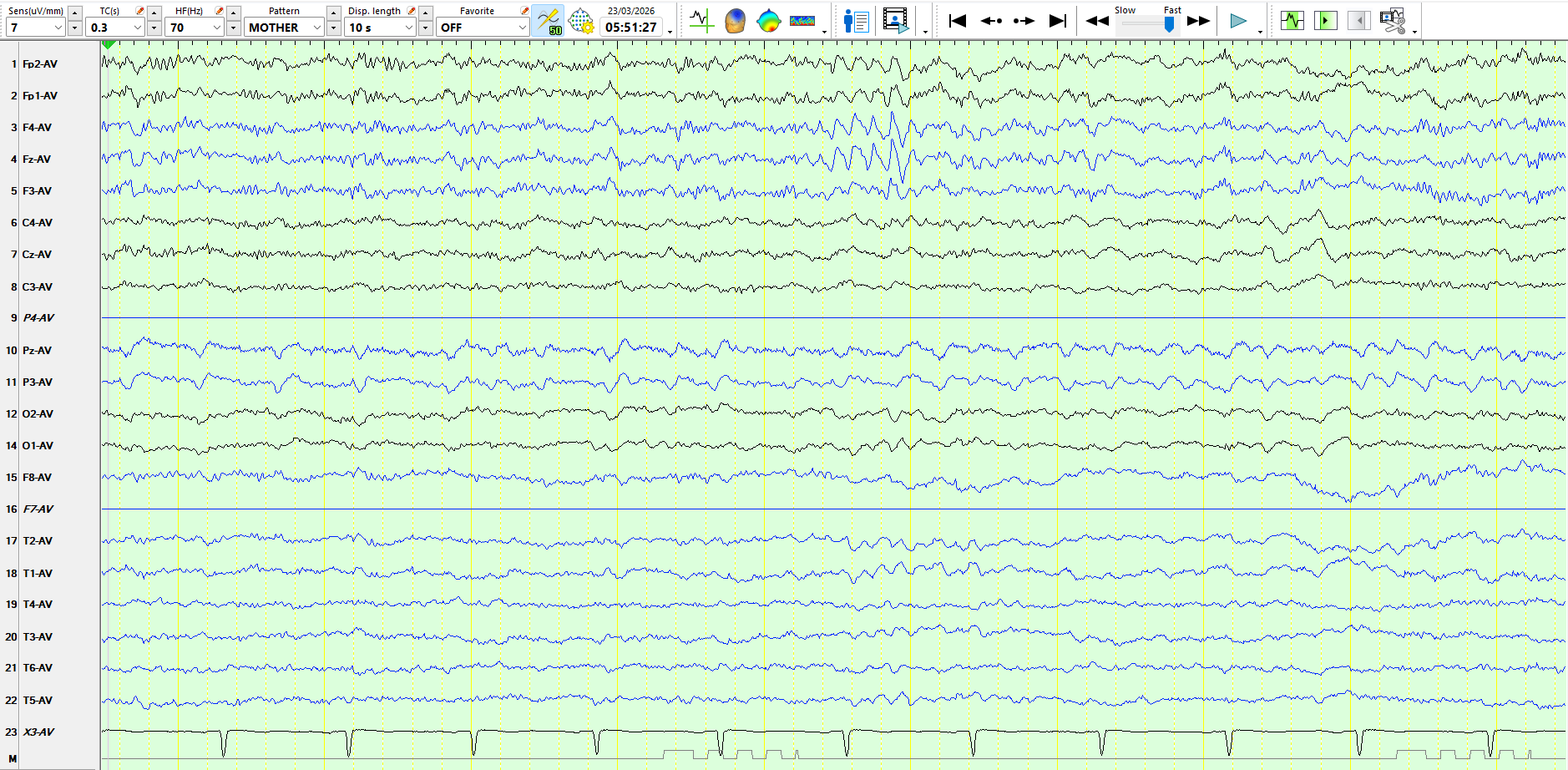
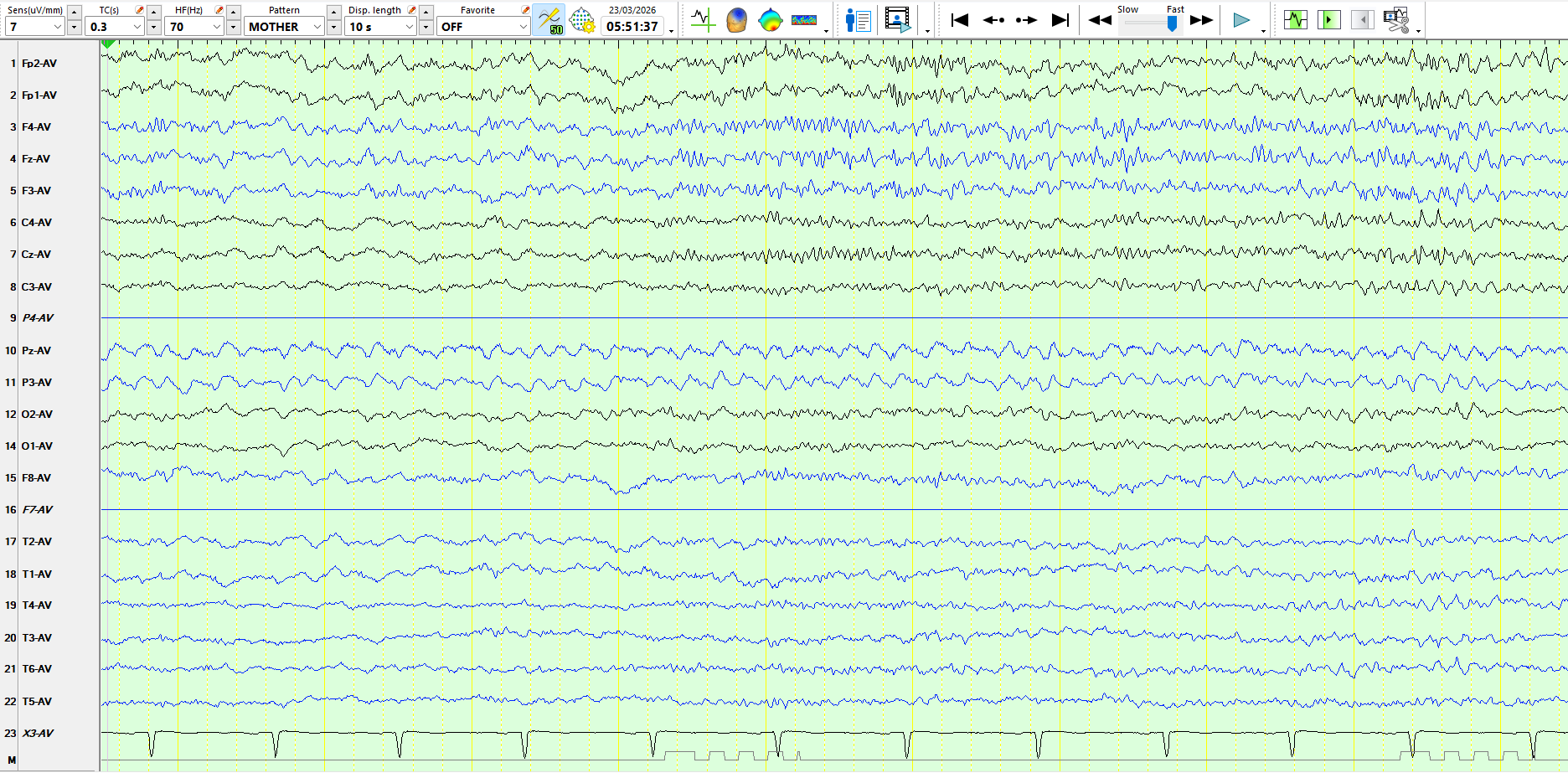
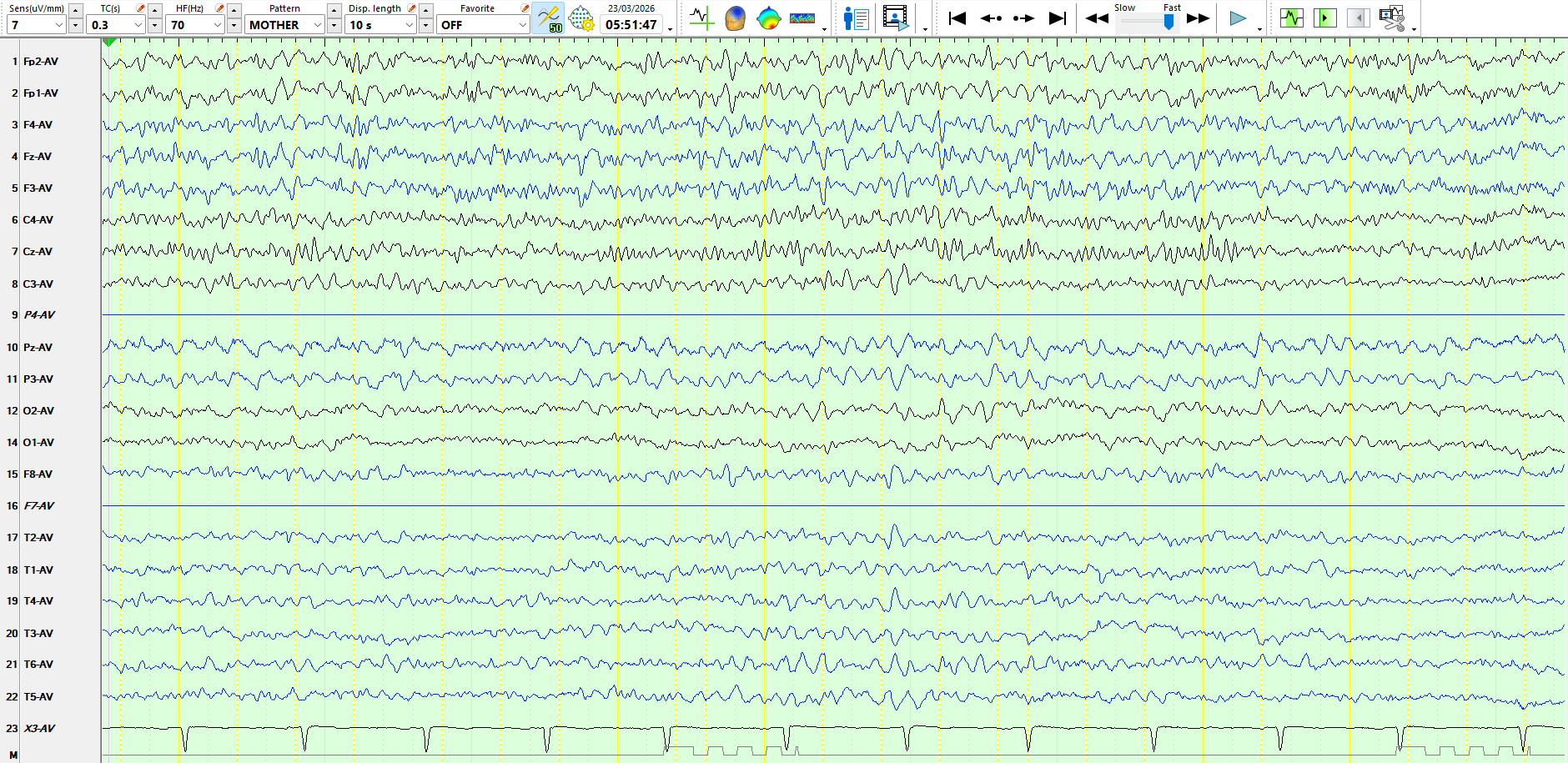
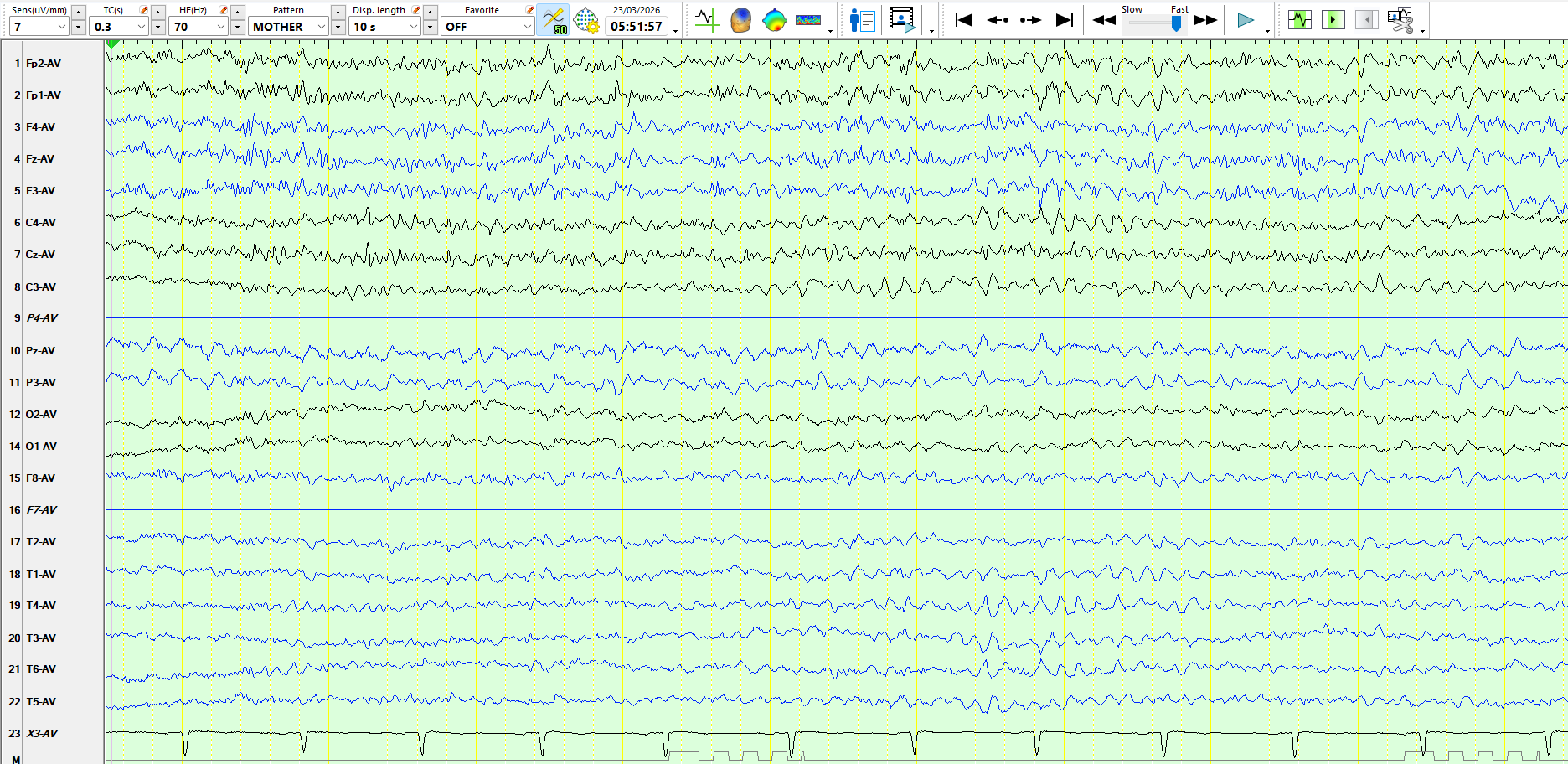
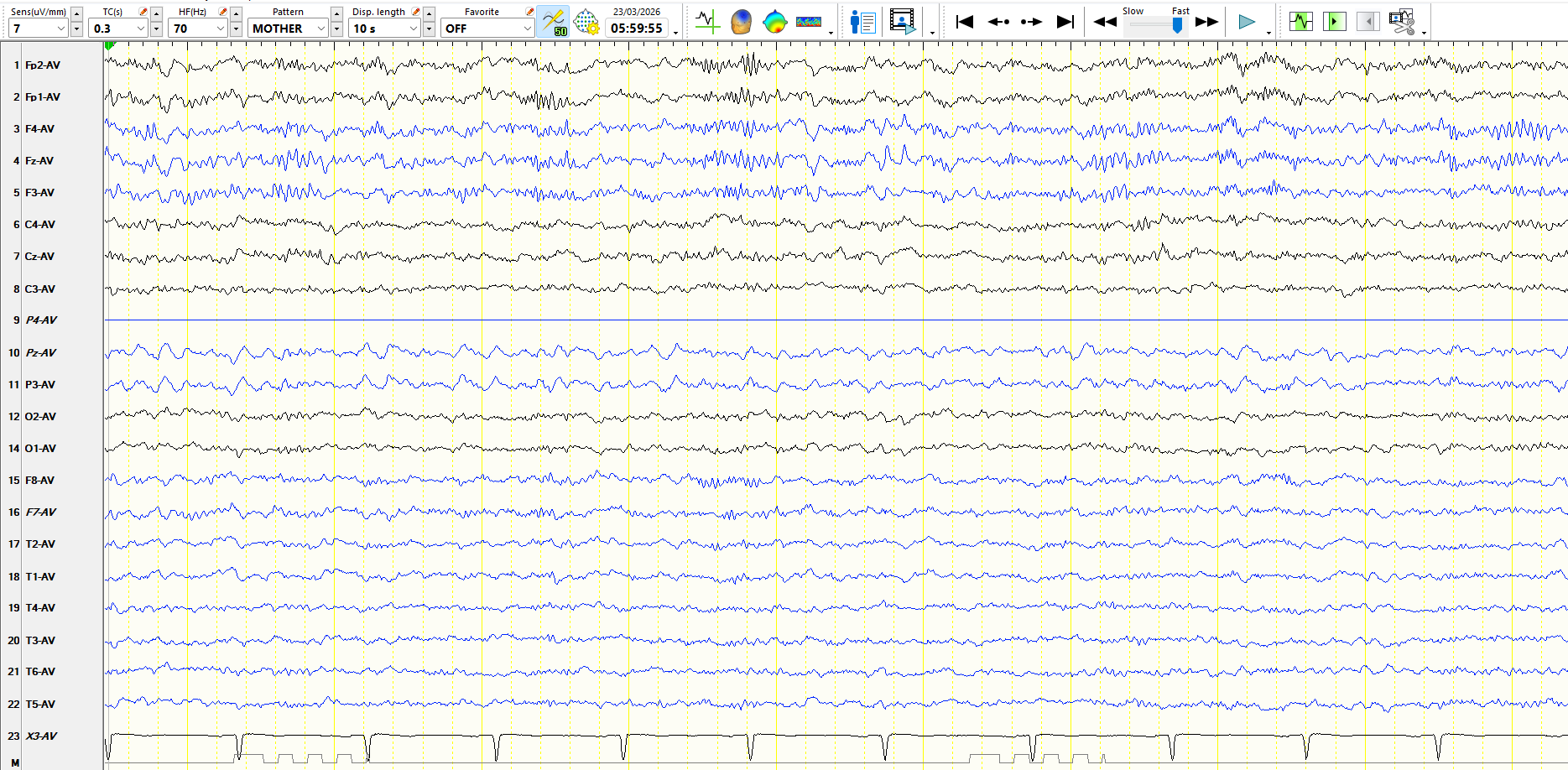
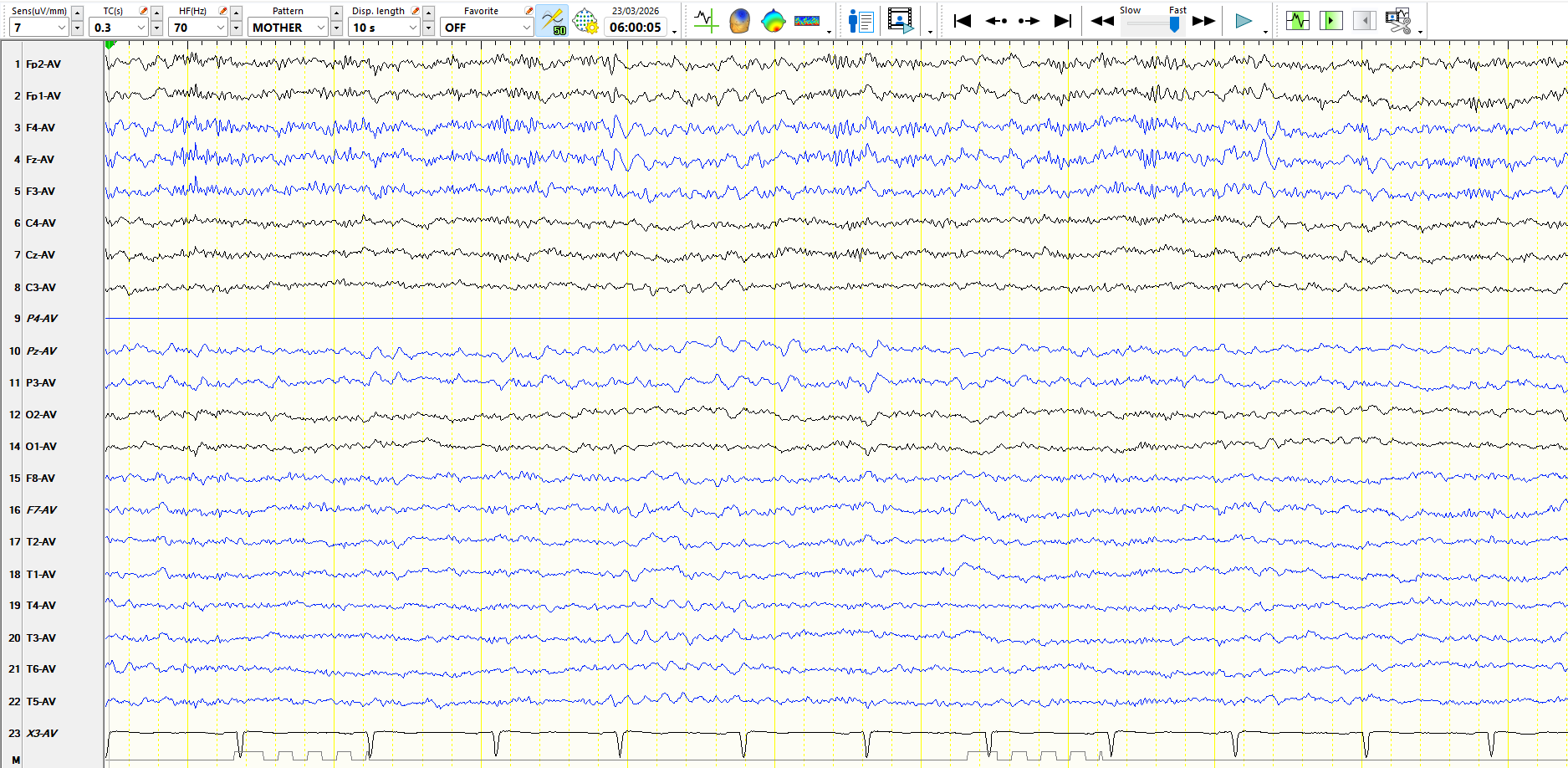
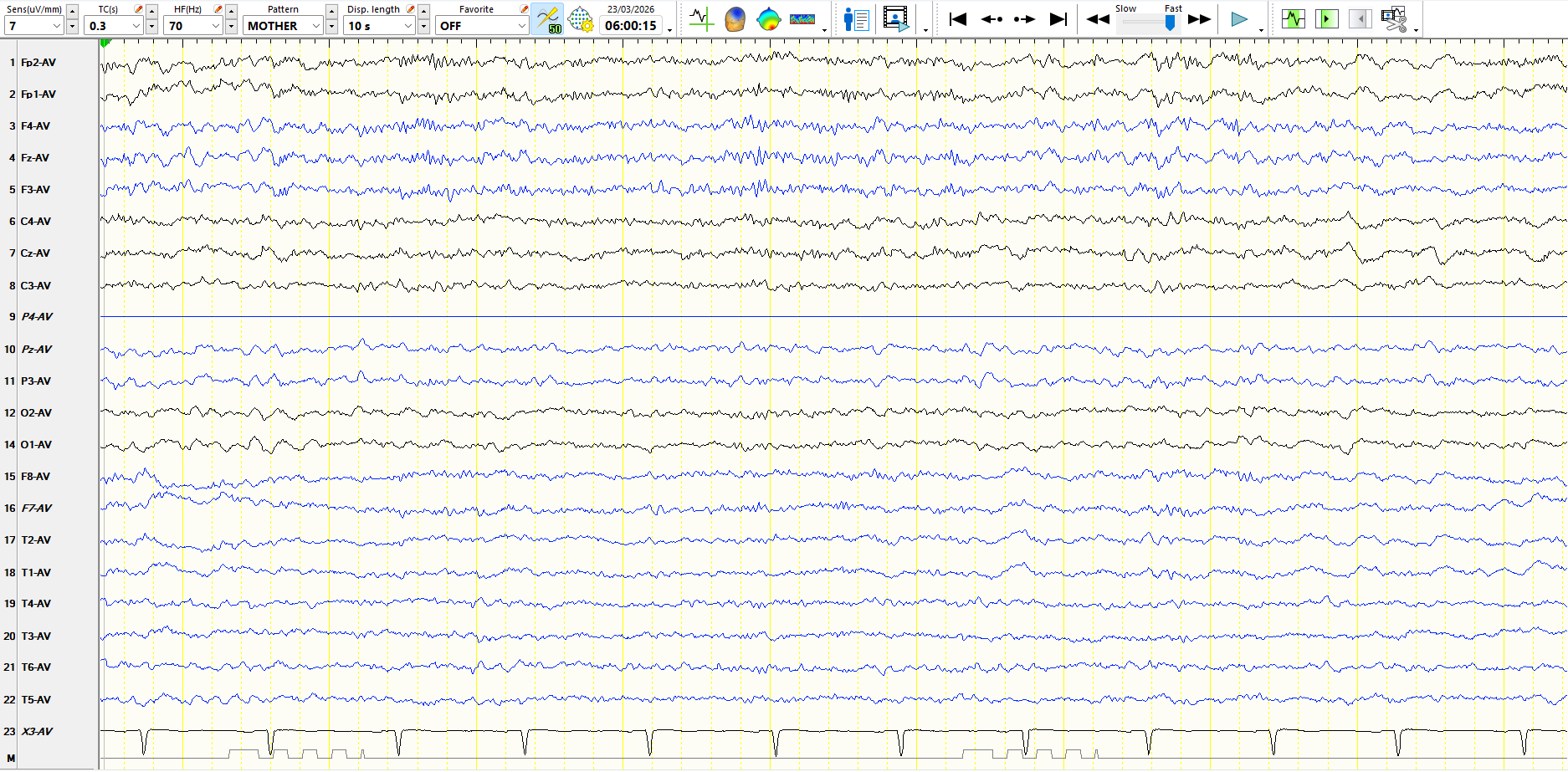
Her routine EEG was normal. The 24-hour EEG demonstrates innumerable, stereotyped electrographic events at PZ-P4-P3, of which only a small number are illustrated here. What do you make of these?
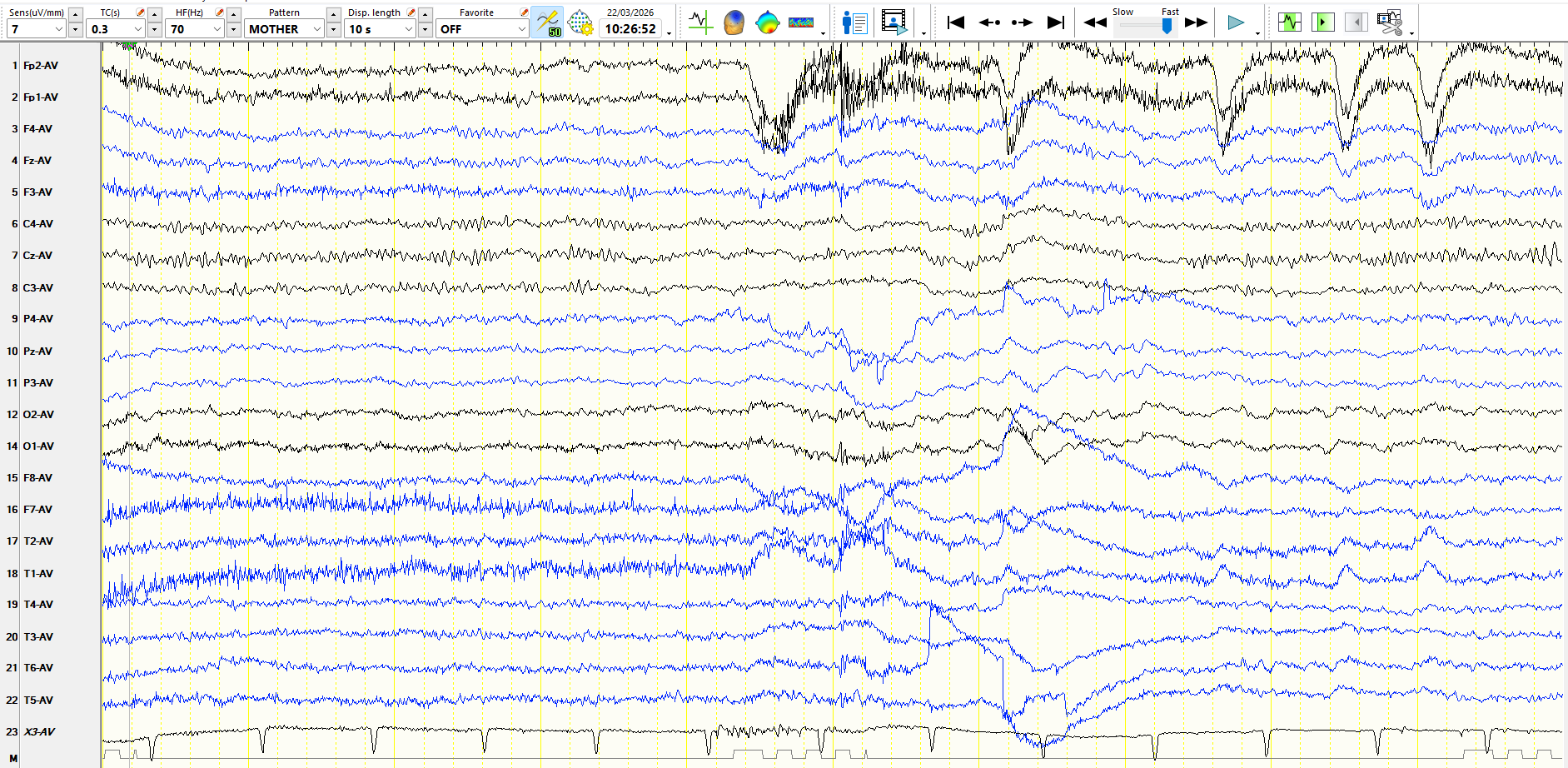
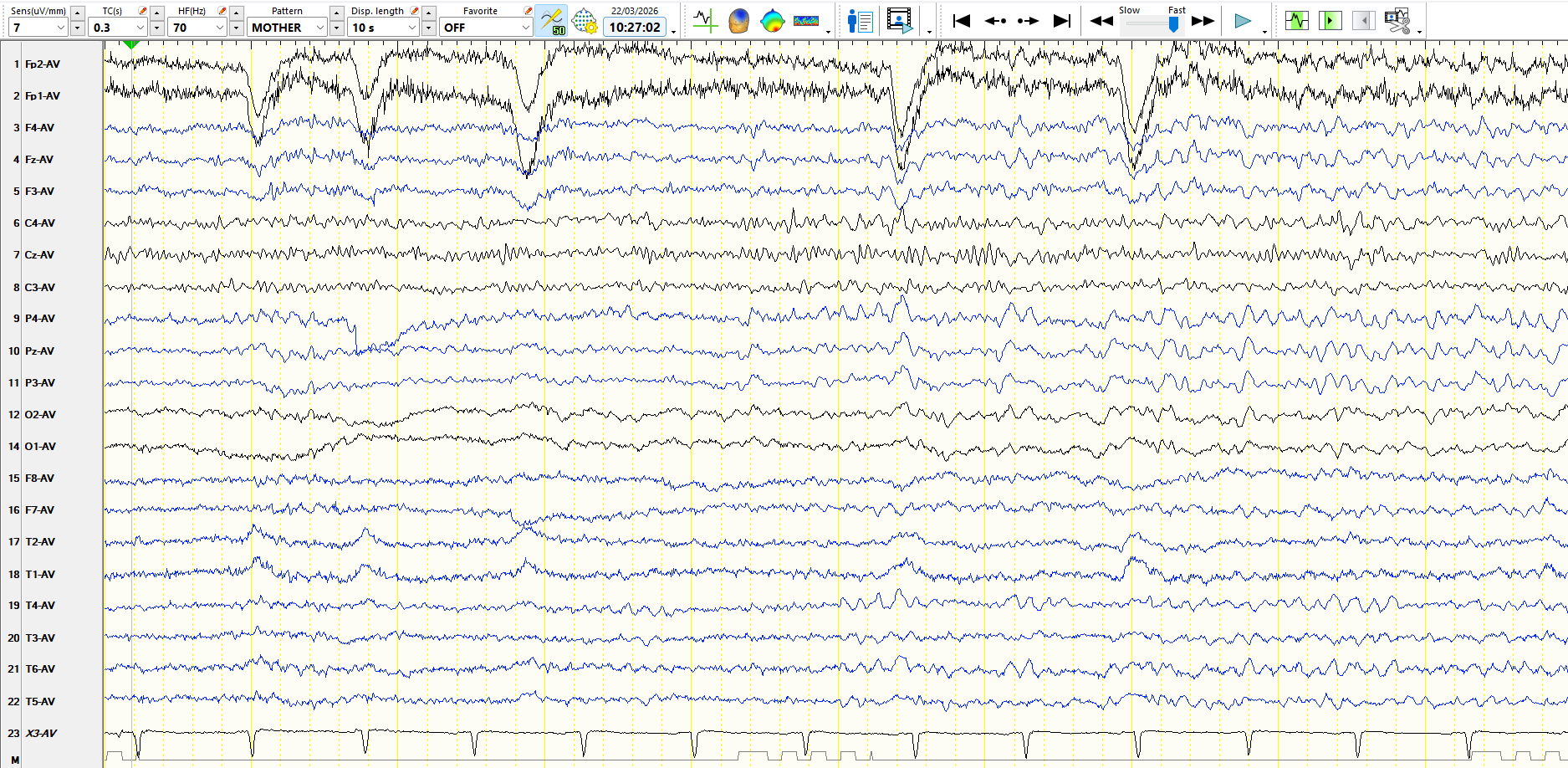
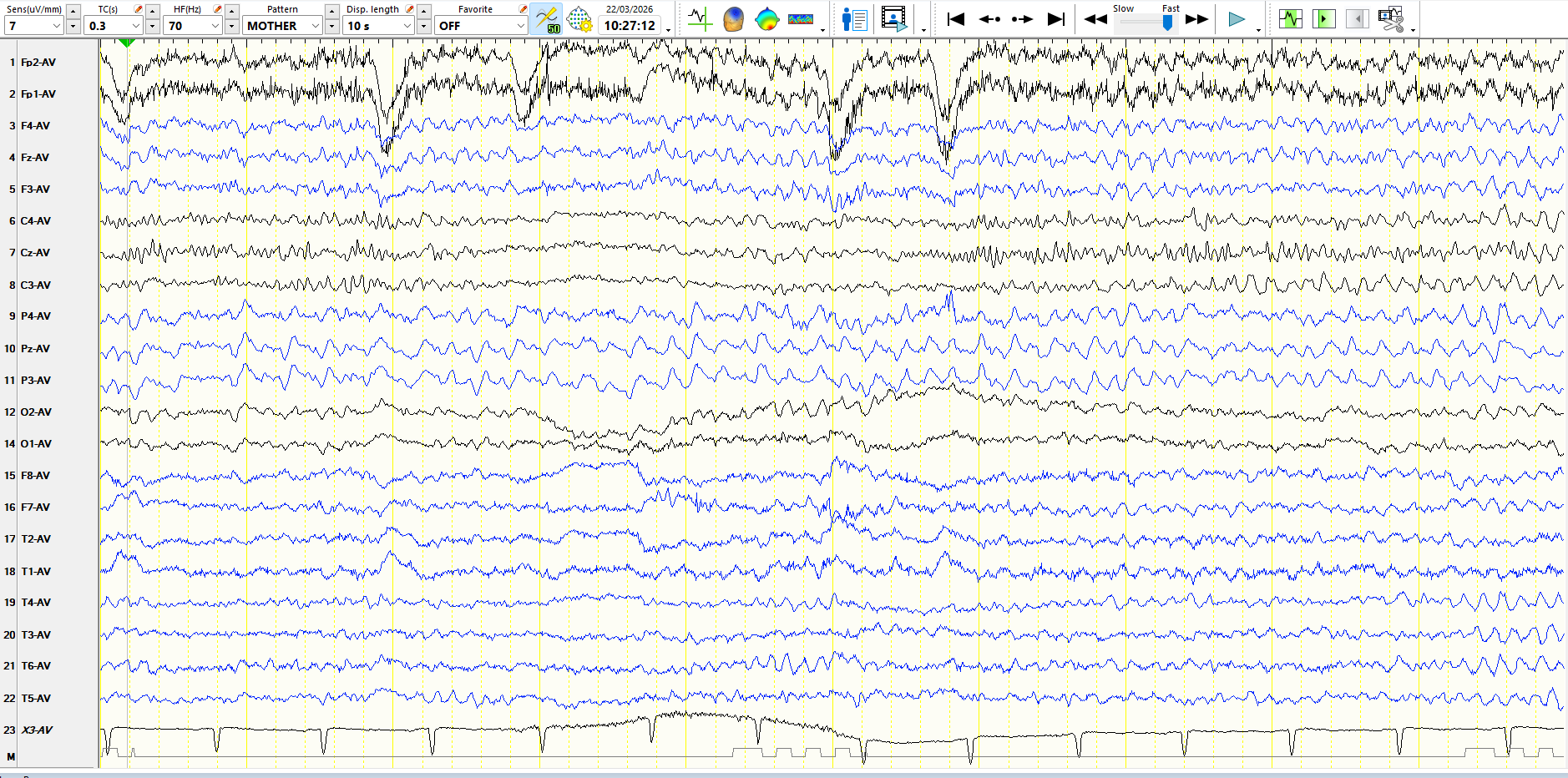
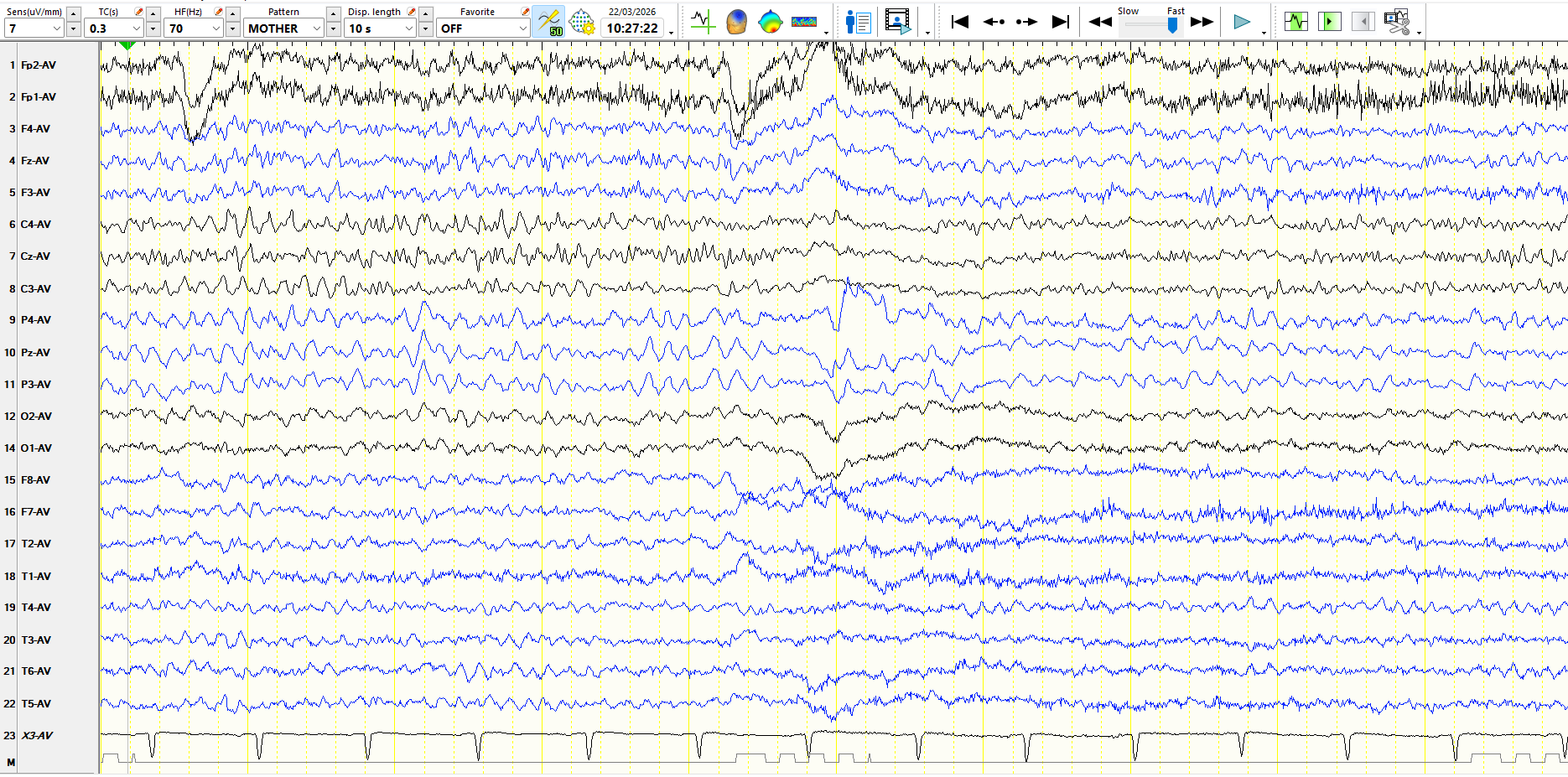
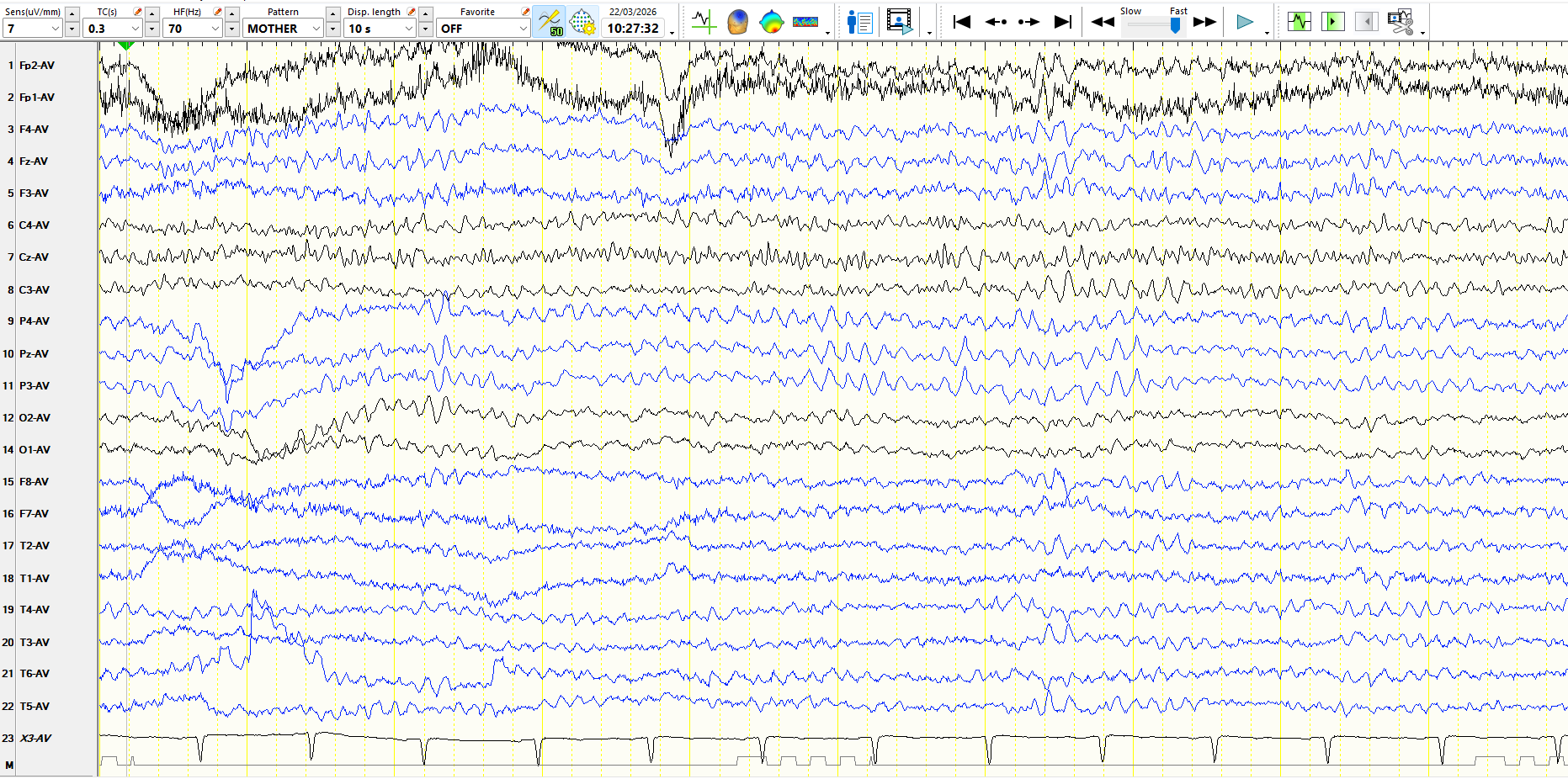
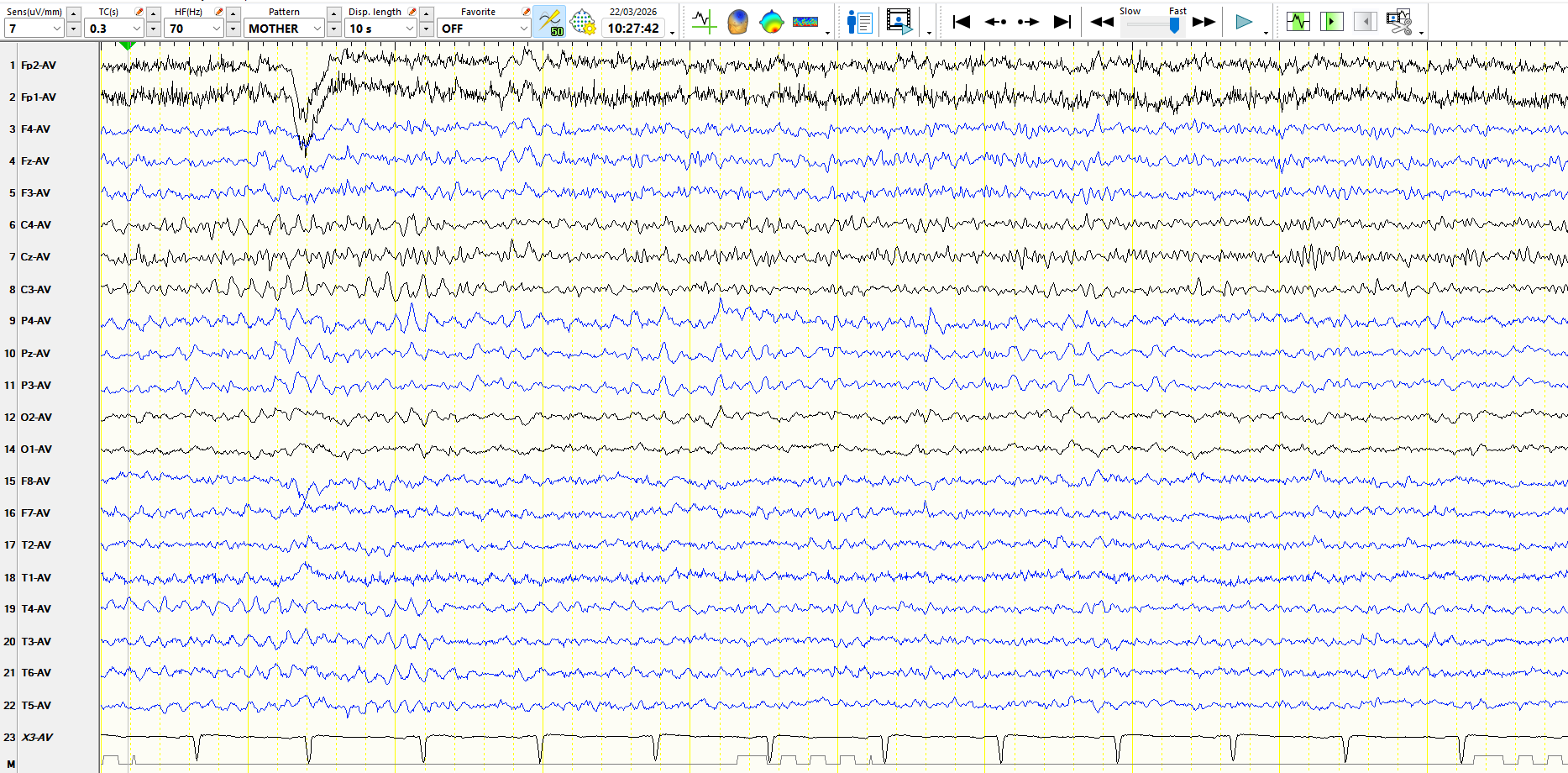
Event number 2:
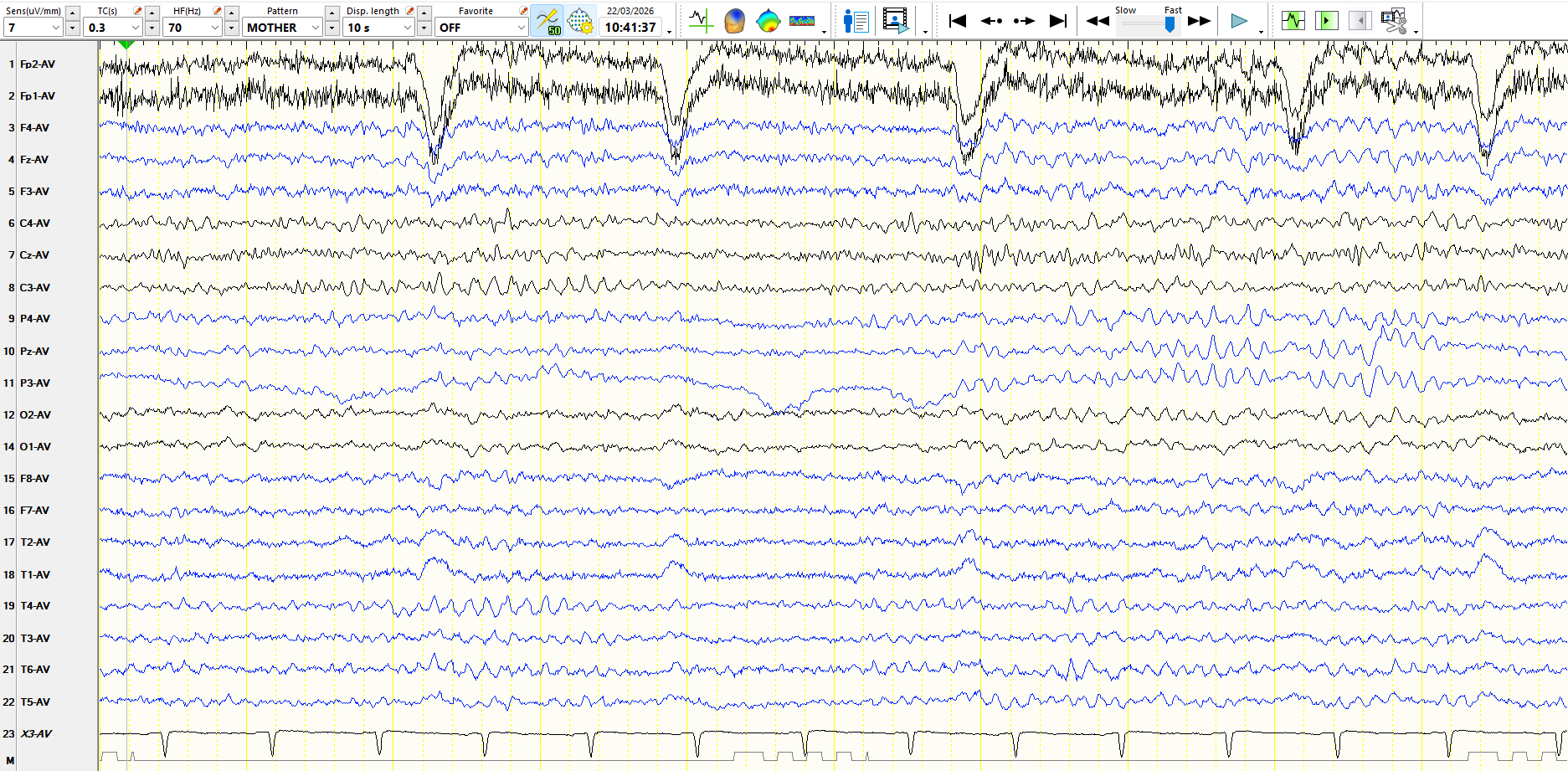
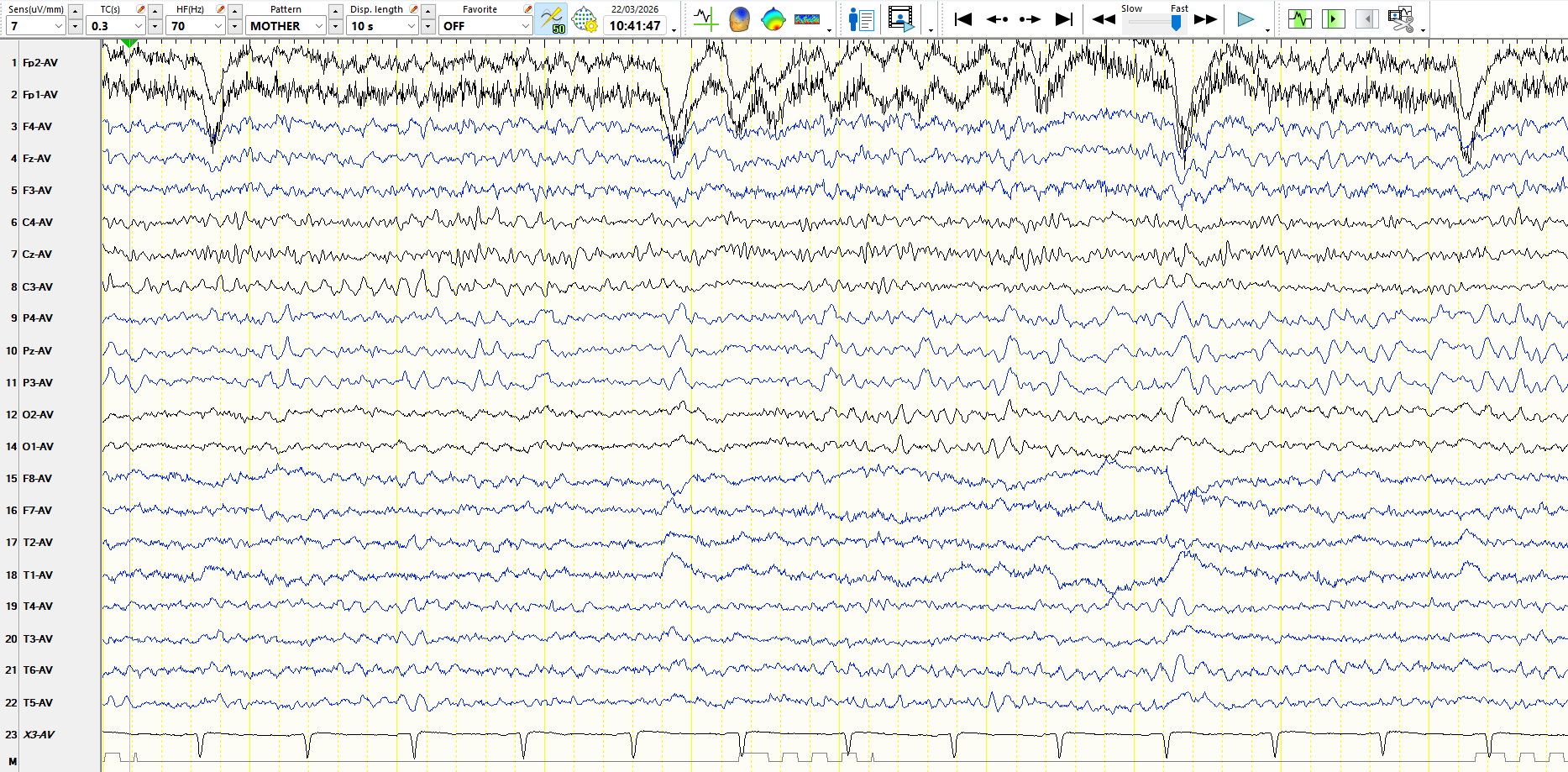
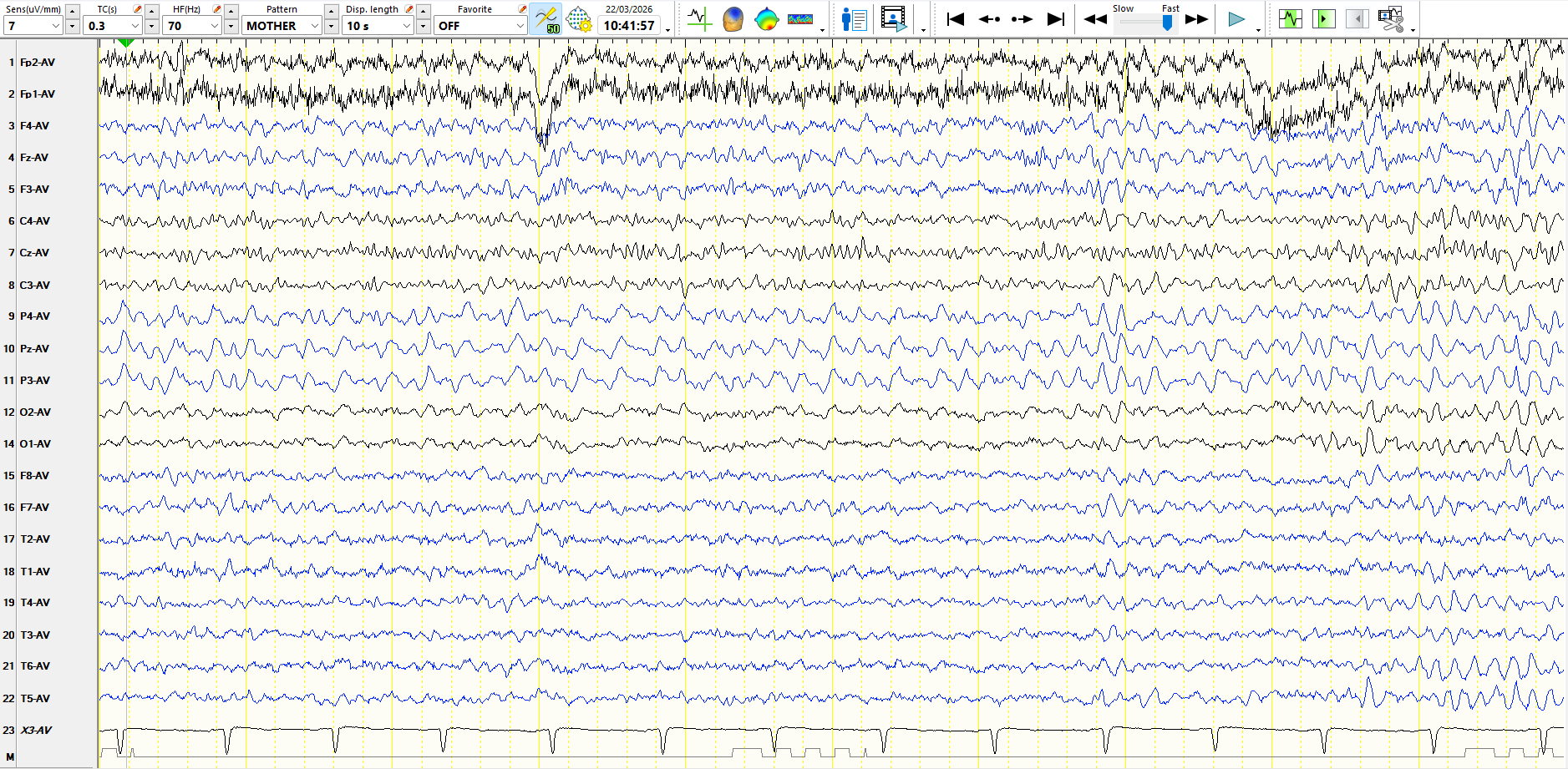
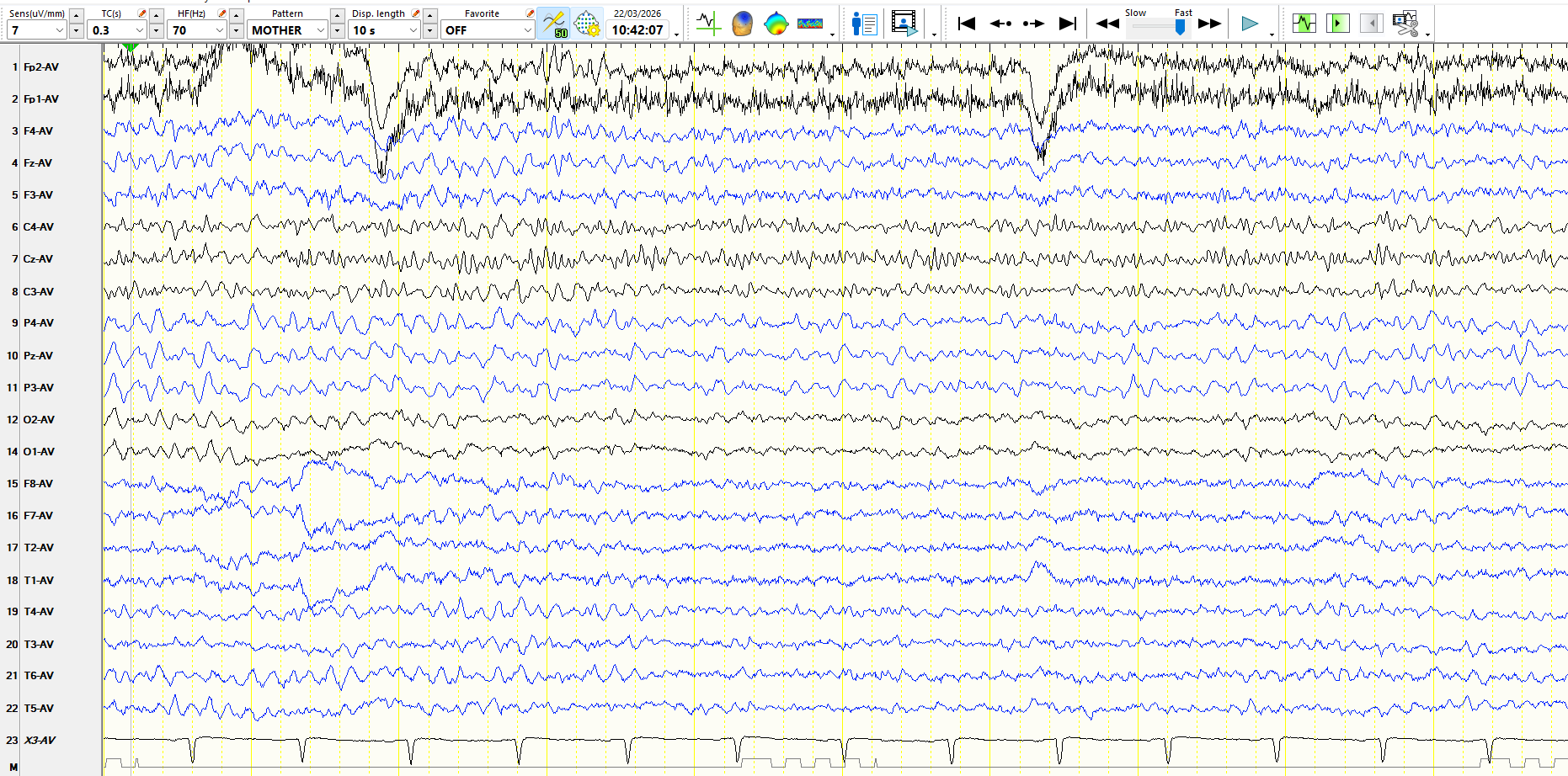
Event number 3:
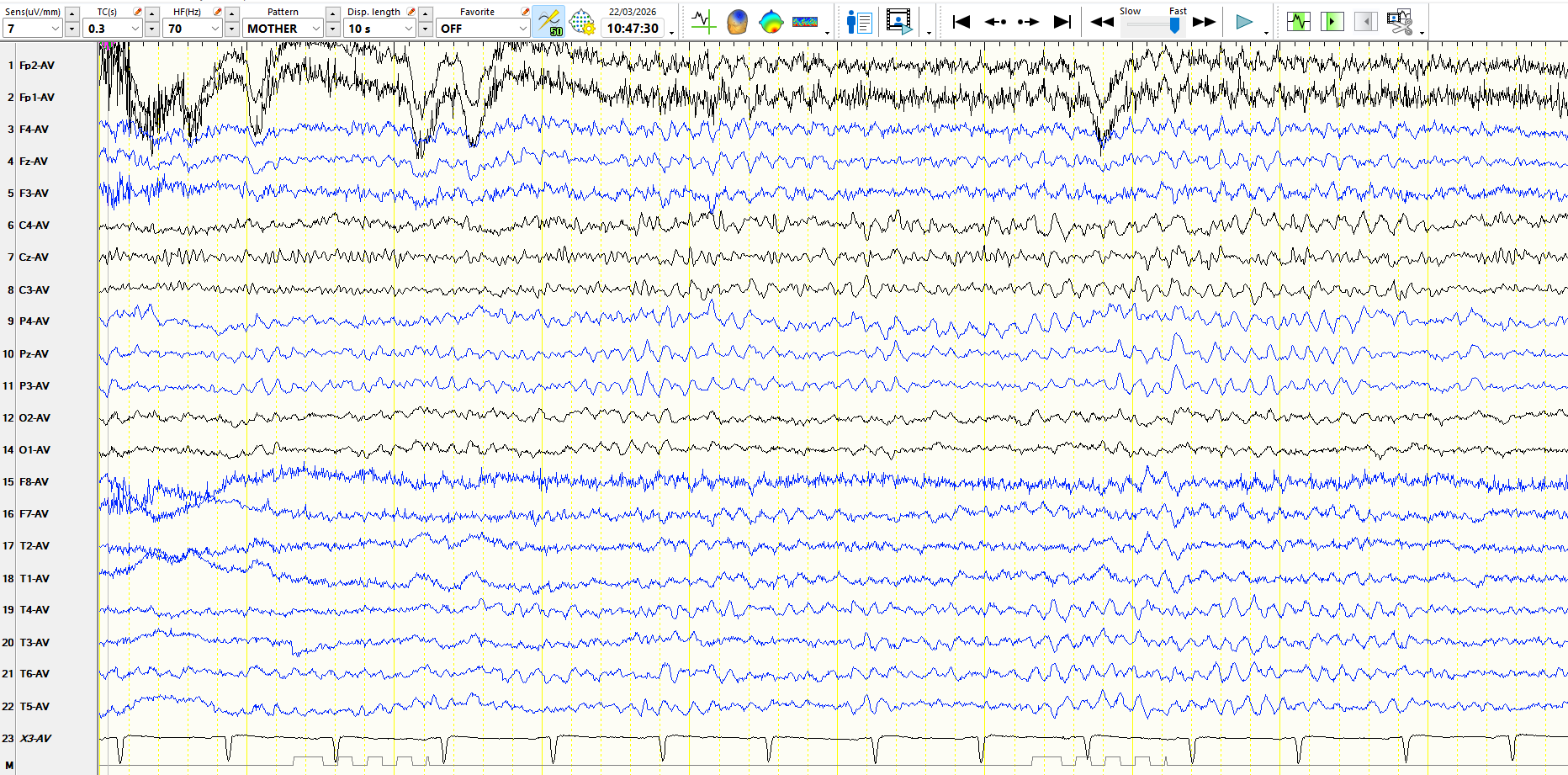
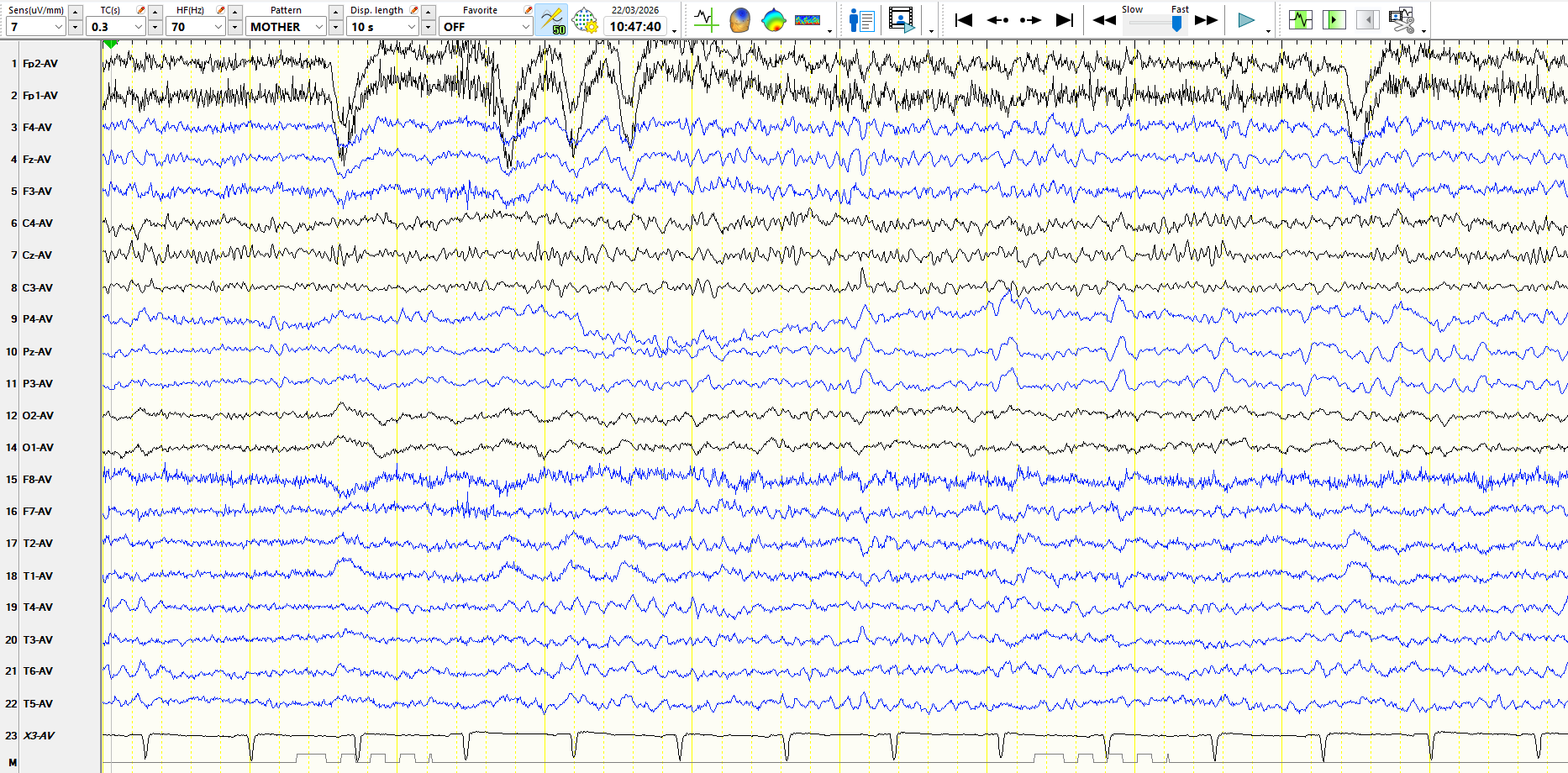
Event number four:
Event number 5:
Event number 6:
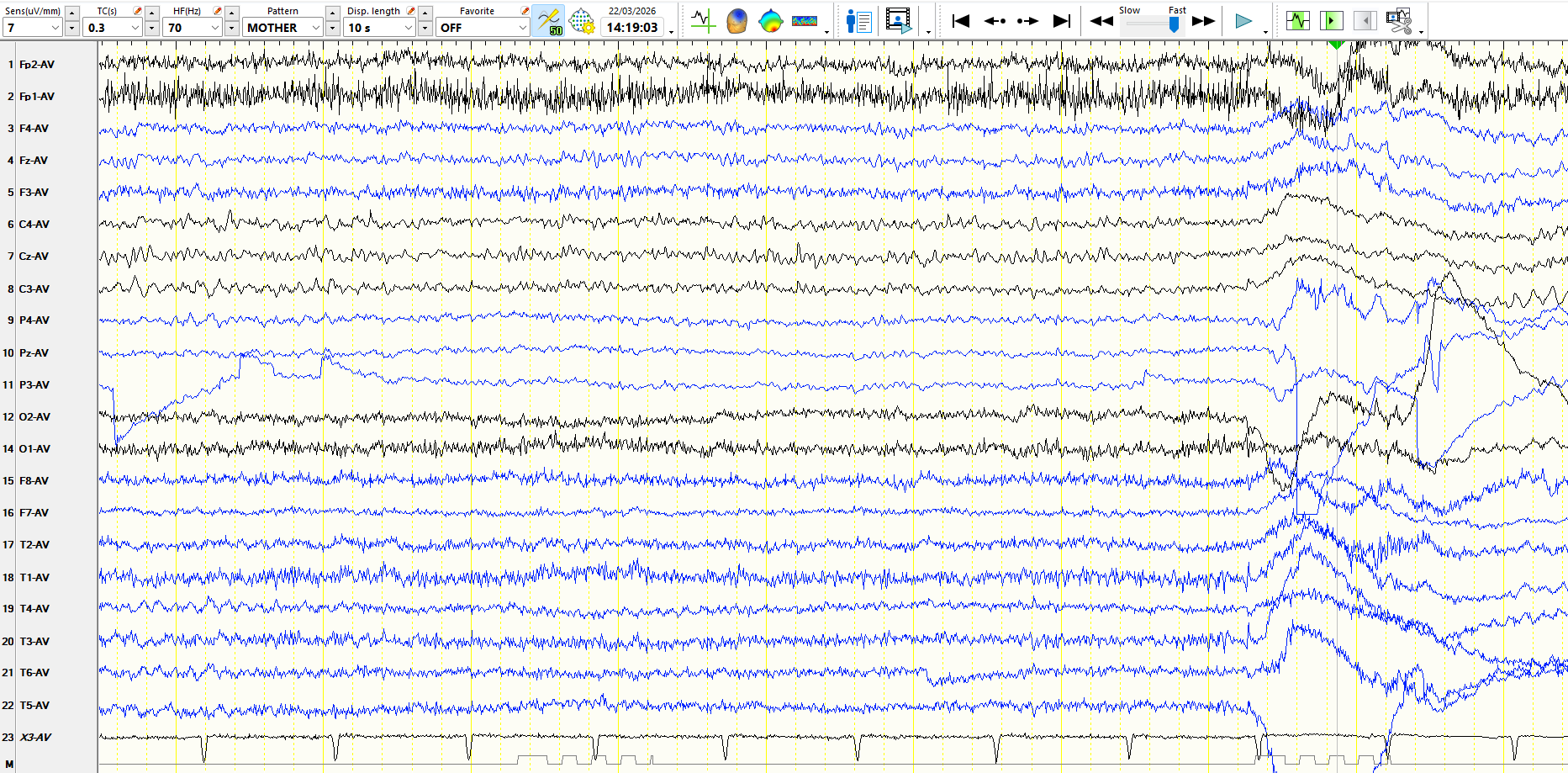
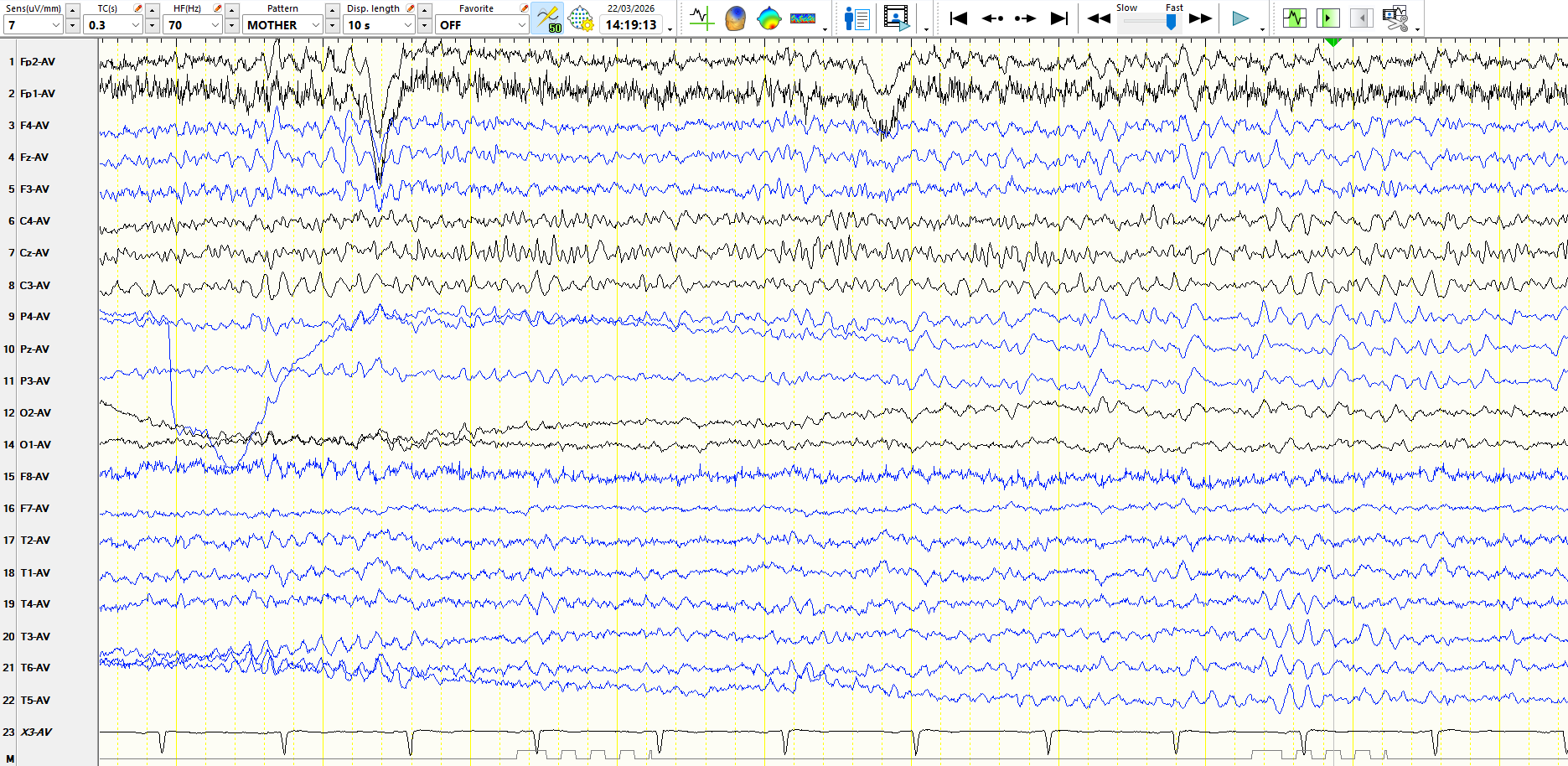
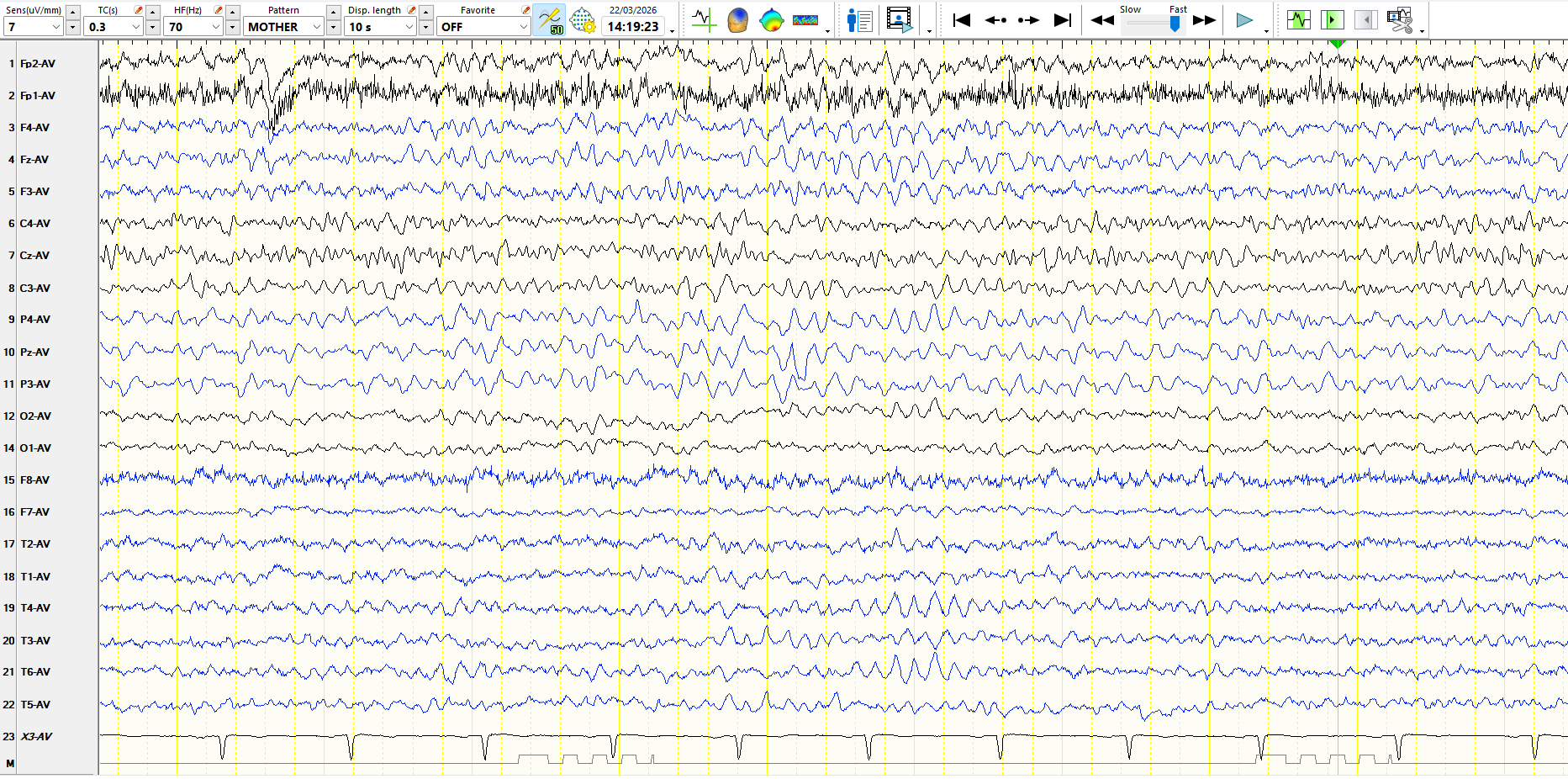
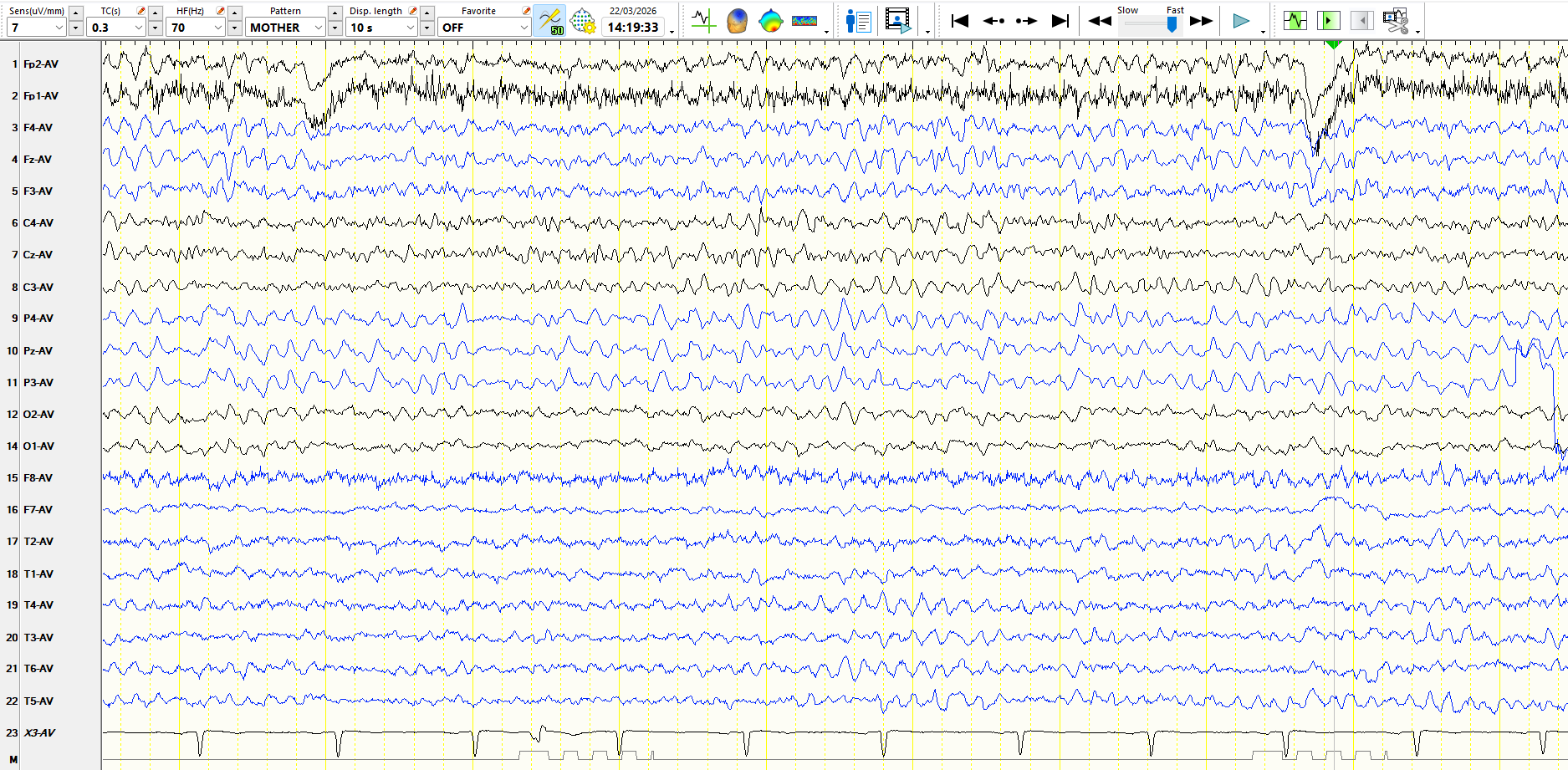
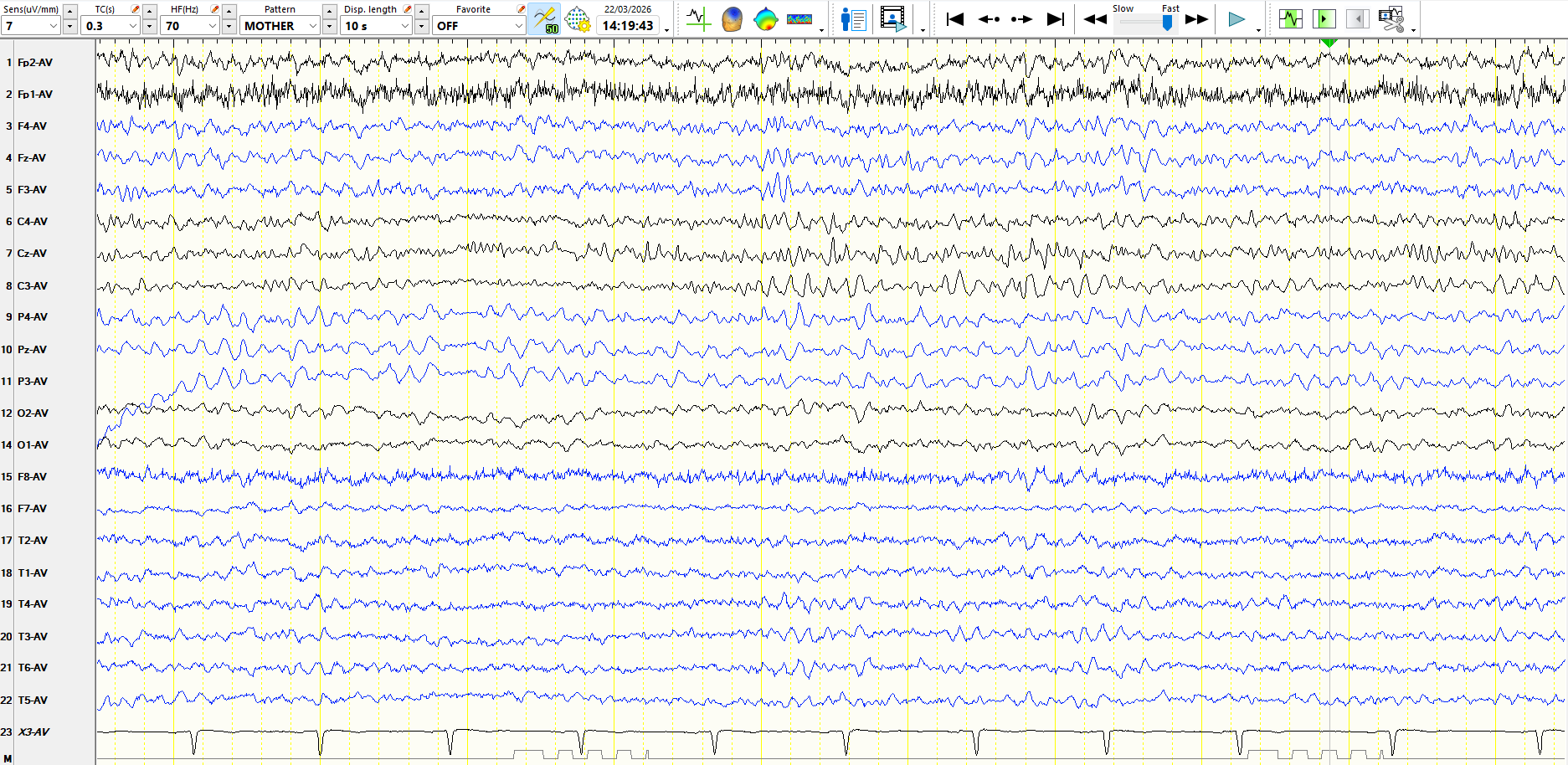
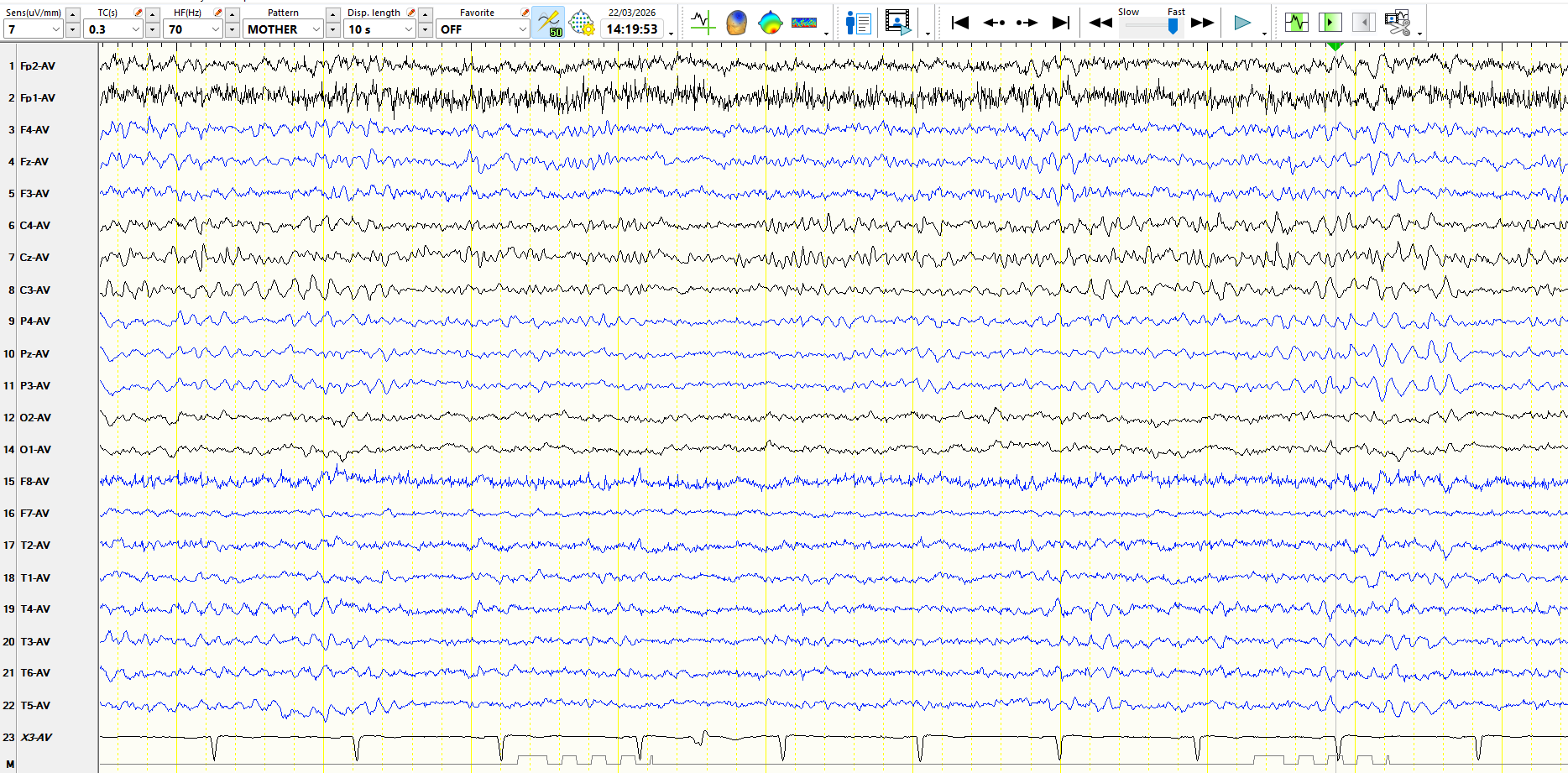
Event number 7 (sleep):
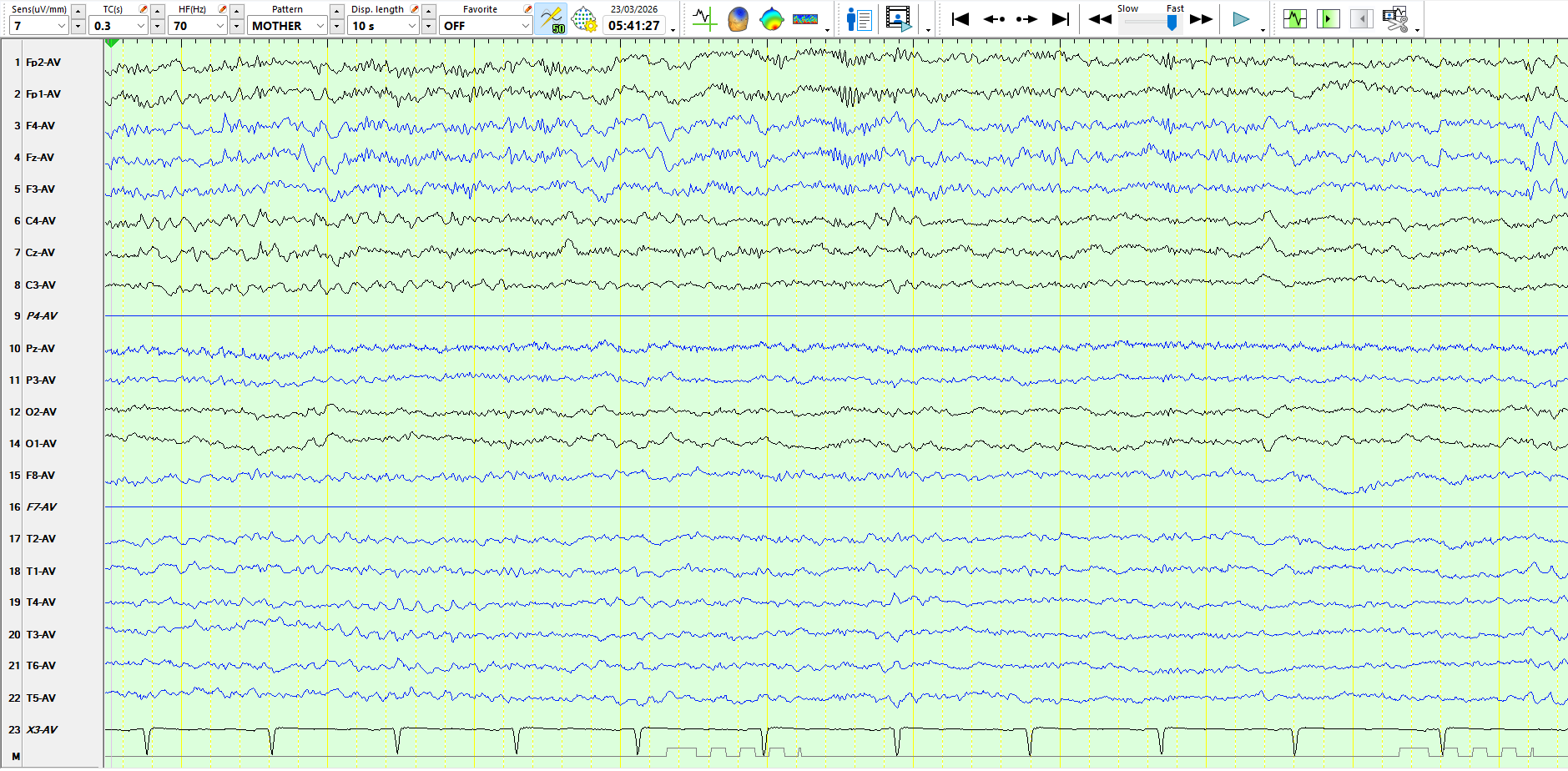
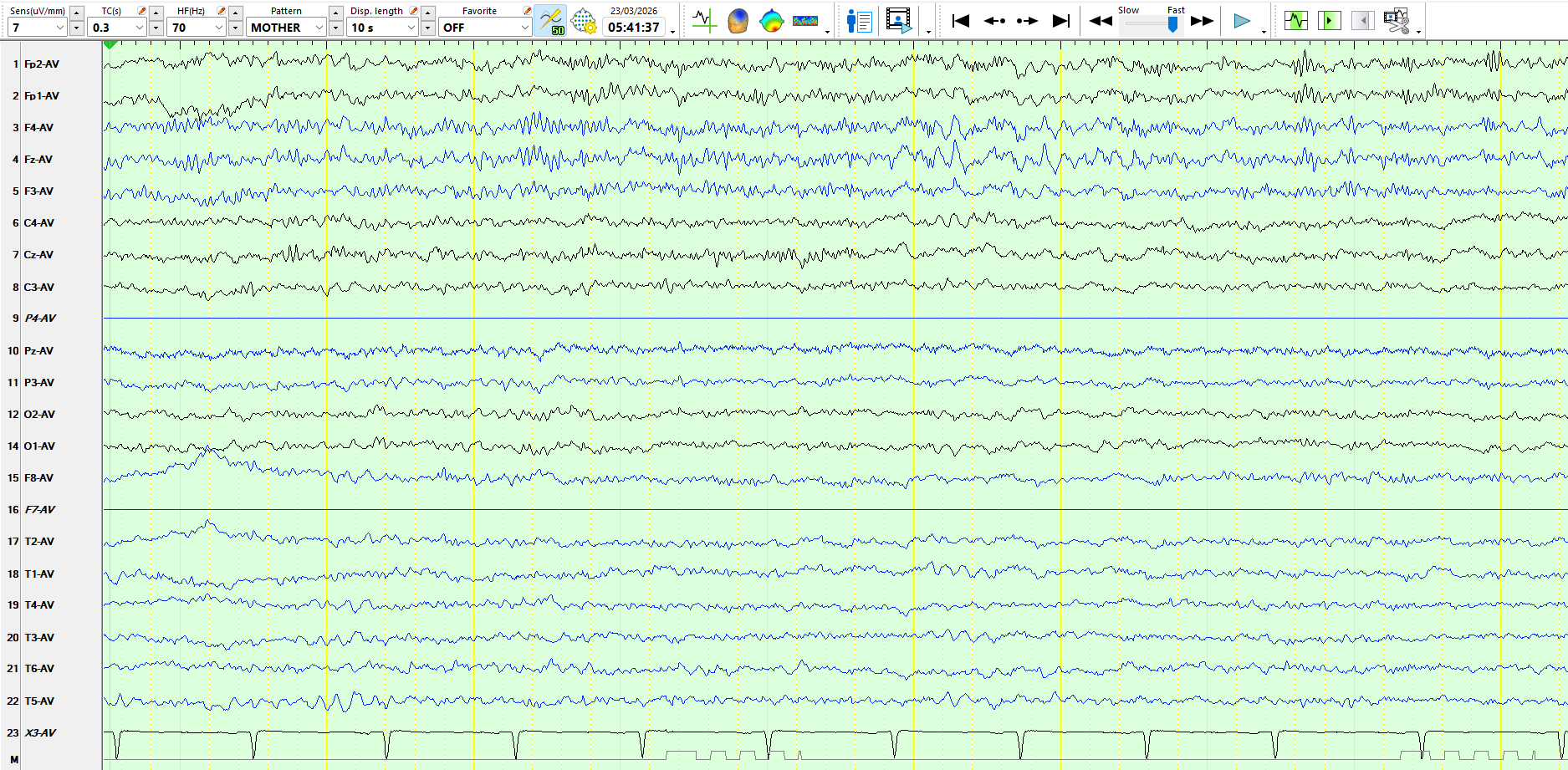
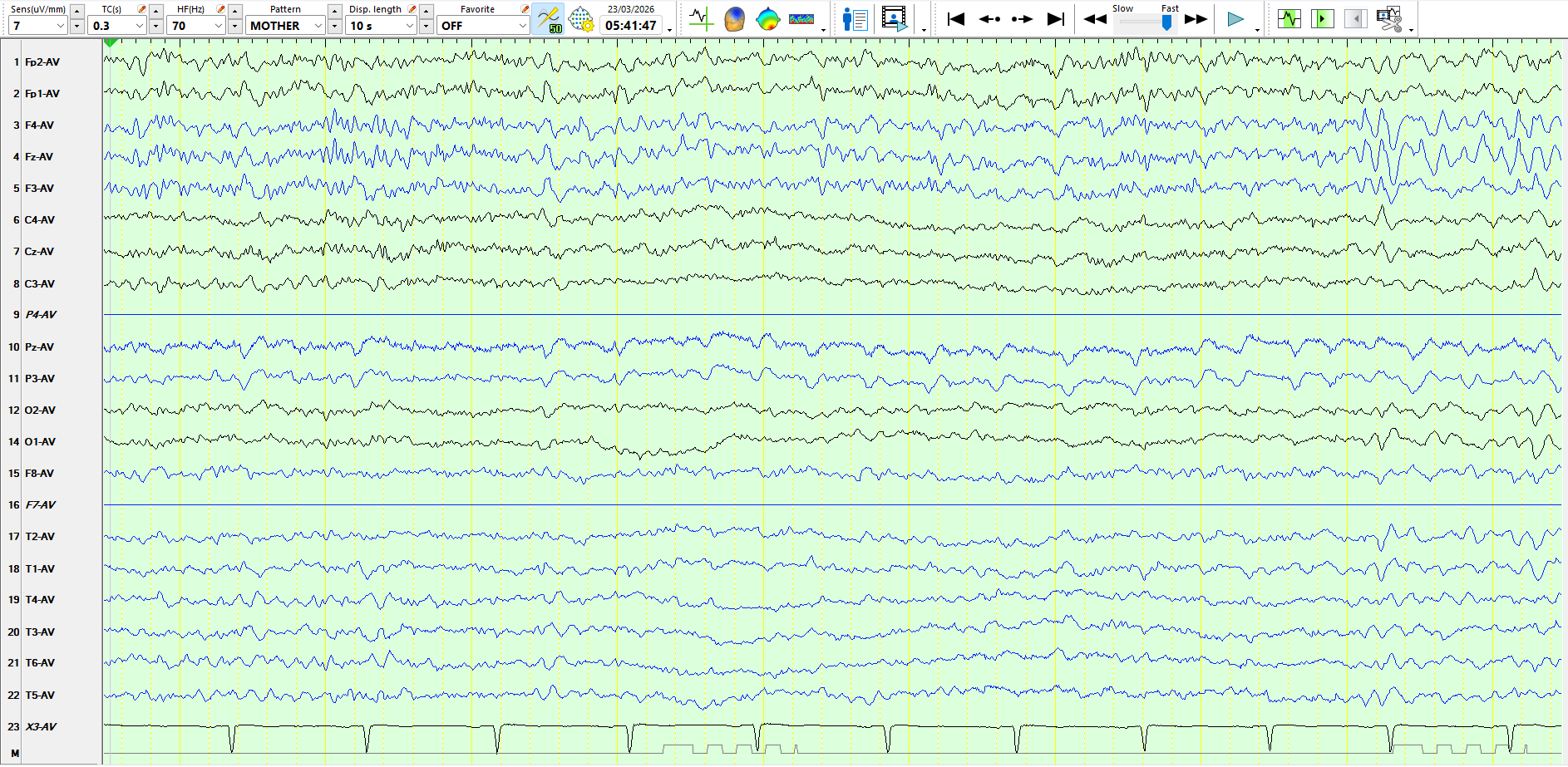
Event number 8:
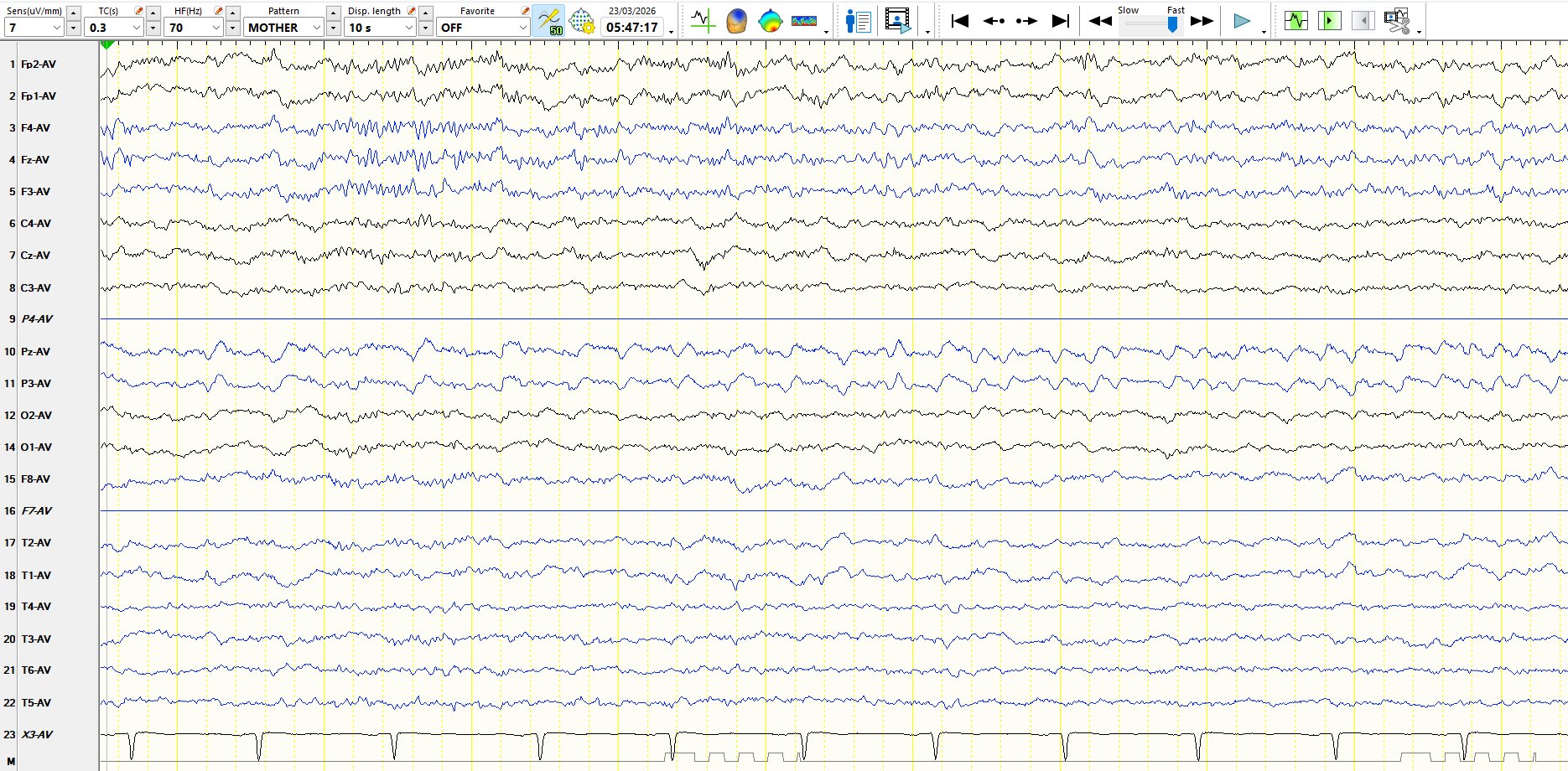
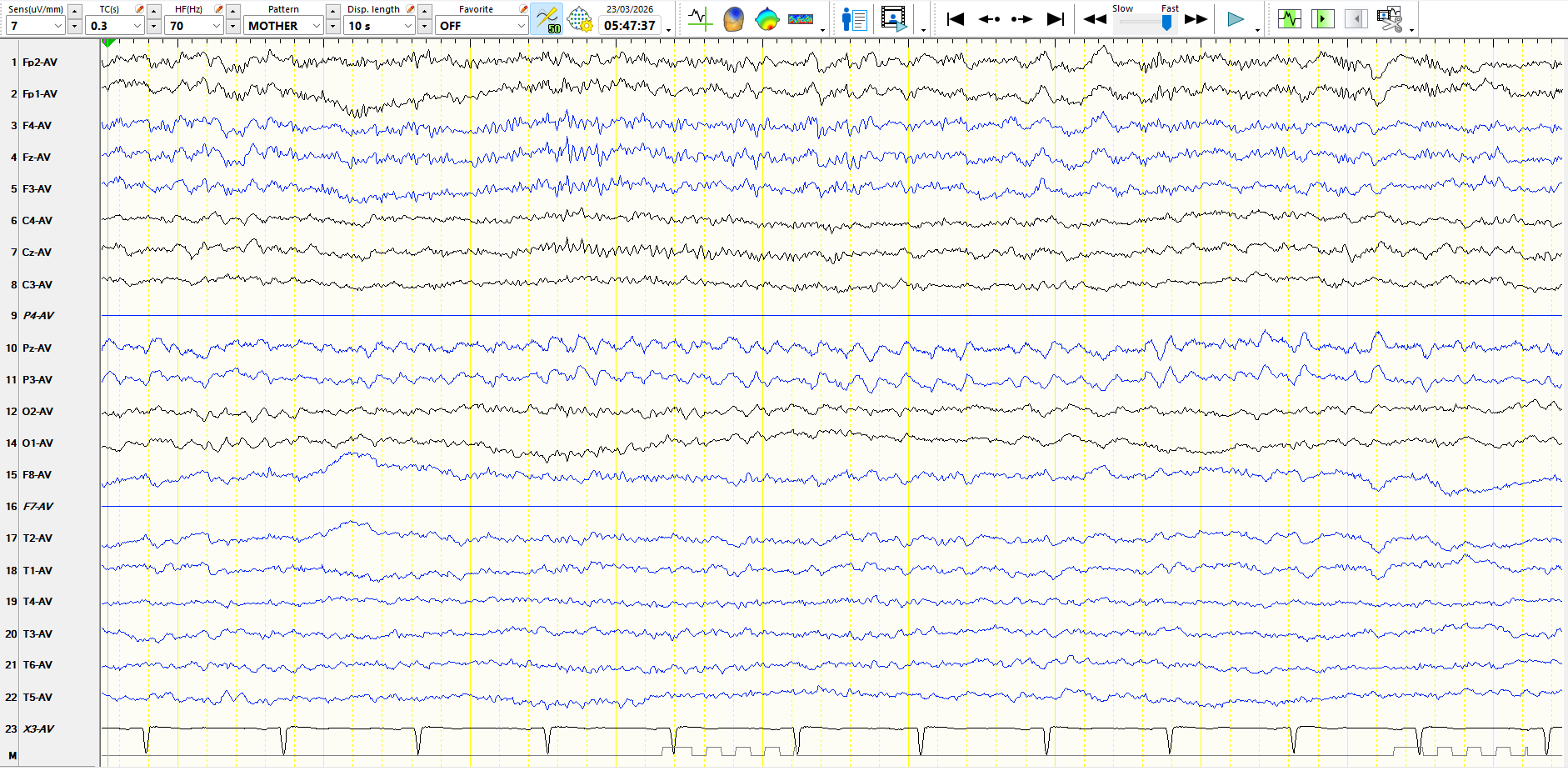
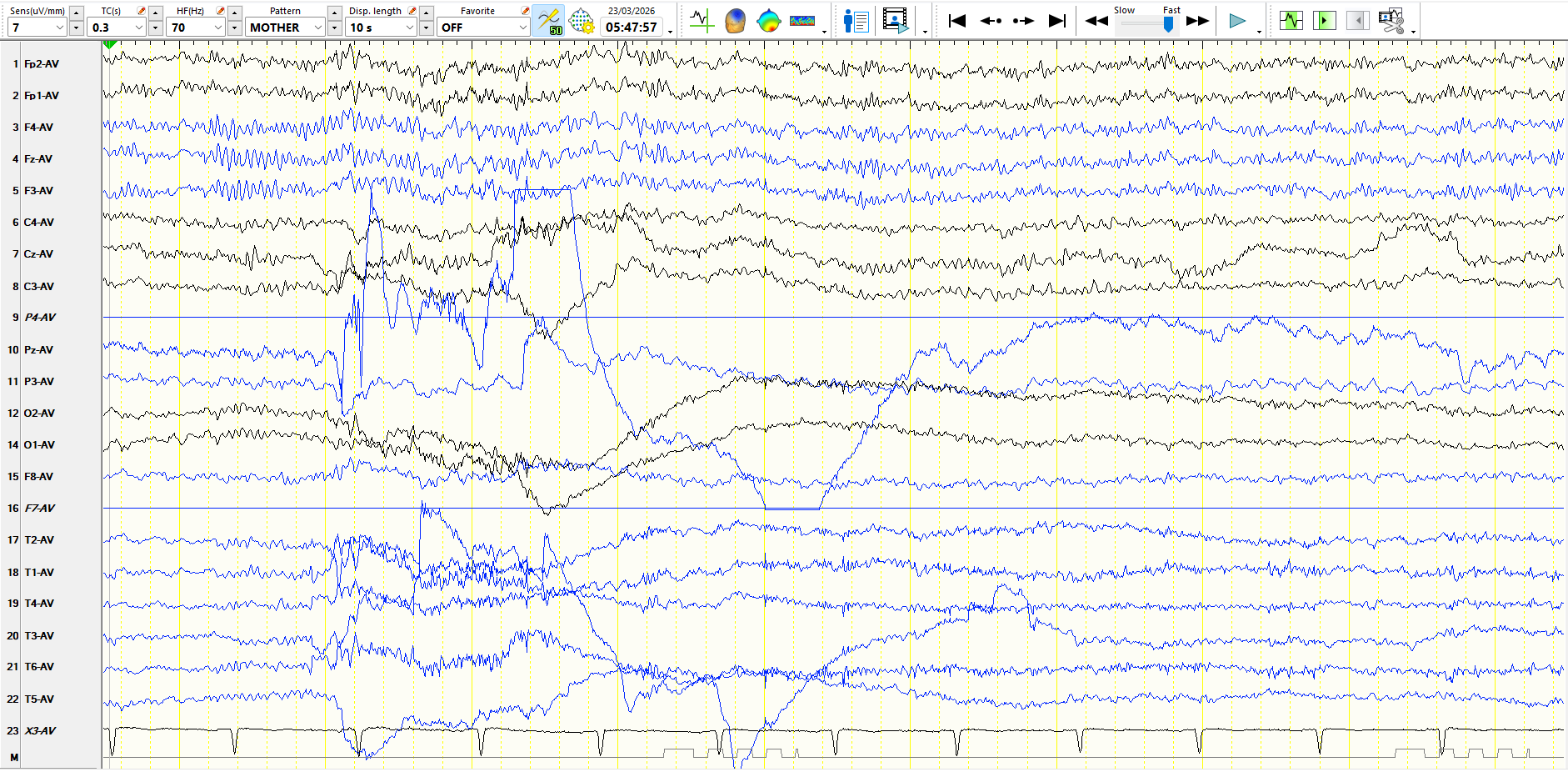
Event number 9:
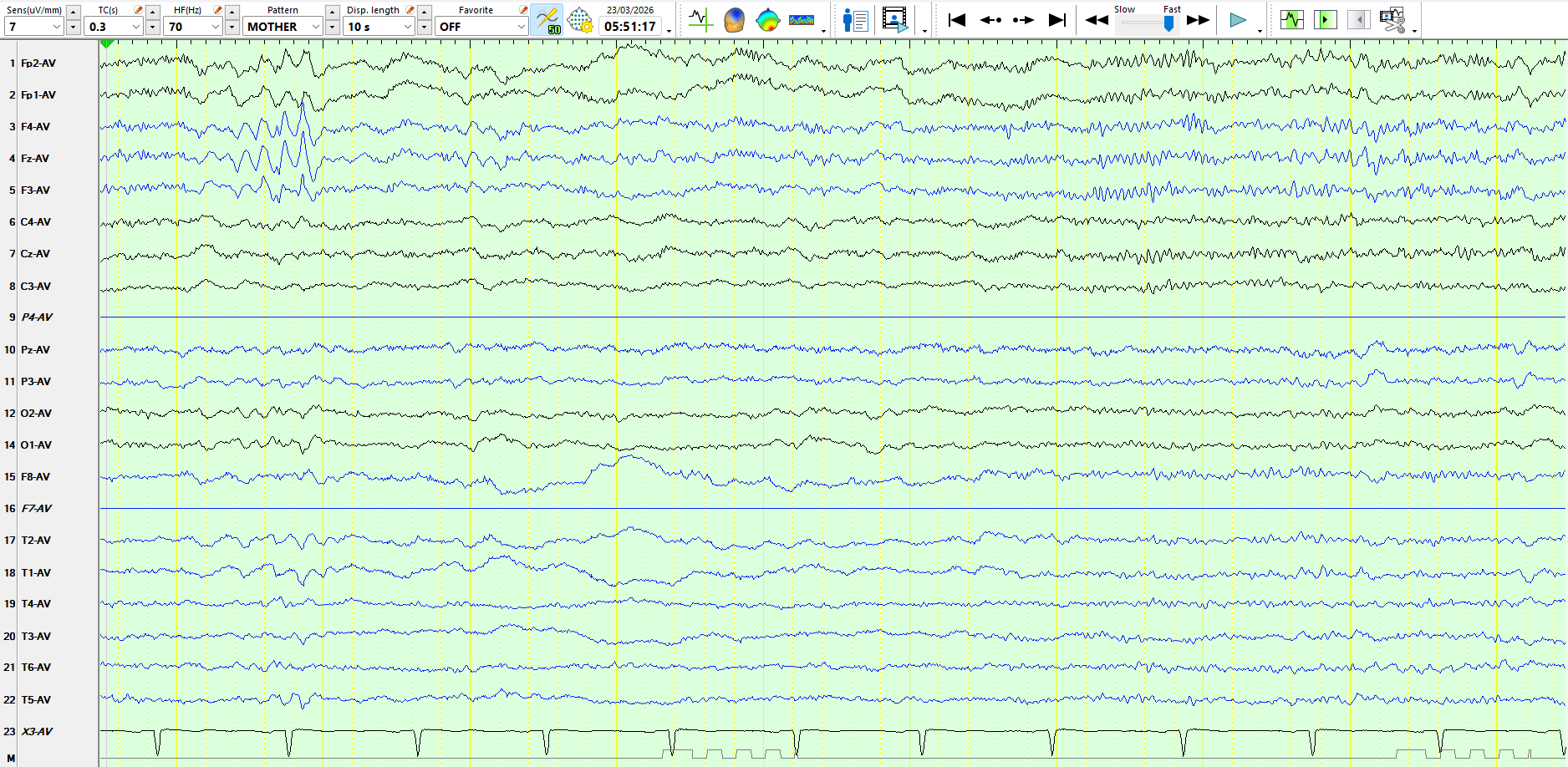
Event number 10:
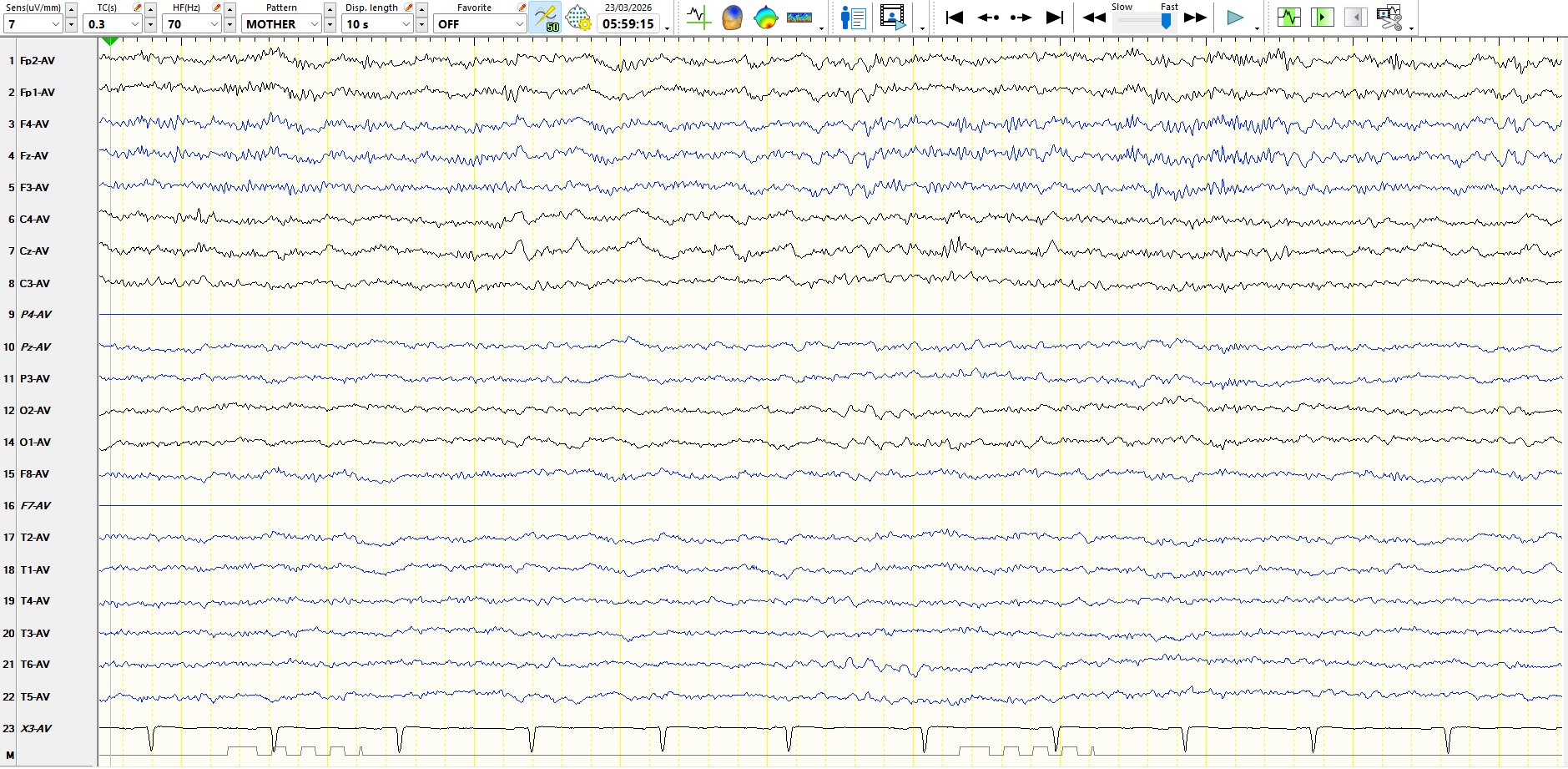
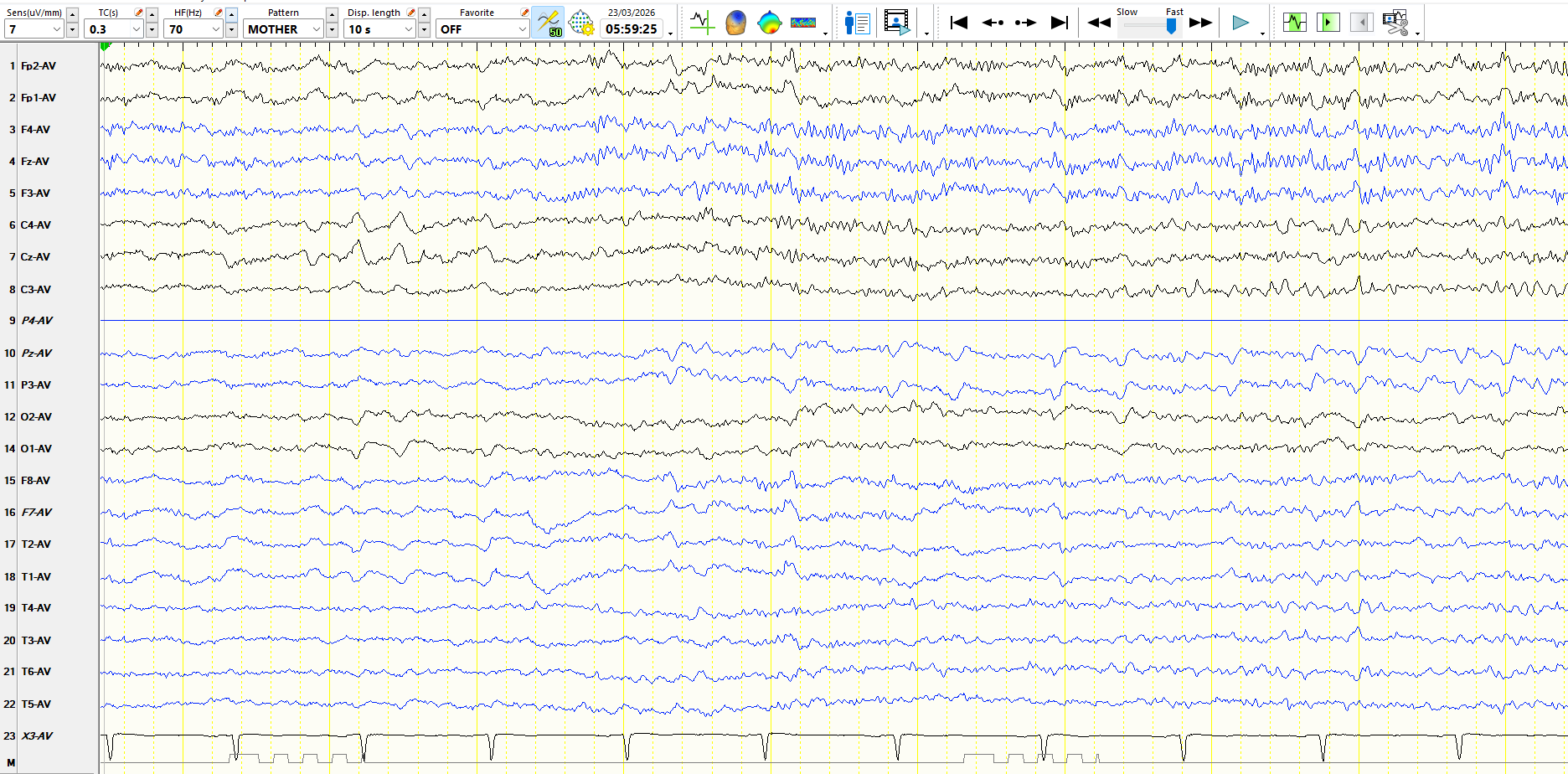
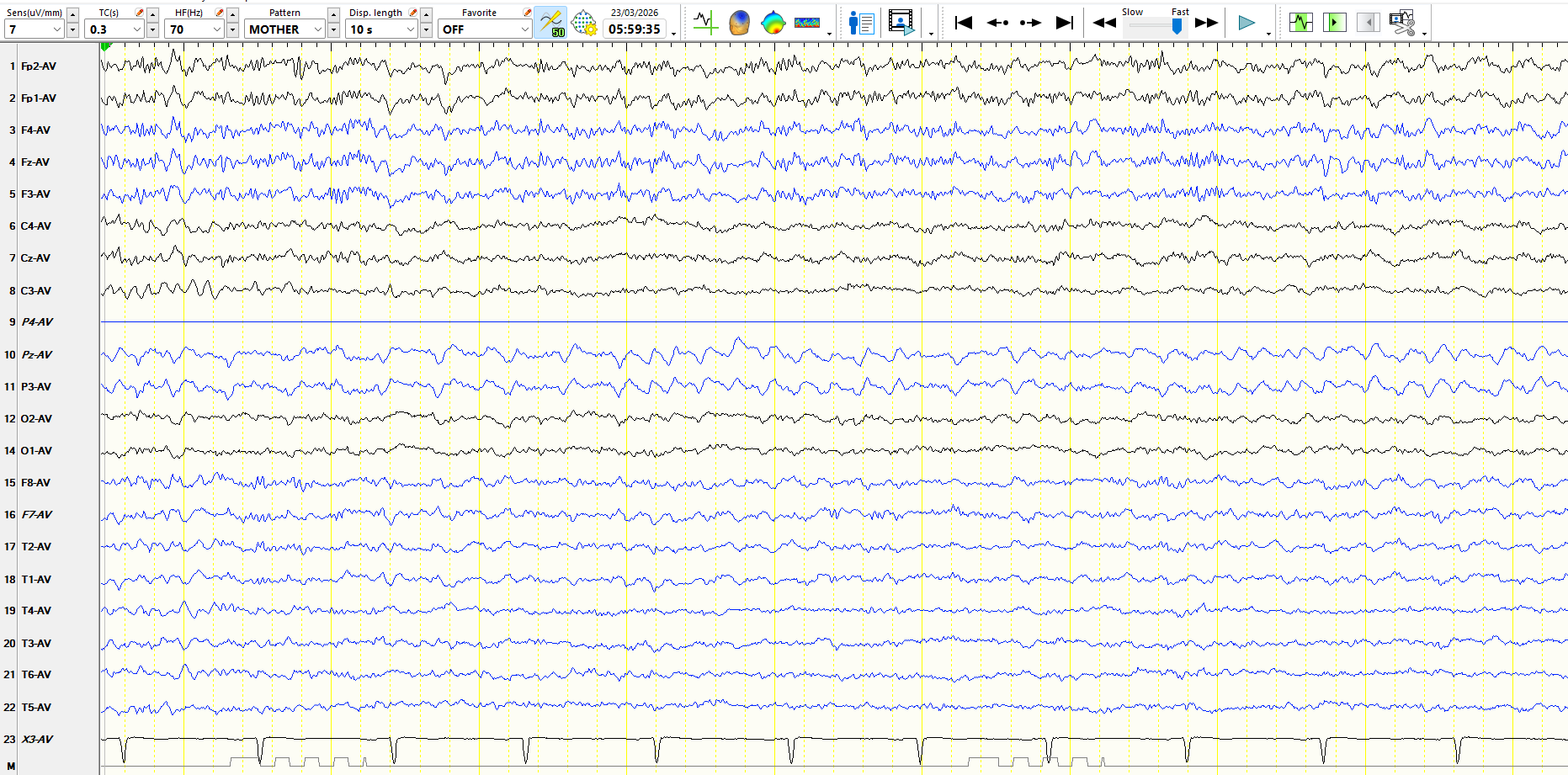
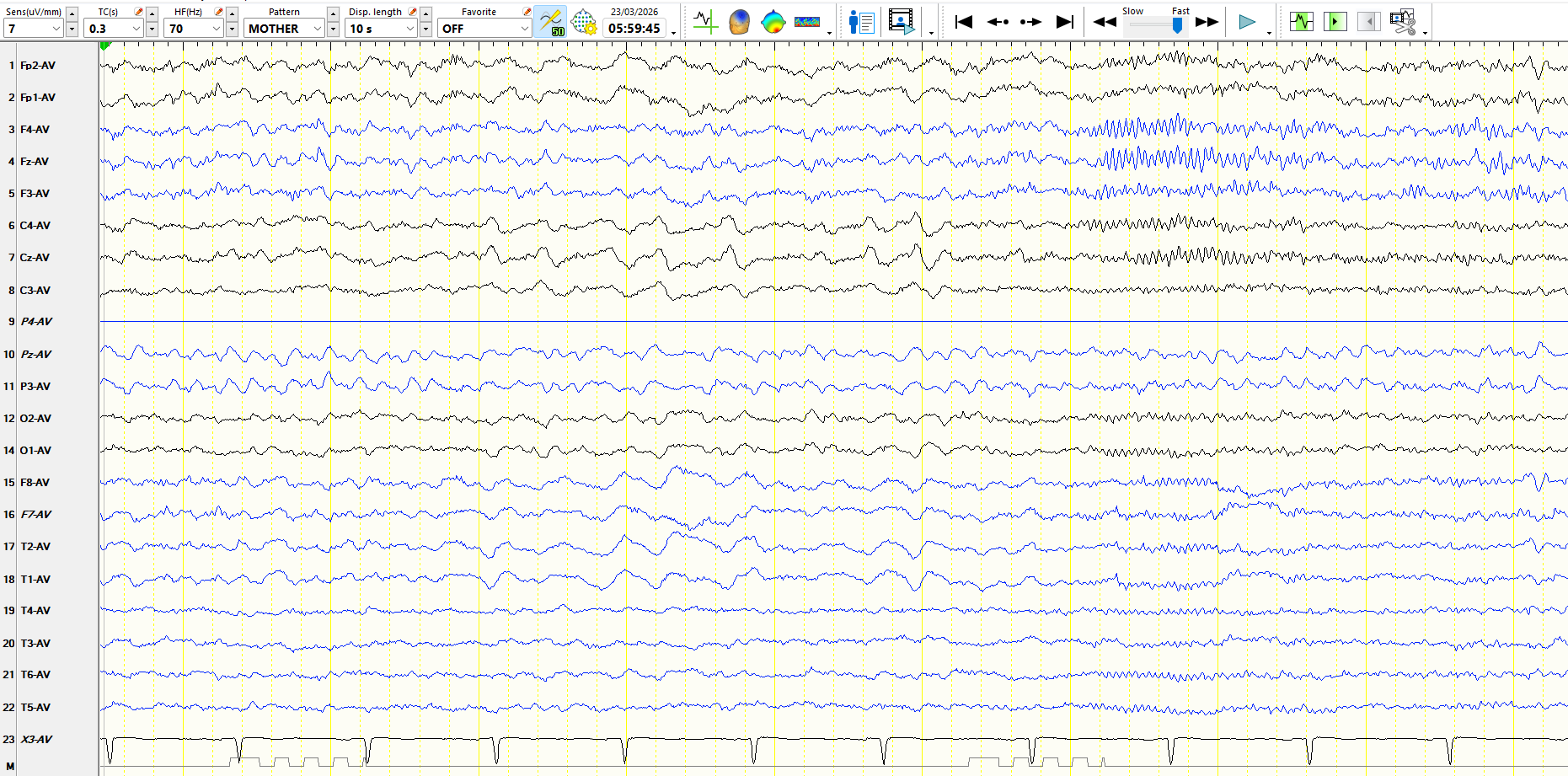
Event number 11:
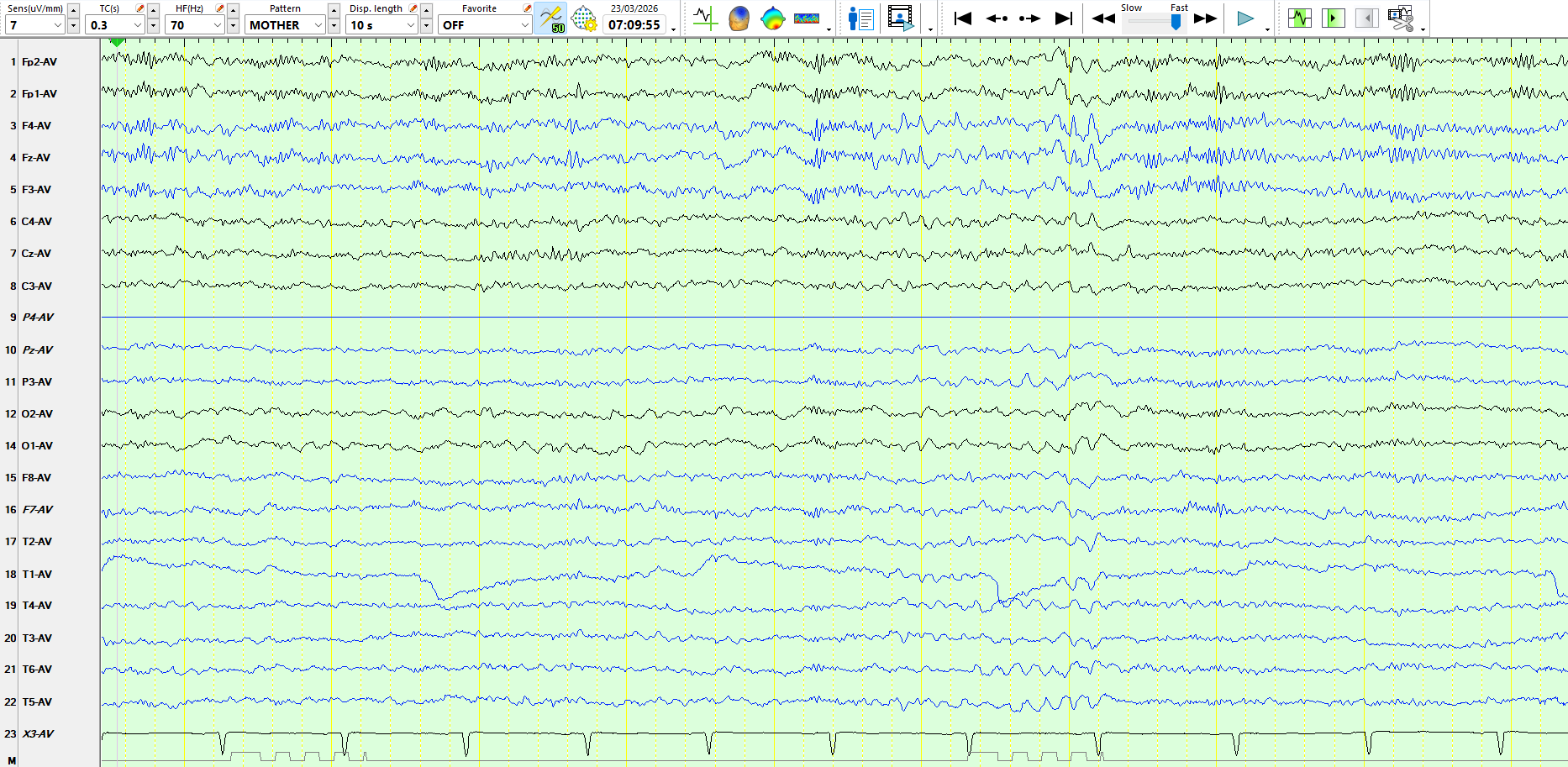
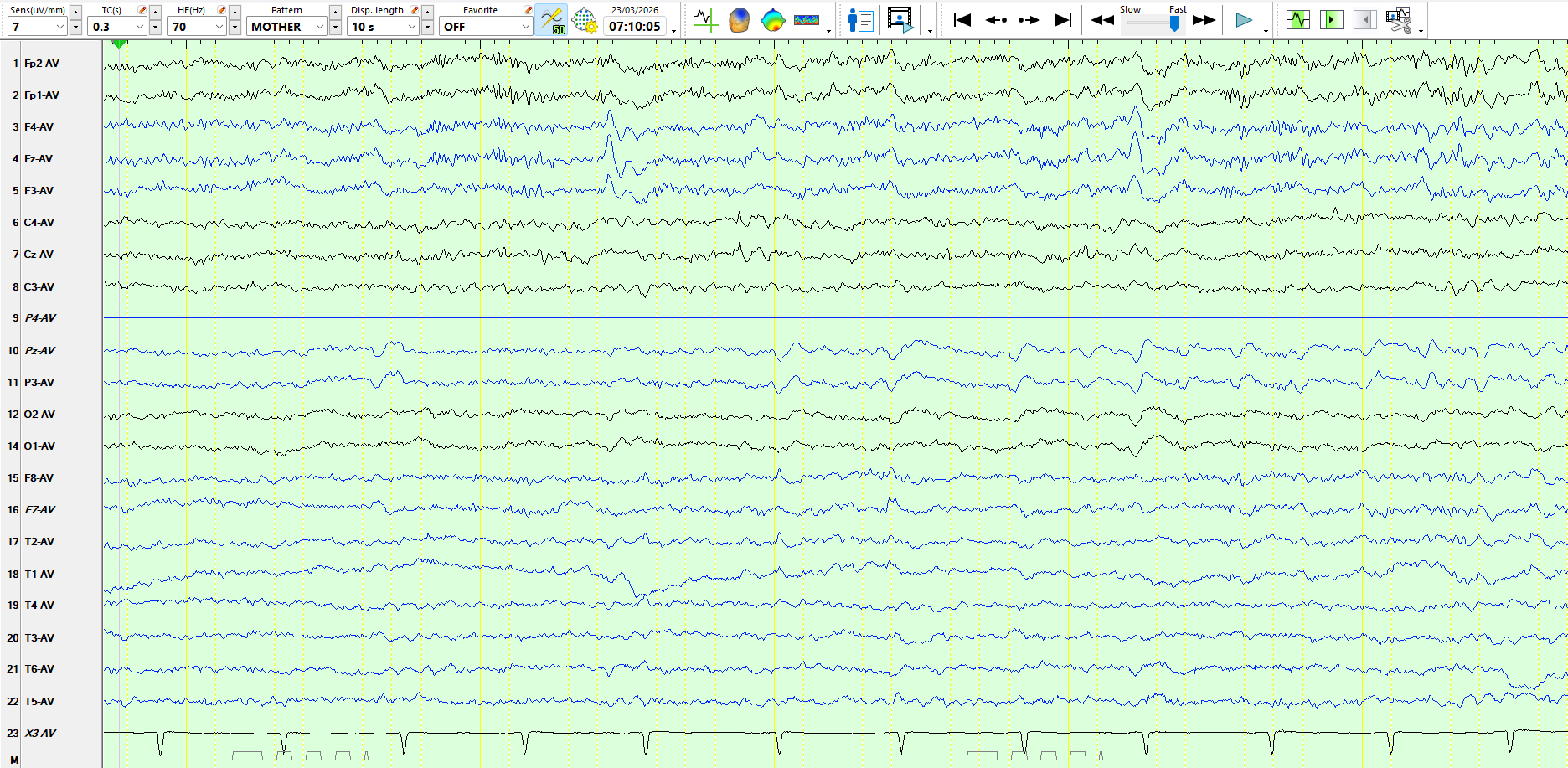
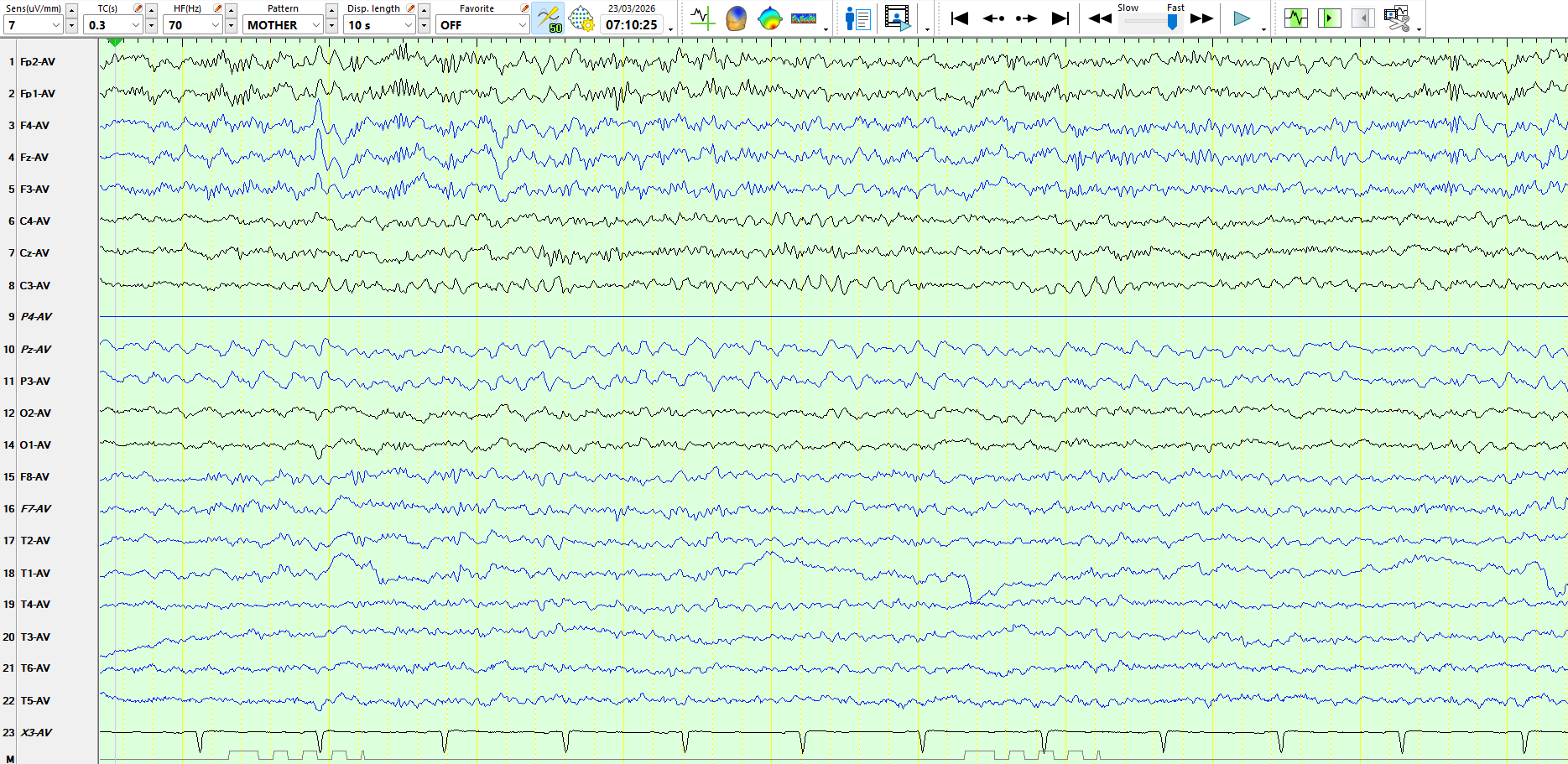
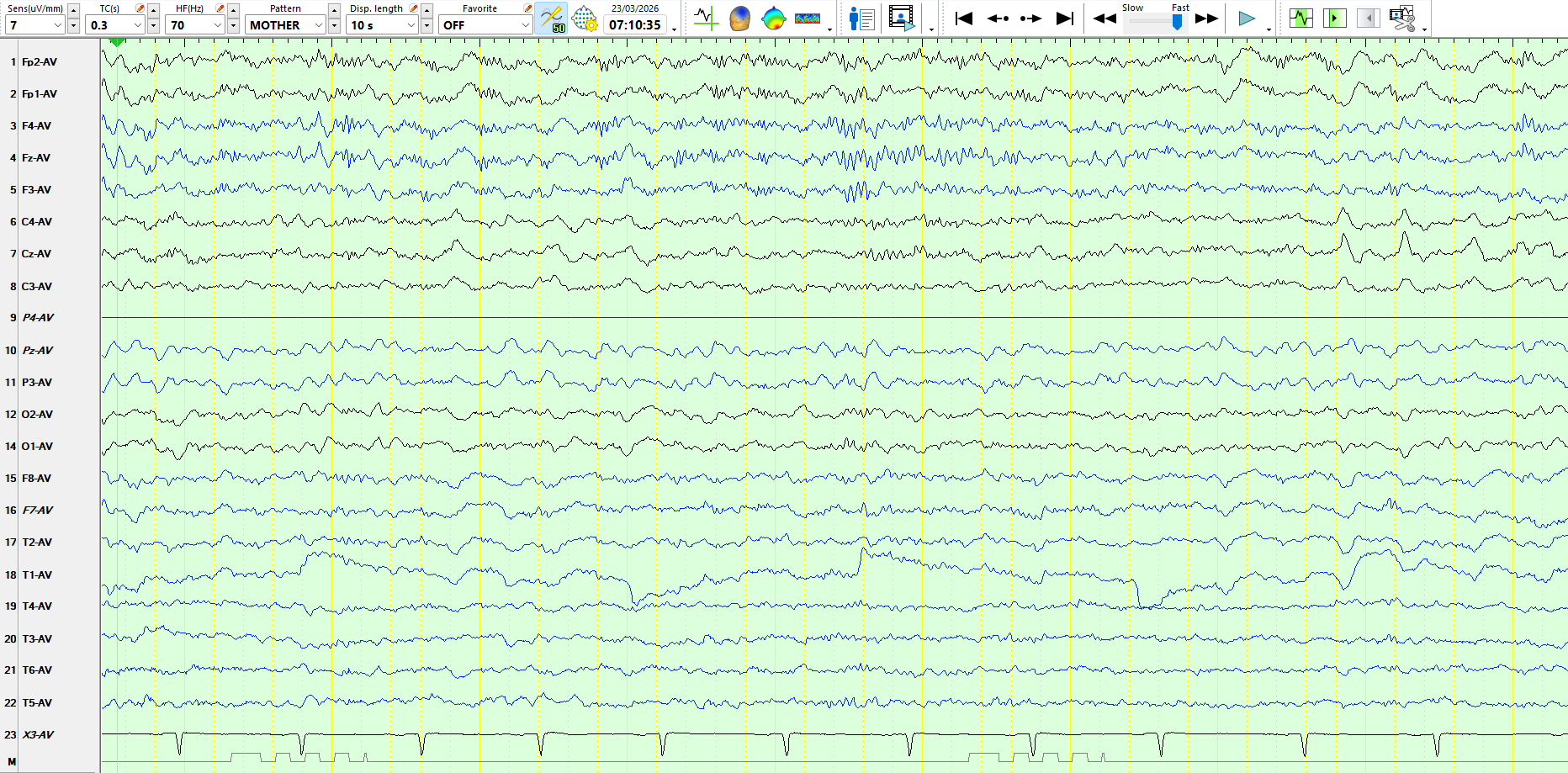
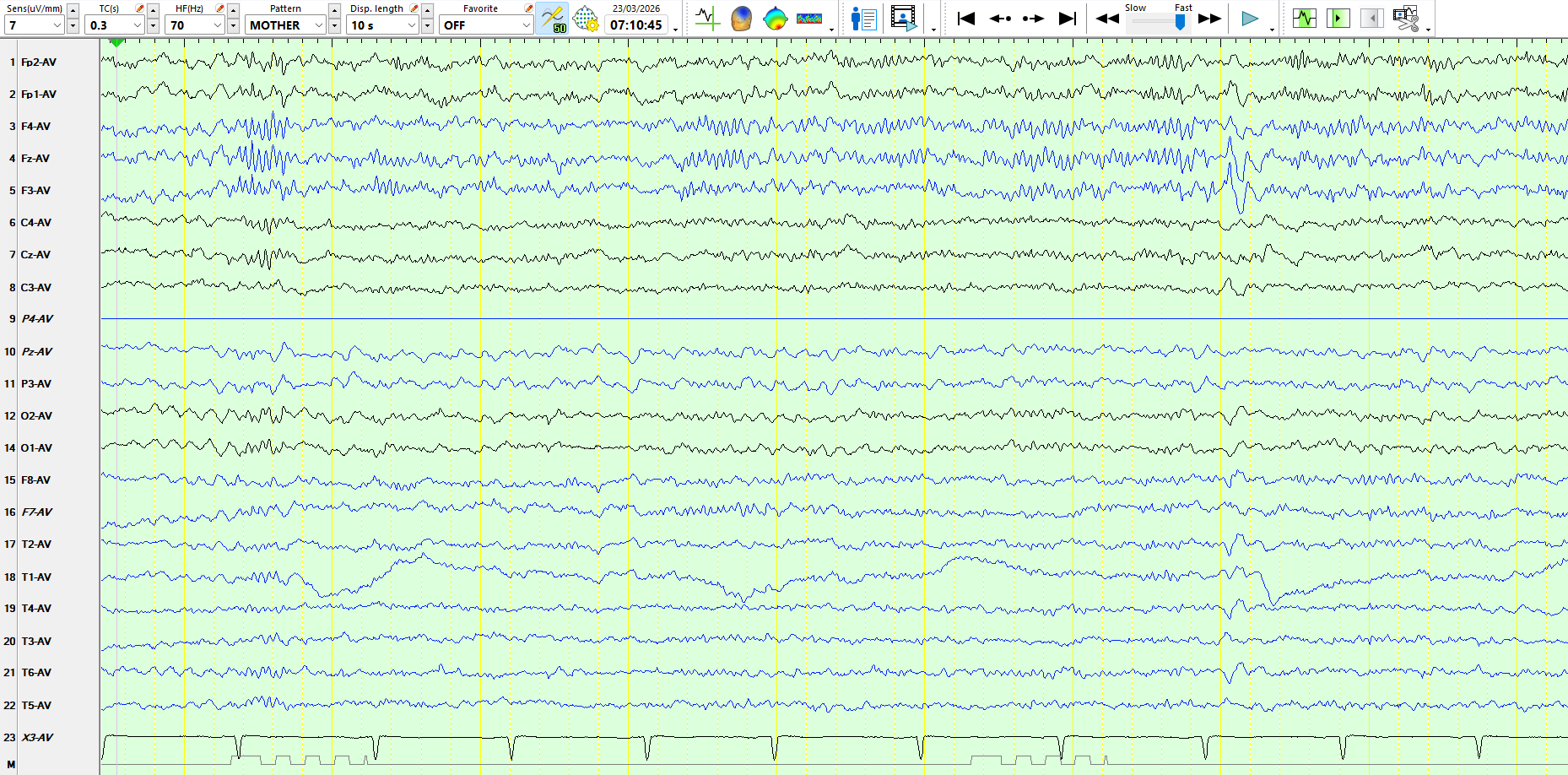
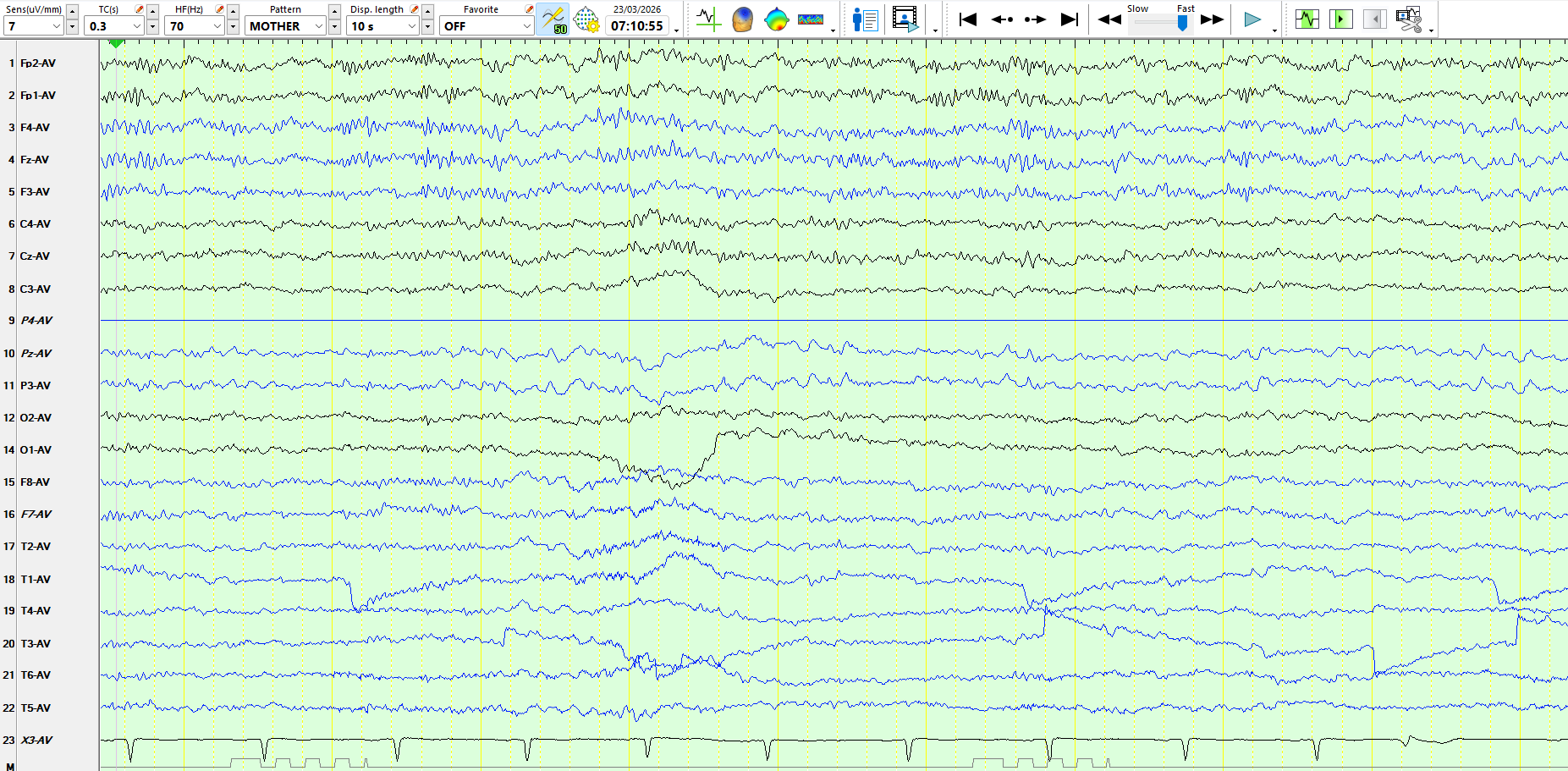
The above discharges are diagnostic of Subclinical Rhythmic Epileptiform Discharge of Adults (SREDA); note the evolution from triphasic-like delta waves or theta waves (texts say 4-7 Hz, but my experience is that it is quite frequently in the Delta range during the early evolution of the phenomenon), resembling a seizure, the location over the parietal regions, the absence of any symptomatology, failure to rouse the patient from sleep, the absence of any change in heart rate and the absence of any slow waves after these discharges. While they often occur during hyperventilation, they may be profuse and they are sometimes seen in sleep. You can see how easily one could fall into the trap of calling these parietal seizures, especially in someone with brief episodic vertiginous episodes. It is a rare normal variant and therefore easily misinterpreted.
A distinctive rhythmic EEG discharge of adults - PubMed
Unusual variants of subclinical rhythmic electrographic discharge of adults (SREDA) - PubMed
SREDA (subclinical rhythmic electrographic discharges in adults) - EEGpedia